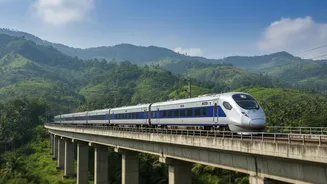

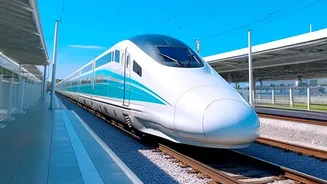
A formidable natural barrier
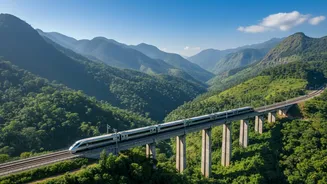
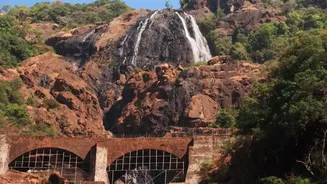
The Western Ghats, a UNESCO World Heritage Site, are as beautiful as they are challenging for engineering projects. For railways, the Ghats mean steep gradients, countless sharp curves, and a geology prone to landslides, especially during the heavy monsoon
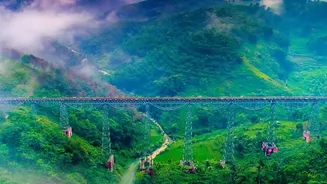
season. For over a century, train operations in these sections have required special measures. Routes like the one between Bengaluru and Mangaluru feature stretches with severe inclines, numerous tunnels, and hundreds of bridges packed into short distances. For example, the 55-km Sakleshpur-Subrahmanya Road section has a steep gradient of 1-in-50, 57 tunnels, and over 220 bridges, making it one of Indian Railways' most technically demanding routes. These conditions have historically slowed down trains and demanded unique operational solutions.
The problem with 'bankers'
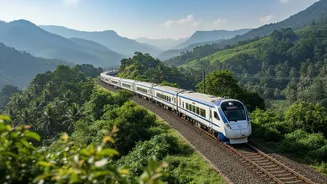
Traditionally, trains are hauled up these steep inclines with the help of 'banker' locomotives — extra engines attached at the rear to provide the necessary pushing power. This has been a standard practice on ghat sections for decades. However, this solution is not ideal for the Vande Bharat Express. These are semi-high-speed, self-propelled trainsets where multiple coaches have their own motors. Attaching and detaching banker locomotives is a time-consuming process that would negate the speed advantages of the Vande Bharat service. The procedure often requires technical halts, interrupting the seamless journey that the modern train is designed to provide.
Engineering for the incline
The core challenge for a Vande Bharat train on a steep, wet, and winding track is maintaining grip (adhesion) and ensuring safe braking. Unlike a conventional train pulled by a heavy locomotive, the Vande Bharat's power is distributed across the trainset. While this is excellent for acceleration on flat terrain, it poses a different problem on severe gradients. To overcome this, Indian Railways is testing specially modified Vande Bharat rakes. For some routes, trains have been equipped with additional parking brakes and advanced traction motor systems to prevent them from rolling back on slopes. For the particularly challenging Bengaluru-Mangaluru route, a special 20-coach rake is undergoing trials with an Automatic Emergency Braking (AEB) system. This system is designed to automatically apply the brakes if the train exceeds a safe speed on the treacherous downhill slopes, providing a critical layer of safety.
Safety is the priority
Running a high-speed service through the Ghats isn't just about power; it's about safety. The region is highly susceptible to landslides, which can disrupt services for days. Because of the terrain, the Commissioner of Railway Safety has capped the maximum speed on certain critical stretches at just 30 kmph. Therefore, the ongoing trials by the Research Designs and Standards Organisation (RDSO) are not just about speed but about a host of safety parameters. Teams are meticulously assessing acceleration, stability, and braking performance to ensure the train can operate reliably and safely, even in adverse weather conditions. The successful deployment of these specially adapted Vande Bharat trains would mark a significant milestone, proving that modern Indian engineering can conquer some of the nation's most difficult terrains.