



The RBI's Latest Move
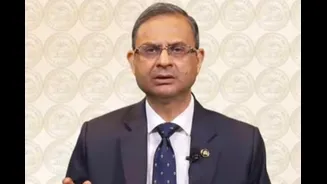
In its August 2026 meeting, the RBI's Monetary Policy Committee (MPC) unanimously voted to keep the repo rate unchanged at 5.25%. This marks another instance of the central bank holding the rate, indicating a clear 'wait-and-watch' approach. The decision
was widely anticipated by economists and market experts, who pointed to persistent global uncertainties and the need to balance economic growth with inflation control. This continuity provides a degree of predictability for the economy, financial institutions, and, most importantly, for individual savers and borrowers.
Decoding the Repo Rate
So, what exactly is the repo rate? Think of it as the interest rate at which the RBI lends money to commercial banks like SBI, HDFC Bank, or ICICI Bank. When this rate is high, it becomes more expensive for banks to borrow funds. Consequently, they pass on these higher costs to customers in the form of increased interest rates on loans, such as home loans and car loans. Conversely, when the repo rate is held at a high level, banks are incentivised to attract deposits from the public, which often translates into more attractive interest rates on FDs.
Good News for FD Investors
For anyone with a Fixed Deposit or considering opening one, the RBI's decision is positive news. A stable repo rate means banks are not under immediate pressure to reduce their FD interest rates. Many banks are currently offering competitive rates, some upwards of 7%, as they continue to need funds to keep up with strong credit demand. With the central bank hitting the pause button, these attractive rates are expected to remain in place for the near future. This creates a valuable window of opportunity for savers to lock in their investments at these higher returns for a fixed tenure, securing predictable earnings.
What About Loan EMIs?
On the other side of the coin, the rate hold means there is no immediate relief for borrowers. Interest rates on loans are likely to remain elevated. If you have a floating-rate home loan or personal loan linked to an external benchmark like the repo rate, your Equated Monthly Instalments (EMIs) will stay the same for now. While this stability prevents any sudden shocks from a rate hike, it also means the higher borrowing costs that have marked the recent economic cycle will continue.
The 'Why' Behind the Pause
The MPC's decision is a carefully calculated balancing act. The primary objective remains to manage inflation and bring it closer to the RBI's target of 4%. While inflation has shown some moderation, risks from volatile food and fuel prices, geopolitical tensions in West Asia, and an uncertain monsoon season persist. At the same time, the Indian economy has shown strong resilience, with GDP growth forecasts being revised upwards. By holding the rate, the RBI is choosing to support this growth momentum while keeping a firm hand on inflation, ensuring that price pressures do not become widespread.
Your Next Move as a Saver
Given that interest rates may be at or near their peak, what should a saver do? Financial experts suggest this period of stability is an opportune time to review your investment strategy. If you prioritise safety and guaranteed returns, locking in funds in FDs for a one- to two-year tenure could be a smart move to maximise earnings before rates potentially begin to decline in the future. It is always wise to compare the FD rates offered by different banks, as even a small difference can significantly impact your returns. While FDs offer security, those with a slightly higher risk appetite could explore other fixed-income instruments, but the certainty of FDs remains unmatched for conservative investors.