




The King of All Trails
At the heart of Sweden’s accessible wilderness lies the Kungsleden, or 'The King's Trail'. Stretching for 440 kilometres through Swedish Lapland, this world-renowned trail takes hikers through some of the most dramatic scenery on the continent, from the Arctic
tundra of Abisko National Park to the soaring peaks of the Kebnekaise massif. But what makes it truly special isn't just its beauty, but its design. Created by the Swedish Tourist Association (STF) in the early 20th century, the trail was conceived with a clear purpose: to make the magnificent Swedish mountains accessible to more people. The path is well-marked and divided into manageable sections, meaning you don't have to be a hardcore mountaineer to experience its wonders. Whether you tackle a small portion or the entire length, the Kungsleden serves as the main artery into a landscape that feels a world away from modern life.
A Network of Mountain Sanctuaries
The true genius of the Swedish trail system is the network of mountain huts (fjällstugor) and larger mountain stations operated by the STF. Spaced roughly a day’s hike apart—about 10 to 20 kilometres—these huts are the lifelines of the trail. They transform a potentially gruelling expedition into a comfortable adventure. Unlike alpine huts with full-service restaurants, most STF huts are simple, rustic shelters without electricity or running water. However, they provide the essentials: a bed in a dormitory, a communal kitchen with gas stoves and cookware, and often a wood-fired sauna to soothe weary muscles. This system allows hikers to travel relatively light, leaving behind tents and heavy cooking gear. The larger mountain stations, found at key access points, are more like full-service hostels or hotels, offering private rooms and meals, and serving as hubs to start or end a trek.
The Meaning of a 'Maintained' Trail
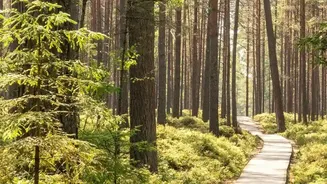
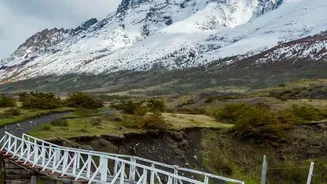
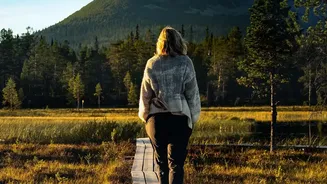
In the Swedish wilderness, 'maintained' doesn't mean paved or tamed. It means thoughtfully managed. The responsibility for trail upkeep is now largely handled by County Administrative Boards, which ensure the paths remain safe and clear. Summer trails are marked with cairns topped with a splash of red paint, a simple but effective guide through the vast, open terrain. In boggy or marshy sections, long stretches of wooden boardwalks keep feet dry and protect the fragile ecosystem. Sturdy bridges are built and maintained over rivers that would otherwise be dangerous or impossible to cross. This infrastructure is crucial for safety, but it’s designed to be unobtrusive, preserving the wild character of the landscape while removing some of its most prohibitive dangers. It's a delicate balance that makes a profound difference.
Wilderness, Truly Intact
The phrase 'Europe's last wilderness' is often used to describe this region, and for good reason. Adjacent to the well-trodden Kungsleden lies Sarek National Park, a place that highlights what true, untamed nature looks like. Covering nearly 2,000 square kilometres, Sarek has no marked trails, no huts, and no amenities of any kind. It's a land of over 100 glaciers, dramatic valleys, and challenging river crossings reserved for highly experienced and self-sufficient trekkers. The existence of Sarek next to the accessible Kungsleden offers a powerful contrast. It shows that Sweden has made a conscious choice: to guide people through parts of its wilderness while leaving other, vast areas completely untouched. These lands are also the ancestral home of the indigenous Sámi people, who have herded reindeer here for millennia, adding a deep cultural layer to the intact nature of the landscape.
Freedom to Roam, with Responsibility
Underpinning the entire experience is a unique Swedish concept: Allemansrätten, or the 'Right of Public Access'. This constitutional right allows everyone to hike, camp for a night or two, and enjoy nature freely, even on privately owned land, as long as they adhere to the simple principle: 'Do not disturb, do not destroy'. This freedom empowers hikers to pitch a tent almost anywhere along the trail if they prefer solitude over the camaraderie of a hut. It fosters a deep, shared sense of ownership and respect for the environment. While the right is generous, it comes with responsibilities, especially concerning campfires, which are often restricted during dry summer months to prevent forest fires. This blend of freedom and responsibility is fundamental to the Swedish outdoor-living philosophy known as 'friluftsliv'.