

The Inevitable Shrinkage
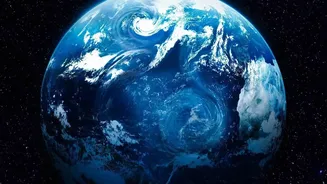
The Pacific Ocean is getting smaller by about an inch every year. This slow but relentless process is driven by plate tectonics, the same force that moves continents. The Pacific is almost completely encircled by a network of subduction zones, often called
the 'Ring of Fire'. In these zones, the dense oceanic plate dives beneath the lighter continental plates and sinks back into the Earth's mantle. Think of it like a massive geological conveyor belt where old ocean floor is constantly being recycled. While the Atlantic Ocean is mostly expanding from its center, the Pacific is being pulled inward from its edges, dooming it to disappear over a vast timescale.
Welcome to Amasia
So, what happens when the world’s largest ocean is gone? The continents will collide. Using supercomputer simulations, scientists predict the formation of a new supercontinent, which has already been named Amasia. This future landmass would likely see the Americas crash into Asia, uniting most of Earth's continents around the Northern Hemisphere. This is part of a known supercontinent cycle, where Earth's landmasses have periodically gathered into one giant continent every 600 million years or so, before breaking apart again. The last one, Pangaea, broke up during the age of the dinosaurs; Amasia is simply the next in line.
The Planet's Deep Water Cycle
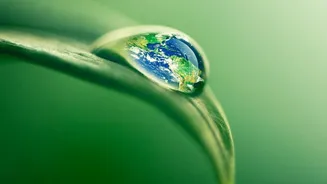
This brings up a critical question: if an entire ocean disappears, where does all its water go? The answer lies in a process known as the deep water cycle. The water doesn't actually leave the planet. As the oceanic plates subduct, they drag enormous quantities of seawater down with them, trapped within the rock and minerals of the crust. This water is pulled deep into the Earth's mantle, far below the surface. Rather than being destroyed, it becomes part of the planet's interior. Some estimates suggest the mantle could hold several times the amount of water found in all of today's oceans combined.
Water's Return to the Surface
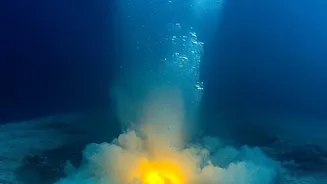
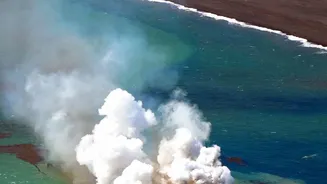
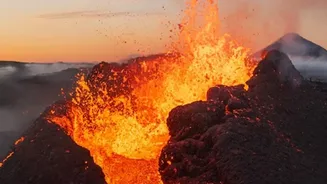
Water carried deep into the mantle doesn't stay there forever. This geologic water cycle is a two-way street. Over millions of years, the water that was transported downwards is eventually released back to the surface. This happens primarily through volcanic activity at mid-ocean ridges and volcanic arcs, where magma rising from the mantle brings water with it. This ensures a long-term balance, preventing the oceans from draining into the Earth's interior permanently. The process is a fundamental part of what makes our planet geologically active and capable of supporting life over billions of years.
A World Transformed
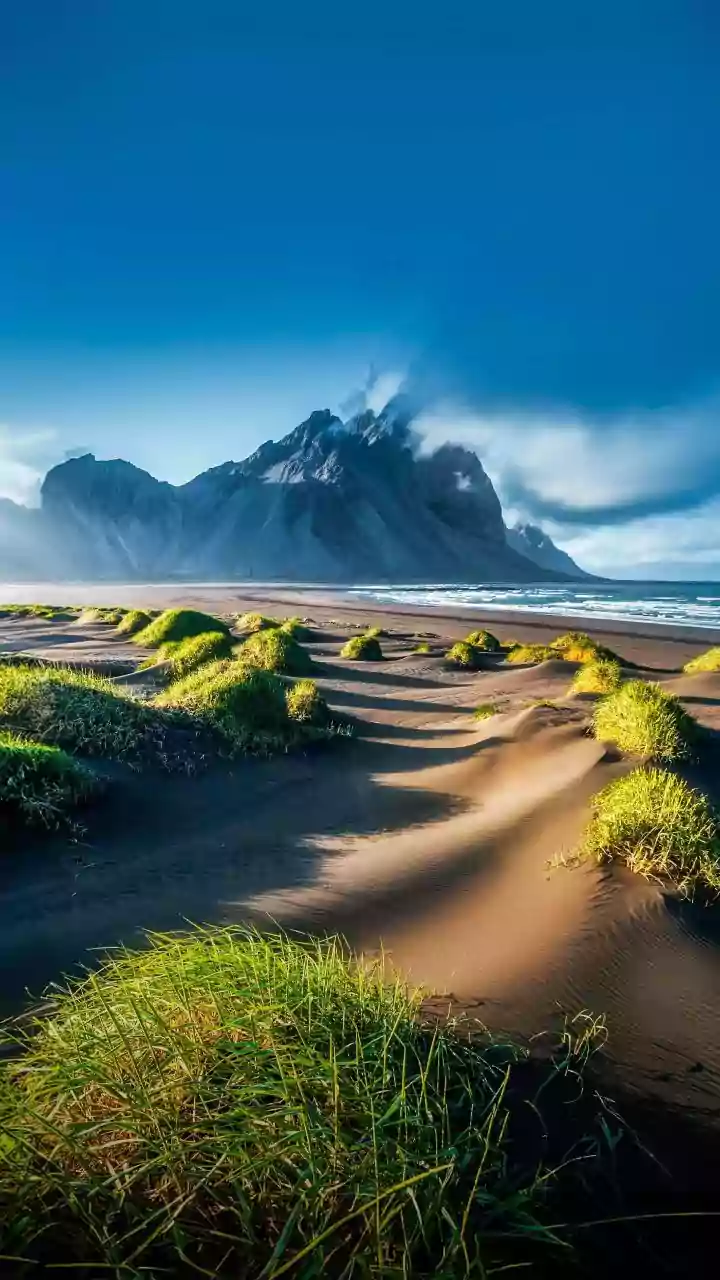
Life on the supercontinent of Amasia would be drastically different. With one massive landmass and a single superocean, global climate patterns would be unrecognizable. Scientists predict sea levels would be lower, and the vast interior of Amasia would likely be an extremely arid desert with massive daily temperature fluctuations. The lack of a large ocean like the Pacific to circulate heat would lead to harsher, more extreme environments. The formation of Amasia would also trigger intense seismic activity, as the colliding continents push up new mountain ranges, creating a landscape forged by geological forces on a scale we can barely imagine.