






A Lifeline at High Altitude
For decades, Leh's airport has been more than just a landing strip; it's a lifeline. As the highest commercial airport in India, it serves as the primary all-weather link for the Ladakh region, which remains cut off by road for several months during the harsh
winter. Its operations are dictated by the extreme environment. Flights are restricted to the morning hours to avoid the strong mountain winds that develop later in the day. The thin air at this altitude impacts aircraft performance, requiring longer runways and specialised pilot training for the scenic but demanding approach through Himalayan peaks. The existing terminal, while functional, has struggled to keep pace with the soaring growth in tourism and the region's strategic needs, handling over a million passengers annually in a space designed for far fewer. This dual role, serving both tourists and as a vital military airbase, makes it one of the most significant airfields in the country.
What's New in the Upgraded Airport?
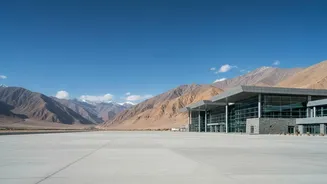
The transformation underway is monumental. A new, state-of-the-art integrated terminal building is in its final stages of construction, with the majority of work expected to be finished by mid-September 2026. This is not just an expansion but a complete overhaul. The new facility is designed to handle up to three million passengers annually, a massive increase from the current capacity. Once fully operational, the airport will be able to manage up to 54 flights a day, tripling its current capability and dramatically reducing congestion. Architecturally, the building is inspired by Ladakhi culture and Buddhist philosophy, designed to blend with the mountainous landscape. Beyond aesthetics, it is an engineering marvel, set to be India's first carbon-neutral airport. A key feature is its innovative geothermal heating and cooling system, which will provide sustainable temperature control in a region known for its extreme climate.
Engineering Against the Elements
Building a modern, large-scale infrastructure project in the Himalayas is a formidable task. Construction at such a high altitude presents a unique set of challenges that have tested engineers and planners. The working season is limited to just a few months each year due to severe winter weather, where temperatures can plummet dramatically. The remote location makes the logistics of transporting heavy machinery and construction materials a significant hurdle. Furthermore, the fragile ecology of the region requires careful planning to minimise environmental impact. The project has necessitated specialised construction techniques to ensure structural stability on the mountainous terrain and to cope with the climatic extremes, from intense solar radiation in summer to deep freezes in winter. The successful execution of this project, despite delays, is a testament to modern engineering and a coordinated effort between multiple agencies.
The Bigger Picture for Ladakh and India
The new terminal at Leh Airport is about far more than just increasing passenger numbers. It represents a strategic leap forward for the entire Ladakh region. For tourism, the engine of the local economy, the upgraded airport will provide a world-class welcome, encouraging more visitors and enabling year-round travel with greater ease and comfort. This enhanced connectivity promises to boost local livelihoods and open up new economic opportunities. From a strategic standpoint, the airport's increased capacity is a significant force multiplier. It allows for faster and more efficient movement of personnel and supplies, bolstering India's operational readiness in a sensitive border area. The ability to handle more and larger aircraft improves the region's logistical depth and its capacity for humanitarian assistance and disaster relief operations during emergencies. The evolution of Leh airport is a clear signal of Ladakh's growing importance on the national stage.