

A Celestial Event for the Ages
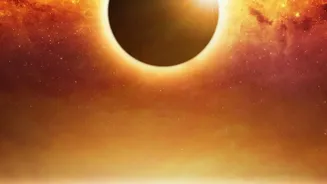
On August 12, 2026, a total solar eclipse will sweep across parts of Greenland, Iceland, and Spain, an event not witnessed on mainland Spain for over a century. This astronomical alignment, where the Moon passes directly between the Earth and the Sun,
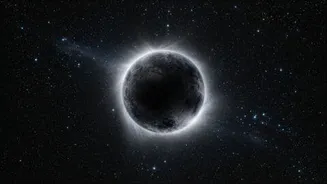
will cast a narrow shadow, known as the path of totality, across the landscape. For those within this path, day will briefly turn into a deep twilight, and the Sun's magnificent outer atmosphere, the corona, will become visible to the naked eye. Spain finds itself in a unique position, located at the very end of the eclipse's path, meaning the moment of totality will occur just before sunset.
The Significance of Avellanosa de Muñó
While the path of totality crosses a wide swath of northern Spain, the tiny village of Avellanosa de Muñó in the province of Burgos has become a point of focus. With a population of only around 10 permanent residents, this small community lies directly on the centerline of the eclipse path. Observers there will experience a precious 1 minute and 46 seconds of totality. Crucially, its location offers a promising vantage point to witness the eclipse at a very low altitude—just about 8 degrees above the horizon—making it an ideal spot to see the sun's corona against the backdrop of the evening sky.
Understanding Totality at Sunset
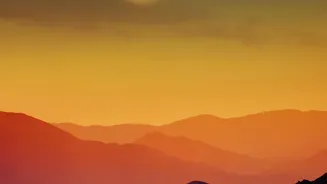
A total solar eclipse is already one of nature's most awe-inspiring sights, but combining it with a sunset elevates it to another level. As the Moon completely obscures the Sun, the sky darkens dramatically, temperatures can drop, and animals might react as if night is falling. When this happens low on the horizon, the visual experience is transformed. Instead of the darkness descending from above, observers will see the Moon's shadow rushing in from the west. With the sun so low, there is a greater chance of capturing dramatic photographs that combine the eclipsed sun with the landscape. Observers will need a completely unobstructed view to the west to avoid having the spectacle blocked by hills or buildings.
The 'Double-Darkness' Phenomenon
The term 'double-darkness effect' describes the unique sensation of experiencing two distinct forms of nightfall in rapid succession. First, the astronomical darkness of totality will fall, plunging the landscape into a deep, eerie twilight. This is the darkness of the Moon's shadow. But in Avellanosa de Muñó, totality will end around 8:30 PM local time, with the sun setting just before 9:20 PM. This means that almost immediately after the sky brightens from the return of the sun, it will begin to dim again for the natural, and final, darkness of sunset and night. It's a one-two punch of fading light, a rapid-fire sequence of eclipse twilight followed by evening twilight.
What Observers Can Expect to See
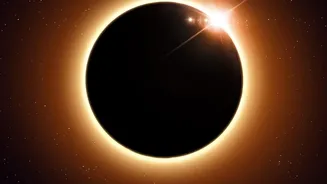
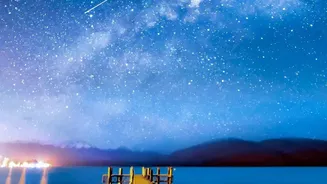
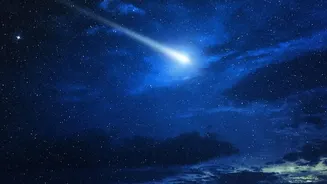
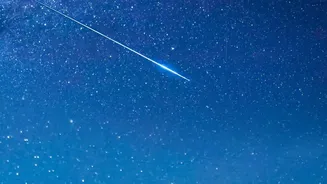
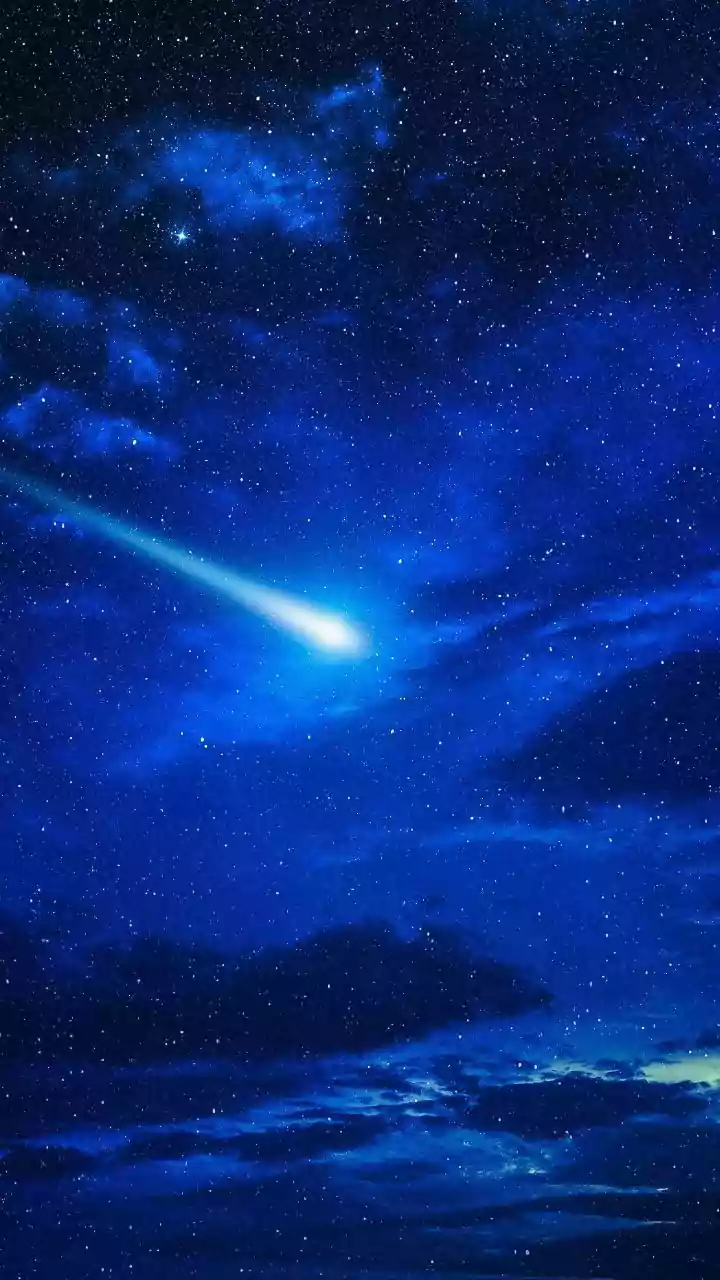
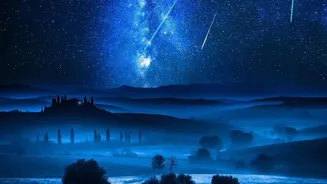
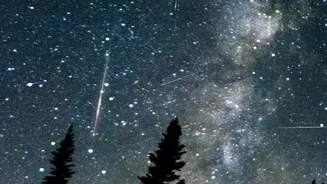
The visual rewards for those positioned correctly will be immense. Just before totality, the last rays of sunlight peeking through valleys on the Moon create a brilliant flash known as the 'diamond ring' effect. Then, as the Sun is fully covered, its ethereal, pearly white corona will unfurl across the sky. Because the eclipse is happening at sunset, the light will have to travel through more of Earth's atmosphere, which could give the corona a warmer, reddish tint. Another potential spectacle is a 360-degree sunset effect, where the horizon in every direction glows with the colours of twilight, as you are standing in a column of shadow while the surrounding landscape is still lit by the Sun. Furthermore, the eclipse coincides with the peak of the Perseid meteor shower, offering the possibility of spotting shooting stars during the brief window of darkness.