




NASA news comes thick and fast, with big announcements about new missions and ambitious timelines. But what do they really mean? Let's break down two major efforts: a new telescope to see the universe’s dawn and a plan to bring Mars to Earth.
A New Window on the Universe
In late September
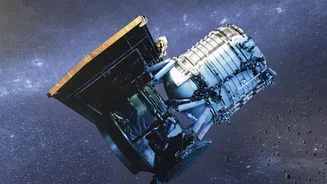
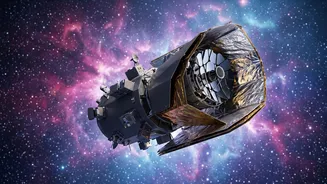
2026, NASA announced it was moving forward with a brand-new space telescope called PRIMA, the PRobe far-Infrared Mission for Astrophysics. This mission is the first of a new 'Probe Explorers' class, designed to be more focused and cost-effective than giant flagship observatories like the James Webb Space Telescope (JWST). With a project cost capped at around $1.2 billion, PRIMA is set to launch no earlier than 2033 for a five-year mission. Its goal is to peer into the universe in far-infrared light, a part of the spectrum that is largely invisible to other telescopes. This will help scientists bridge the observational gap between JWST and ground-based radio telescopes like ALMA. By studying this 'cold' and dusty side of the cosmos, PRIMA will tackle some of the biggest questions in astrophysics.
The Science of PRIMA
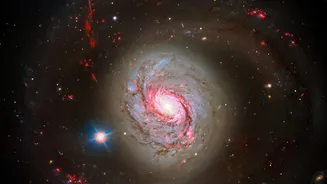
So, what will PRIMA actually be looking at? Its primary science goals are threefold: understanding how planets form, how galaxies and their supermassive black holes grow, and how cosmic dust and heavy elements have built up over time. In essence, PRIMA will help us understand the origins of almost everything. It will investigate the role water plays in forming new planets and even trace the chemical ingredients that could lead to life. Scientists are particularly excited about its ability to survey large areas of the sky, hunting for clues about everything from the birth of stars and black hole growth to the composition of objects in our own outer solar system. PRIMA’s sensitive instruments are designed to see through cosmic dust that obscures the view for other telescopes, revealing processes that have long been hidden from sight.
The Long Road to Mars
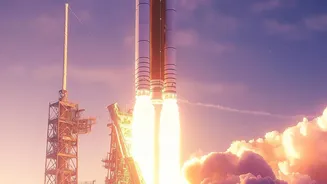
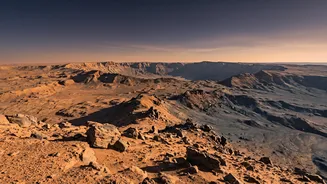
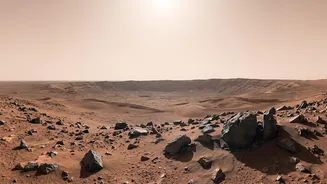
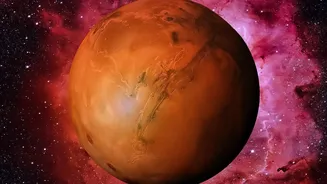
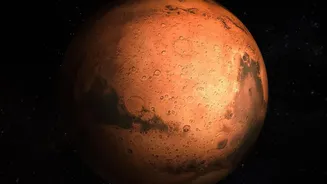
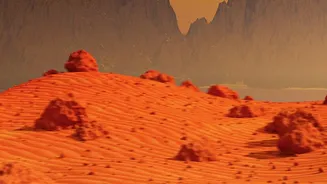
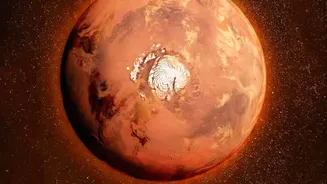
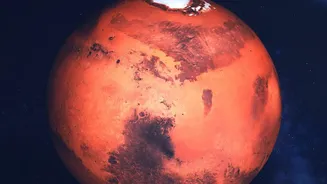
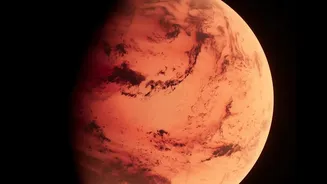
The 2033 launch target mentioned in the headlines is a familiar date, but it's often associated with a different, even more ambitious mission: Mars Sample Return (MSR). This multi-part, international campaign aims to do something never done before: launch samples collected by the Perseverance rover off the Martian surface and bring them back to Earth. However, the MSR mission has faced significant challenges, with independent reviews citing soaring costs, potentially up to $11 billion, and a timeline stretching to 2040. In response, NASA is re-evaluating the entire plan, seeking cheaper and faster architecture, with a return to Earth now hoped for in the mid-to-late 2030s. The original 2033 date for the samples' arrival on Earth is no longer considered firm, as the entire program is under intense review to reduce cost and complexity.
Big Missions, Big Hurdles
Both PRIMA and Mars Sample Return must pass a series of rigorous reviews before they can get a final green light for construction and launch. The headline mentions a 'Confirmation Review,' which is a key step in NASA's process. For a mission like PRIMA, it has already passed its initial concept stages and is now in Phase B, where preliminary designs are refined. Before it can move to final implementation (Phase C), it must pass a confirmation review that scrutinizes its technical readiness, schedule, and cost performance. This is a critical gatekeeper to ensure that the mission is feasible and fiscally responsible. The Mars Sample Return mission faces even greater hurdles, with NASA now actively soliciting entirely new, more affordable concepts from industry partners to get the mission back on track for a launch around 2030.
Why These Missions Matter
From probing the dawn of time with PRIMA to analyzing actual Martian rocks in labs on Earth, these missions represent two different but complementary approaches to exploration. PRIMA is a targeted, strategic mission filling a specific gap in our astronomical toolkit. MSR, on the other hand, is a monumental, decadal effort to answer fundamental questions about the potential for life on other worlds. While one looks outward across cosmic history, the other aims to bring a piece of another world home. Success in either endeavor will not only rewrite textbooks but also drive technological innovation and inspire the next generation of scientists and engineers. They remind us that for all the challenges, the quest to understand our place in the universe continues to be one of humanity's most powerful drivers.