






A New Voice in Mission Control
For the first time, NASA has integrated a dedicated Science Officer role into the front room of its Mission Control Center at the Johnson Space Center in Houston. This marks a significant evolution from the Apollo era, where geology experts advised from a 'back
room'. Now, science has a seat at the main table, with the authority to guide mission objectives in real-time. Exploration geologists Trevor Graff, Angela Garcia, and their colleague Kelsey Young have become the first to be certified for this pioneering role for the upcoming Artemis II mission. As senior flight controllers, they will be responsible for directing the crew's scientific activities, from geology observations to sample collection priorities, ensuring that science is woven into every moment of the mission. The Artemis program, designed to return astronauts to the lunar surface, is not just about planting a flag; it's about establishing a sustained presence and conducting groundbreaking research. This new role is the operational backbone of that scientific ambition.
Meet the Trailblazers
The individuals selected for this historic position are seasoned experts with a unique blend of scientific acumen and operational grit. Trevor Graff and Angela Garcia, both based at NASA's Johnson Space Center, are exploration geologists who have spent years preparing for this opportunity. Their work involves not just theoretical knowledge but extensive hands-on training in environments that mimic otherworldly terrains. They have led geology training for Artemis astronauts in locations like Iceland, teaching them how to identify valuable rock samples and make field observations just as a geologist would on Earth. Garcia has spoken about the importance of getting 'boots back on the Moon' to do transformational science. Graff, who also leads hardware and testing for the Artemis science team, has been instrumental in developing the modern tools astronauts will use to explore the lunar landscape. Their preparation has been a multi-year effort, combining rigorous flight controller certification with intensive geological fieldwork to bridge the gap between Mission Control and the lunar surface.
Training on Earth for the Moon
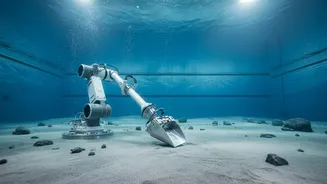
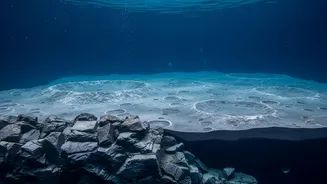
Becoming a Science Officer involves more than just classroom study. To prepare for the challenges of lunar exploration, Graff and Garcia have undergone some of the most unique training on the planet. Recently, they conducted a training exercise in NASA’s Neutral Buoyancy Laboratory (NBL), a massive indoor pool over 12 meters deep that simulates the reduced gravity of the Moon. Suited up in prototype spacesuits, they practiced maneuvering, using geological tools, and deploying mock payloads on a simulated lunar landscape, all while underwater. This marked the first time two geologists were suited up together for such a training run in the NBL. The exercise focused on working in low-light conditions, mimicking the harsh shadows of the Moon's South Pole, where future Artemis missions are slated to land. This immersive preparation ensures that when they guide astronauts from a console in Houston, their instructions are grounded in a practical understanding of the challenges the crew will face thousands of miles away.
More Than Just a Test Flight
The Artemis II mission is officially a test flight—its primary goal is to certify that the Space Launch System rocket and Orion spacecraft are ready for deep space human exploration. However, the introduction of the Science Officer role makes it much more. According to Graff, this mission is setting the foundation for all future science operations. It's a 'part one' that establishes science as a core component of the Artemis program from the very beginning. During the mission, Graff, Garcia, and Young will communicate directly with the astronauts, helping them scientifically describe what they are seeing and guiding them toward features of interest based on a pre-planned lunar targeting map. They will help the crew notice subtle but important details, like color variations in rocks that can reveal their chemical composition. By testing and refining these scientific workflows during Artemis II, NASA is ensuring that when astronauts finally land on the Moon again, the support structure is in place to maximize the scientific return on that historic achievement.