






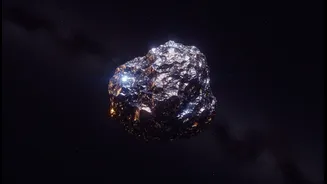


An Object of Interest
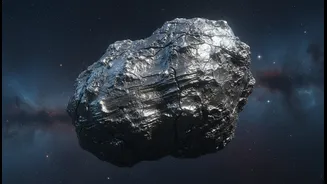
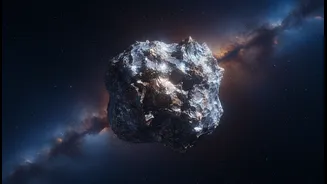
First spotted in 1998, the object now known as Comet P/1998 SH2 has been on astronomers' watchlists for years. Classified as a Near-Earth Object (NEO), its orbit brings it relatively close to our planet. For nearly three decades, it was cataloged as an Apollo-type
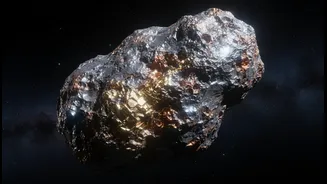
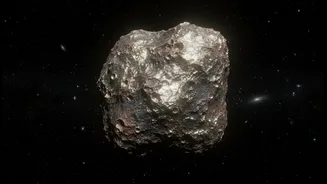
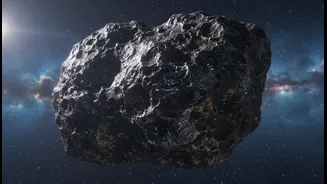
asteroid—a class of space rocks whose paths cross Earth's orbit. Measuring roughly 400 meters in diameter, it was considered a Potentially Hazardous Asteroid, meaning it warranted careful tracking, even though it posed no immediate impact risk. But during a close approach in August 2025, scientists at NASA's Deep Space Network got a surprise: 1998 SH2 wasn't where their calculations said it should be. This discrepancy was the first clue that something other than gravity was influencing its journey through space.
The Case of Mistaken Identity
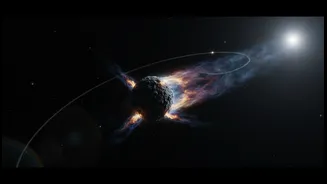
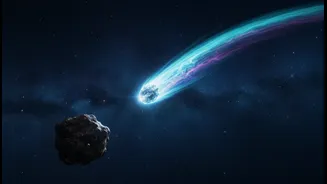
The line between an asteroid and a comet can sometimes be blurry, but the textbook distinction comes down to composition and behavior. Asteroids are primarily rock and metal, inert remnants from the early solar system, mostly found in the asteroid belt between Mars and Jupiter. Comets, on the other hand, are often called 'dirty snowballs'. They are mixtures of ice, rock, and dust that formed in the colder, outer regions of the solar system. As a comet approaches the Sun, its ices heat up and turn to gas in a process called sublimation. This activity creates a glowing atmosphere around it, known as a coma, and a spectacular tail of dust and gas that can stretch for millions of kilometers. For years, 1998 SH2 showed none of this classic cometary activity, which is why it was assumed to be a simple, rocky asteroid.
The Telltale Signs of a Comet
The mystery of 1998 SH2's wayward path led scientists at NASA's Jet Propulsion Laboratory to a compelling hypothesis. They suspected the object was engaging in faint outgassing, with jets of gas acting like tiny rocket thrusters that gently pushed it off its predicted course. This kind of 'nongravitational perturbation' is a key characteristic of a comet. To test this idea, they called on some of the world's most powerful observatories, including the European Southern Observatory's Very Large Telescope in Chile. The new, detailed images settled the debate: they revealed a weak but clear dust tail and a faint coma surrounding the object. The asteroid was officially unmasked. This was the first time an object's cometary nature was predicted from its orbital deviations before being visually confirmed.
Why This Reclassification Matters
Changing a space rock’s designation from 'asteroid' to 'comet' is more than just a matter of cosmic semantics; it has significant implications for planetary defense. The trajectories of asteroids are primarily dictated by gravity, making them highly predictable. Comets, however, are wild cards. Their outgassing makes their paths much harder to forecast with long-term accuracy. Discovering that an object we thought was a predictable asteroid is actually a less predictable comet changes our risk assessment. While comet impacts are far rarer than asteroid impacts, they can pose a greater threat due to their higher potential velocities and often larger sizes. This discovery helps scientists better identify other 'dark comets'—objects with very weak activity that might be hiding in plain sight among the known asteroid population.