

A Time Capsule from the Bronze Age
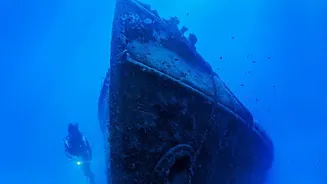
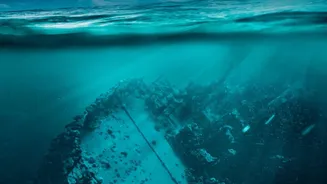
In October 2026, archaeologists announced a remarkable find: the scattered cargo of what may be the world's oldest known shipwreck. While the wooden hull of the 10-metre-long ship disintegrated centuries ago, eaten away by marine organisms, its payload
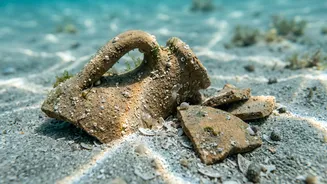
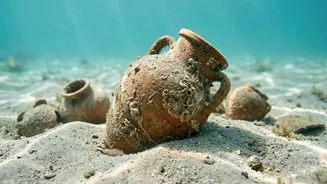
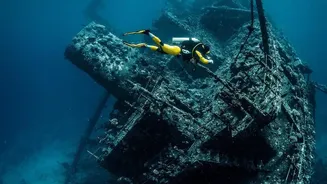
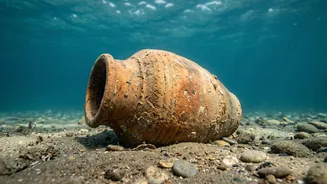
remained. Resting on the seabed about 30 metres deep were over 30 ceramic jars, known as amphorae, and three large stone anchors. Dated to the Early Bronze Age, between 4,400 and 4,700 years ago, the wreck is a contemporary of Egypt’s great pyramids. Led by Professor Hakan Öniz of Akdeniz University, the underwater excavation team is carefully studying these artifacts, which serve as a direct window into a distant past. The site was first noted in earlier surveys, but only now is its profound significance coming into focus.
The Story in the Jars
The true importance of the Kekova shipwreck lies in its cargo. These are not just ordinary pots. Clay analysis suggests the amphorae were likely produced in workshops in the Jordan Valley, part of the ancient Levant. This is a crucial clue, as similar vessels have been found at archaeological sites in Egypt, Crete, and even ancient Troy. The discovery physically links these powerful and distant Bronze Age centres, confirming they were part of a sophisticated trade network. Before this, evidence for such early and extensive maritime trade was scarce. The amphorae themselves were the shipping containers of their day, likely used to transport valuable commodities like olive oil or wine. Some of the jars still contain a glossy residue, which scientists are now analysing to confirm their contents.
An Ancient Superhighway Emerges
This discovery pushes back the timeline for organized maritime commerce in the Mediterranean. While famous later shipwrecks like the Uluburun, also found off Turkey, revealed a complex Late Bronze Age trade in metals and luxury goods, the Kekova wreck is centuries older. It provides rare physical proof that long-distance sea trade was happening much earlier than previously thought. Researchers believe the ship was sailing west from a port on the Levantine coast, with a possible destination of Troy or Minoan Crete, when it sank in the treacherous waters near Kekova. This single voyage illustrates a much larger story of connection, where goods, ideas, and cultures moved across the sea, laying the groundwork for the interconnected world that would follow.
Surprising Glimpses of Life at Sea
Beyond trade routes, the artifacts offer hints about the daily lives of ancient mariners. One particularly unusual amphora has captured researchers' attention. It features nine distinct markings and two holes in its body. Archaeologists have theorized that this vessel may have been a churn, used for making butter or cheese while at sea. This raises the fascinating possibility that sailors may have kept live goats aboard their ships on long voyages, providing a source of fresh milk. While just a theory, it challenges the assumption that crews relied solely on provisions packed before departure and paints a richer picture of life aboard a small Bronze Age trading vessel.