

The Ocean’s Hidden Roar
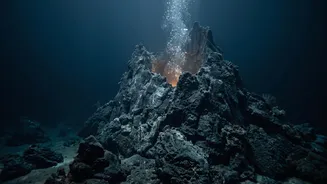
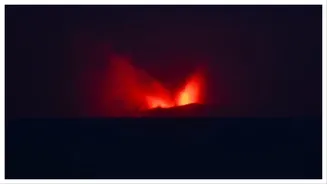
When the Hunga Tonga-Hunga Ha'apai volcano erupted in January 2022, it was one of the most powerful volcanic events in modern history. It sent atmospheric pressure waves circling the globe and triggered devastating tsunamis. In the aftermath, scientists
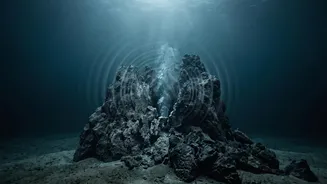
studying the event discovered something crucial: the volcano produced a powerful and distinct underwater acoustic signal, a T-wave, that travelled thousands of kilometres. This sound, generated by processes like the volcano's caldera collapsing, was not just noise; it was a clear signature of a tsunami-generating event. Researchers realized that an isolated volcano can act like a bell, radiating the sounds of violent underwater processes through the ocean with remarkable efficiency. This discovery has ignited a new field of inquiry, suggesting that listening to the ocean's hidden roar could be a revolutionary tool in natural disaster preparedness.
How We Listen for Tsunamis Today
Current tsunami warning systems are marvels of engineering, primarily relying on two methods. First, a global network of seismometers detects underwater earthquakes, the most common cause of tsunamis. However, seismometers don't directly measure tsunamis, making their warnings inferential. Second, the Deep-ocean Assessment and Reporting of Tsunamis (DART) system uses a network of buoys connected to bottom pressure recorders (BPRs) on the seafloor. When a tsunami wave passes over a BPR, it detects the change in water pressure and relays that data via the surface buoy and satellites to warning centers. While effective for earthquake-generated tsunamis, this system has limitations. Data transmission can have latency, and the system struggles to assess tsunamis from non-seismic sources like landslides and, critically, volcanic eruptions. The 2022 Tonga event exposed this gap, as the resulting tsunami behaved in ways that traditional models failed to predict.
A New Kind of Warning Bell
The great advantage of sound is speed. Sound travels through seawater at about 1.5 kilometers per second, which is more than seven times faster than a tsunami wave can travel across the open ocean. This creates a crucial time gap between hearing an event and feeling its impact. By using underwater microphones called hydrophones, scientists can detect the acoustic-gravity waves generated by an eruption or caldera collapse almost instantaneously. Researchers at institutions like Cardiff University are developing systems, such as the Global Real-time Early Assessment of Tsunamis (GREAT), that use this principle. These systems can analyze the acoustic data in seconds, classifying the event's characteristics and assessing the tsunami danger in real-time, potentially providing warnings minutes, or even hours, faster than current methods.
The Challenges of Eavesdropping on the Earth
Harnessing these volcanic sounds is not a simple task. The biggest challenge is the scarcity of monitoring equipment. The Comprehensive Nuclear-Test-Ban Treaty Organization (CTBTO) operates a global network of 11 hydrophone stations, but only a handful provide real-time data for tsunami warning research. Experts estimate that a truly global early warning system based on this technology would require about two dozen strategically placed hydrophone stations. Furthermore, scientists need to build a comprehensive library of acoustic signatures. An eruption that causes a massive caldera collapse and a dangerous tsunami might sound different from a smaller, less threatening event. Developing artificial intelligence and machine learning models that can instantly distinguish between these sounds is a critical next step. The goal is to make the system smart enough to issue reliable warnings without creating false alarms, which can erode public trust.