


A New Martian Weather Report
Scientists from India's prestigious Physical Research Laboratory (PRL) in Ahmedabad have unveiled a groundbreaking analysis of the Martian climate. Published in the journal Current Science, their work provides one of the most detailed pictures yet of how
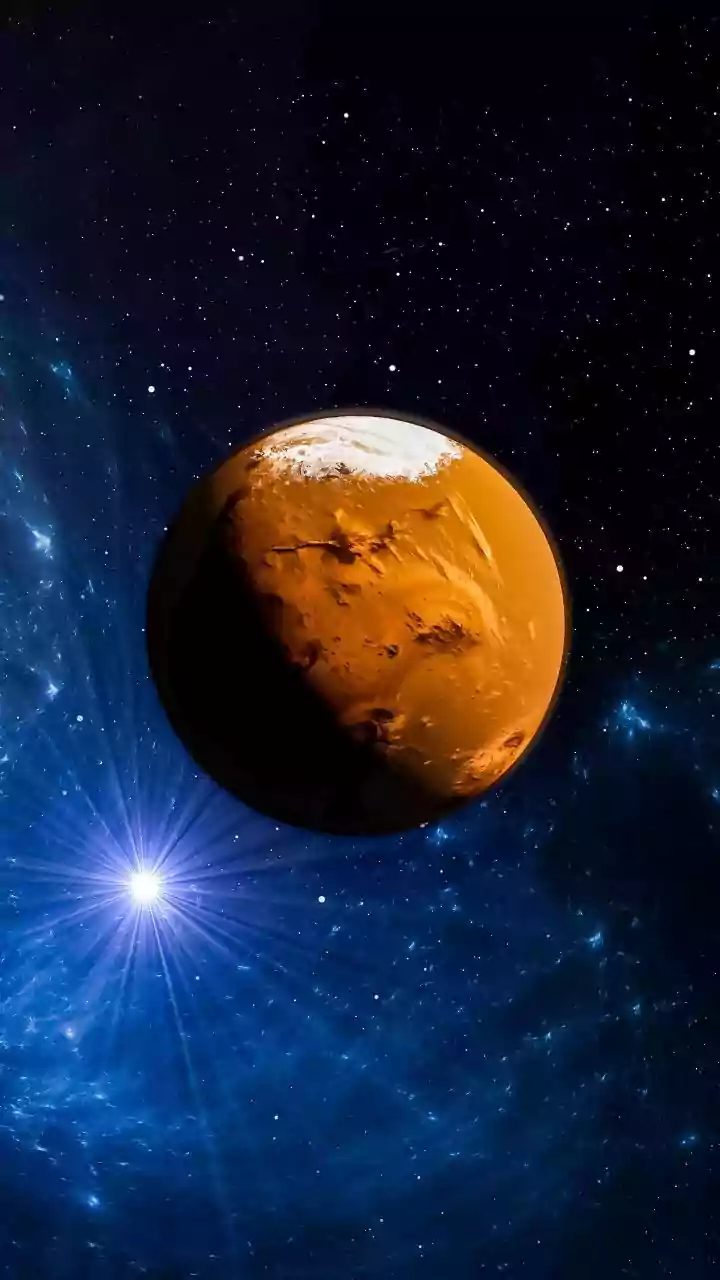
temperatures rise, fall, and ripple across the surface of the Red Planet. This isn't just a simple weather update; it's a fundamental piece of the puzzle in understanding Mars's atmospheric behaviour. By charting these thermal patterns, the researchers have shed new light on everything from the planet's thin atmosphere to the way its massive geological features influence its weather, offering crucial knowledge for the future of space exploration.
Decoding the Red Planet's Temperature Swings
The study confirms that Mars experiences extreme temperature fluctuations. The PRL scientists recorded surface temperatures ranging from a shockingly cold -123 degrees Celsius to a surprisingly mild 22 degrees Celsius. A key driver of this is Mars's thin atmosphere, which is unable to hold onto heat the way Earth's thicker blanket does. Another major factor is the planet's orbit. Mars follows a highly elliptical path around the Sun, and it reaches its closest point during the southern hemisphere's summer. This makes the southern summer significantly more intense, with temperatures in some areas roughly 25 Kelvin higher than during the same season in the northern hemisphere. This orbital quirk creates dramatic seasonal and latitudinal differences in heat that are unlike anything we see on Earth.
The Global Ripples of Martian Heat
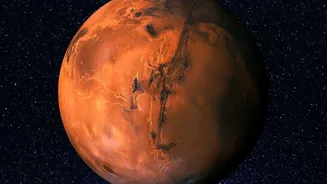
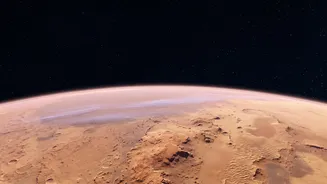
Perhaps most fascinating is the discovery of large-scale temperature patterns that move like waves around the planet. Known as zonal waves, these ripples in heat provide an indirect window into the complex circulation of Mars's atmosphere. The researchers observed that these waves are heavily influenced by the planet's topography. For example, they found starkly different wave patterns in two of Mars's largest impact basins, Hellas and Argyre. The immense depth and unique shapes of these basins appear to shape how thermal energy moves across the globe. This finding helps explain why Martian weather isn't uniform and how its ancient, battered landscape continues to play an active role in its climate today.
The Tools Behind the Discovery
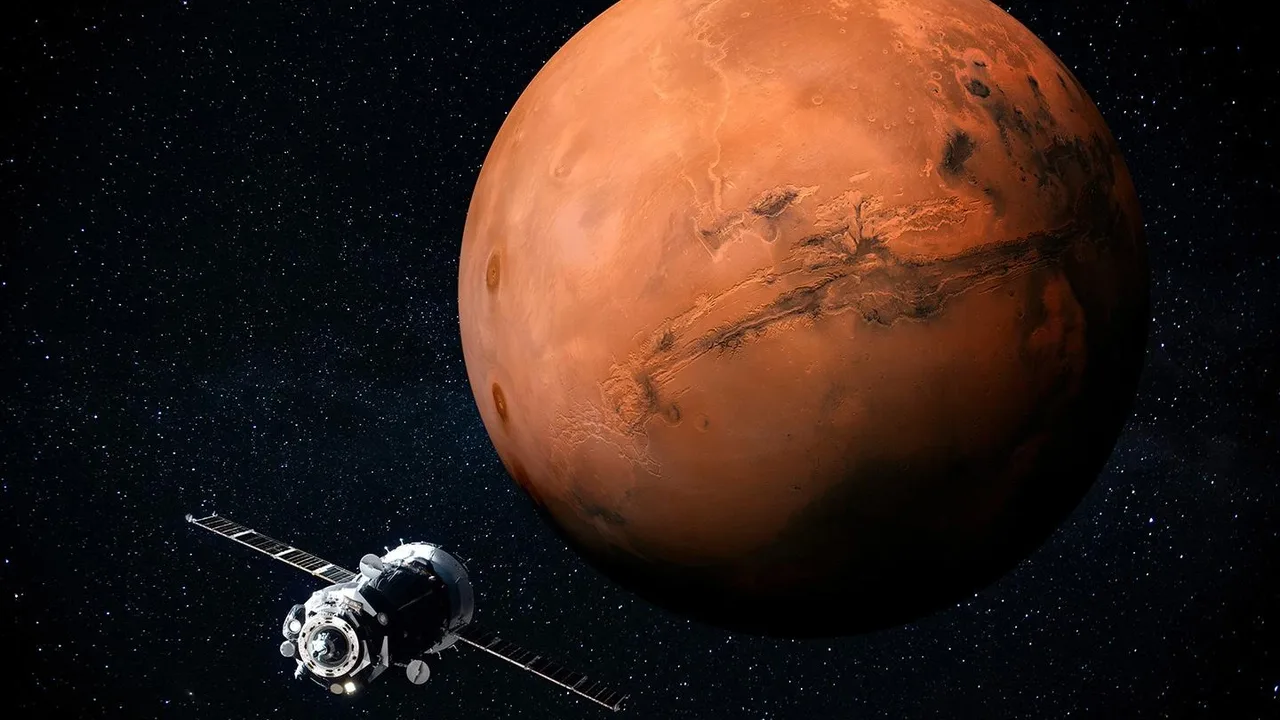
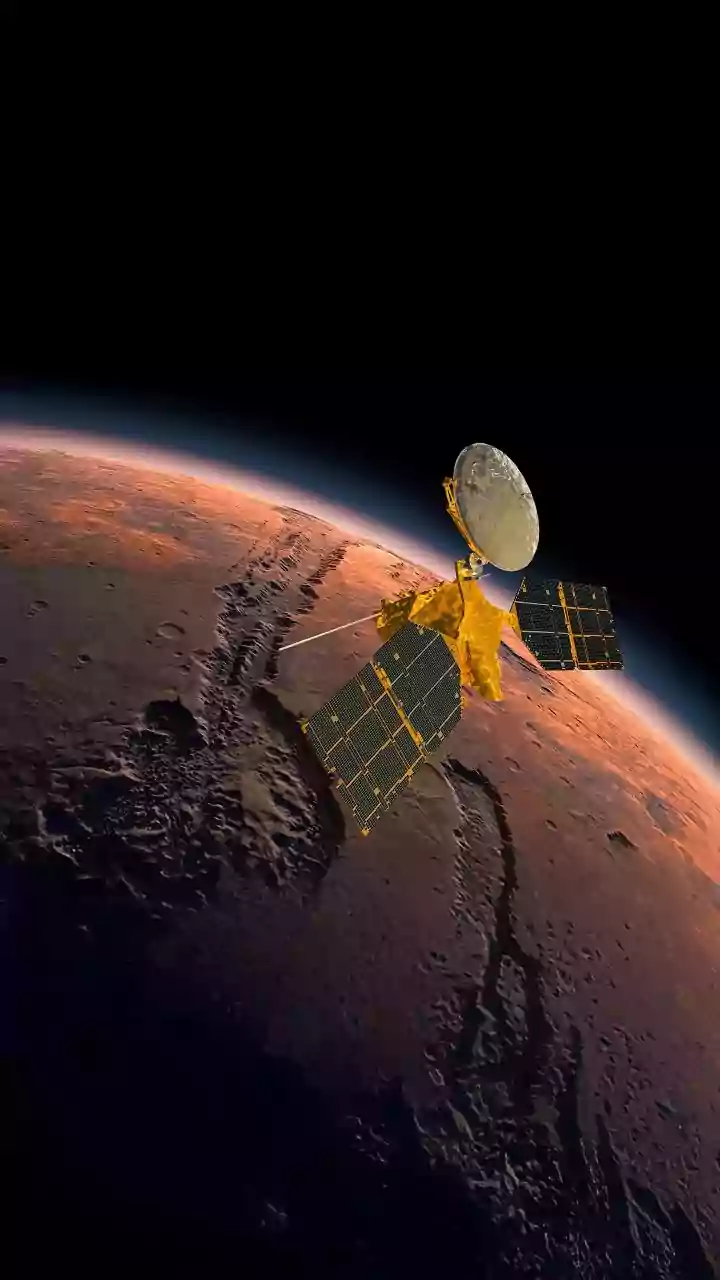
This advanced climate mapping was made possible through a spirit of global scientific collaboration. The Indian research team analysed a rich dataset from the Emirates Mars Infrared Spectrometer (EMIRS), an instrument aboard the United Arab Emirates' Hope spacecraft. By comparing these real-world observations with existing climate models, the scientists found that the models were often about 10 Kelvin too cool in their predictions. This discovery is vital, as it allows climate physicists to fine-tune their simulations, making future Martian weather forecasts more accurate. This refinement is critical for planning the next generation of robotic and, eventually, human missions to Mars.
India’s Enduring Legacy in Martian Science
This study builds upon India’s proud history of Mars exploration, which began with the groundbreaking Mars Orbiter Mission (MOM), also known as Mangalyaan. Launched by ISRO in 2013, Mangalyaan made India the first nation to succeed on its first attempt to reach Martian orbit and provided invaluable data for nearly eight years. Though the mission has concluded, this new research demonstrates that Indian scientists remain at the forefront of planetary science. By leveraging international datasets and applying their expertise, they continue to unlock the secrets of our celestial neighbour, cementing India's role as a key player in humanity's quest to understand the cosmos.