
The Anatomy of a Perfect Tuile
The name 'tuile' is French for 'tile', a nod to the curved terracotta tiles that line rooftops in Provence. These wafer-thin cookies get their delicate, snappy texture from a simple batter, traditionally made from egg whites, sugar, flour, and melted
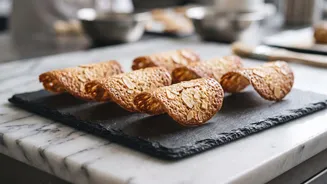
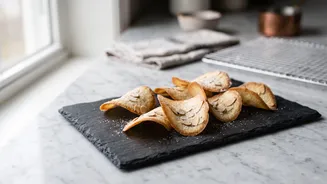
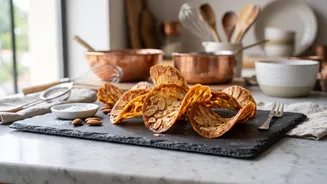
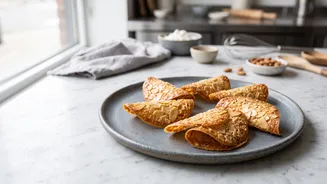
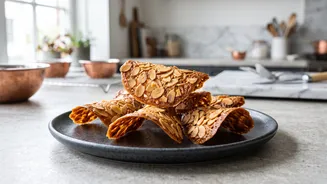
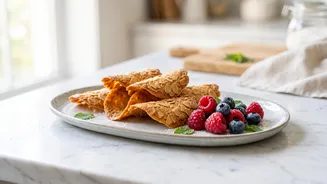
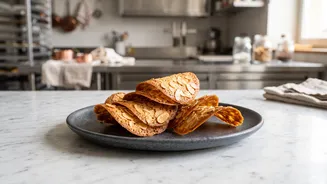
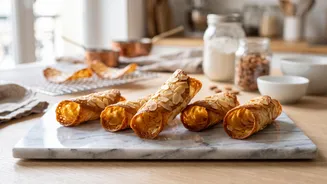
butter. Sliced almonds are the classic addition, providing flavour and a beautiful, lacy appearance. The magic of a tuile isn't just in its taste, but in its transformative properties. When fresh from the oven, the cookie is soft and pliable for a few precious seconds, allowing it to be shaped before it cools and hardens into its final, crispy form.
Mastering the Rolling-Pin Shape
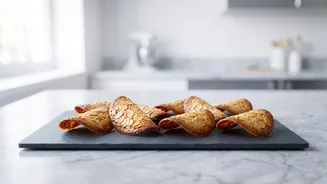
The rolling pin is your best friend for achieving that signature curve. The technique requires speed and a bit of practice, but is straightforward. Once you bake your thin, circular cookies until the edges are golden brown, you must work quickly. Using a thin metal spatula, lift each hot cookie off the baking sheet and immediately drape it over a rolling pin. You can gently press it to encourage the curve. The cookie will cool and harden in this position, locking in the shape. Many bakers work in small batches of just two to four cookies at a time to ensure they can shape them all before they become too brittle. If they harden too fast, you can return them to the oven for a minute to make them pliable again.
A Classic Foundation Recipe
Before you can experiment, you need a solid base. A reliable tuile batter is typically quite liquid. Start by whisking together egg whites and granulated sugar until foamy but not stiff. Sift in all-purpose flour and a pinch of salt, then stir in melted butter and a splash of vanilla or almond extract. Finally, gently fold in a generous amount of thinly sliced almonds. The batter should be spread very thinly onto a silicone mat or parchment-lined baking sheet in small circles. A common method is to use the back of a spoon to spread a small dollop of batter into a 3- to 4-inch round.
Building with Flavours and Spices
Once you're comfortable with the basic almond tuile, the rolling-pin technique becomes a canvas for countless variations. The batter is highly adaptable. For a citrusy note, add the finely grated zest of an orange or lemon to the batter. Warming spices like cinnamon, cardamom, or ground saffron can also be infused into the melted butter for a more complex aroma. For a richer flavour, a portion of the flour can be substituted with cocoa powder to create chocolate tuiles. You can also experiment with the nuts themselves, swapping almonds for shredded coconut or finely chopped pistachios.
Creative Shapes Beyond the Curve
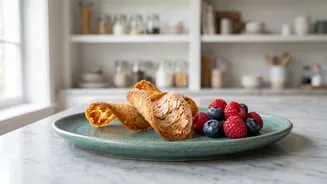
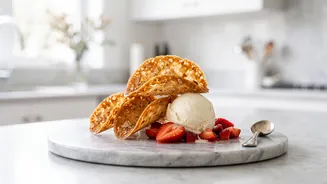
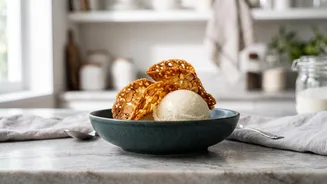
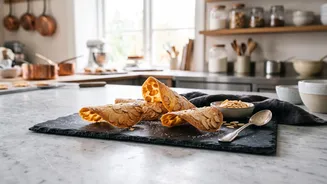
While the classic curve is elegant, your rolling pin—and other kitchen items—can help you create a variety of shapes. For a cigar or cannoli-like tube, roll a hot tuile tightly around the handle of a wooden spoon. These can be filled with whipped cream or mousse just before serving. To create small, edible bowls perfect for a scoop of ice cream or sorbet, drape the warm, flat cookies over the back of an inverted muffin tin or small ramekin. Gently press the cookie around the mold to form a cup shape, letting it cool completely before removing. This transforms the simple cookie into a functional and decorative dessert vessel.
Troubleshooting Common Tuile Troubles
Tuiles can be sensitive to their environment. If your finished cookies become soft or lose their crispness, humidity is likely the culprit. Always store them in a completely airtight container as soon as they are cool. If they do go soft, they can often be re-crisped with a few minutes in a warm oven. If your batter spreads too much in the oven or seems greasy, the butter ratio may be too high, or the batter may not have been chilled. Some recipes call for resting and chilling the batter for at least an hour to help it thicken and prevent excessive spreading.