


A Breakthrough Observation
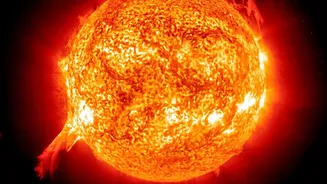
For the first time, scientists have successfully used two uniquely powerful space missions in tandem to track Coronal Mass Ejections, or CMEs, right from their violent origins. These events are colossal explosions of plasma and magnetic fields from the Sun's
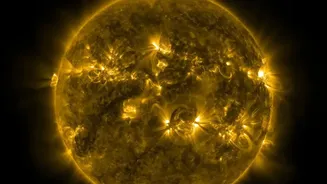
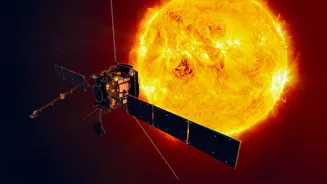
atmosphere. Researchers from the Indian Institute of Astrophysics (IIA) in Bengaluru combined data from India’s Aditya-L1 and the European Space Agency's (ESA) Proba-3 to analyse two separate CMEs in September 2025. The joint analysis allowed them to measure the mass, density, and energy of these eruptions in the Sun’s inner corona, a region notoriously difficult to observe. This coordinated effort provides a much deeper understanding of how these solar storms evolve than is possible with a single spacecraft.
Two Missions, One Unique View
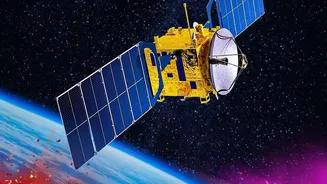
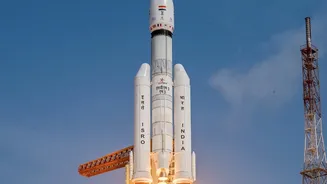
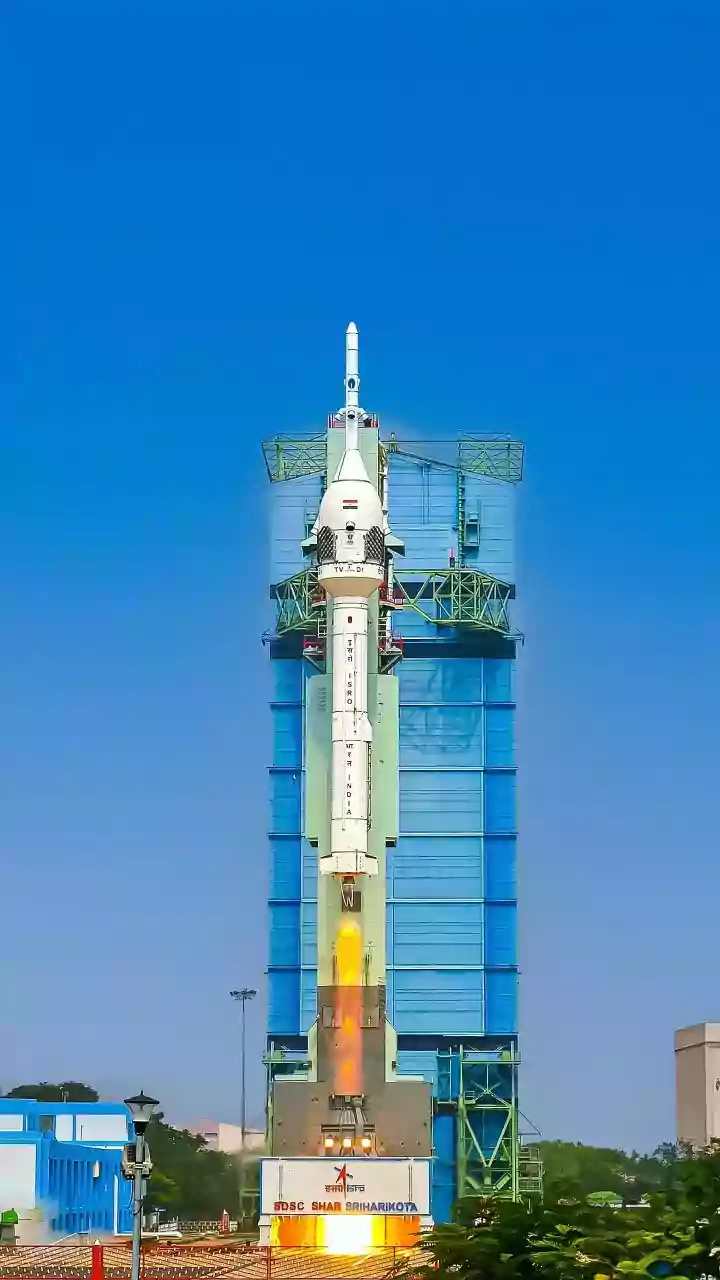
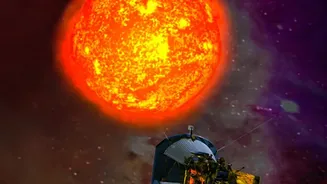
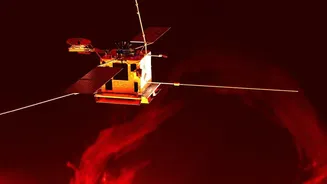
The success of this observation lies in the complementary capabilities of the two missions. India's Aditya-L1, stationed 1.5 million kilometres from Earth at Lagrange Point 1, has an uninterrupted view of the Sun. Its Visible Emission Line Coronagraph (VELC) instrument performs spectroscopy, analysing the light from the corona to determine properties like temperature and density. ESA’s Proba-3, which was notably launched by an ISRO PSLV rocket, is a groundbreaking mission in its own right. It uses two satellites flying in precise formation, just 150 metres apart, to create a sustained artificial solar eclipse. One satellite blocks the Sun's blinding glare, allowing the other to capture incredibly clear images of the faint, mysterious corona right down to the solar limb—a feat previously possible only during brief natural eclipses.
Why Seeing the Source Matters
Observing CMEs at their birthplace is crucial for understanding the fundamental physics that drive them and for improving our ability to predict 'space weather'. When directed at Earth, these eruptions can be highly disruptive. They can trigger powerful geomagnetic storms that threaten our modern infrastructure, potentially damaging power grids, disrupting satellite operations, and interfering with GPS and communication systems. Previously, coronagraphs struggled to track the early, faint stages of CMEs, leaving a gap in our knowledge about how their energy is distributed and how they accelerate. By combining Aditya-L1's spectroscopic data with Proba-3's sharp imaging, scientists can now build a more complete, cross-checked picture of a CME's initial evolution, giving us a vital head start in forecasting its potential impact.
A Landmark India-Europe Partnership
This joint observation is more than just a scientific first; it highlights a strengthening partnership between ISRO and ESA. The collaboration extends beyond just sharing data. ESA provided crucial ground station support for Aditya-L1's launch and mission operations, while ISRO successfully launched ESA's Proba-3 mission into orbit. This synergy, where one agency launches the other's satellite and they later combine the data, marks a new level of international cooperation in space science. It showcases how combining the strengths of different national space programmes can lead to scientific returns greater than the sum of their parts, paving the way for more ambitious joint projects in the future.
New Clues to Our Star's Mysteries
The initial findings from the September 2025 observations have already revealed fascinating details. The two CMEs studied had dramatically different speeds; one travelled at approximately 645 km per second, while the other moved at a much slower 145 km per second. Scientists also noted differences in how their density changed and how their energy was distributed between thermal (heat) and kinetic (motion) energy as they expanded. These variations offer crucial clues about the complex magnetic processes that trigger and power these eruptions. While the specific reasons for the speed difference are still under investigation, these detailed measurements from the Sun's inner corona are precisely the kind of data needed to refine our models of the Sun and ultimately solve these longstanding mysteries.