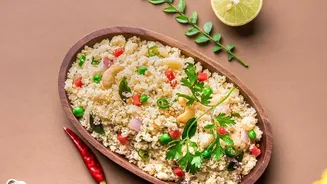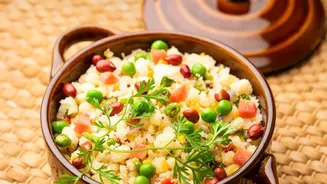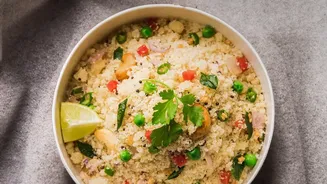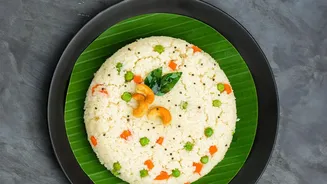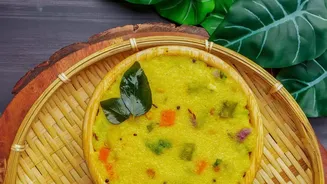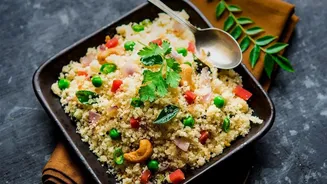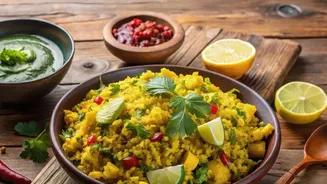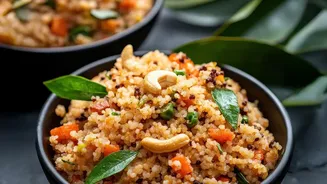




The Classic: Soft and Fluffy Rava Upma
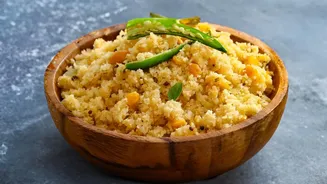
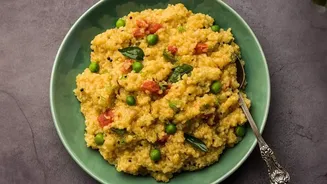
This is the version most people recognise, especially in South India. The key ingredient is fine semolina, known as rava or sooji. The secret to its texture lies in the preparation. The rava is typically dry-roasted until it releases a nutty aroma before
being cooked. This crucial step ensures that the final dish is light and fluffy, with each grain remaining separate rather than turning into a sticky paste. A classic tempering of mustard seeds, lentils, curry leaves, and ginger provides the foundational flavour, while a final touch of ghee gives it a rich finish and a melt-in-the-mouth quality. The result is a soft, porridge-like consistency that is both gentle and satisfying.
Karnataka’s Spicy Cousin: Khara Bath
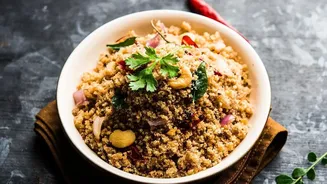
Travel to Karnataka, and you'll find that upma often goes by another name: Khara Bath. While structurally similar to rava upma, it is a distinctly spicier and more savoury version. Often featuring a reddish-yellow hue, Khara Bath gets its unique flavour profile from the addition of a masala powder, such as Vangi Bath powder or even sambar powder. It’s also frequently loaded with more vegetables like tomatoes, carrots, and beans, giving it a chunkier texture. Some preparations use a coarser variety of semolina called Bansi Rava, leading to a more granular, less gooey consistency than its Tamil Nadu counterpart. It is a breakfast staple, famously served with a scoop of sweet Kesari Bath in a combination plate known as 'Chow Chow Bath'.
Maharashtra’s Tangy Twist: Sanja
In Maharashtra, a popular variation is called Sanja. While it also uses roasted semolina as a base, what often sets it apart is the use of buttermilk (dahi or yogurt mixed with water) instead of just water for cooking. This imparts a subtle tangy flavour to the dish. Sanja shares the soft, porridge-like texture of classic upma, but the buttermilk can sometimes result in a slightly stickier, more cohesive consistency. Peanuts are a quintessential ingredient, adding a delightful crunch, and a hint of turmeric gives it a warm, yellow colour. It's a comforting and wholesome meal, often described as a melt-in-your-mouth breakfast treat.
The Noodle-like Form: Semiya Upma
Moving away from semolina grains, we find Semiya Upma, made from vermicelli noodles. This variation is popular across India for good reason—its texture is completely different. Instead of a soft porridge, you get distinct, noodle-like strands that are wonderfully non-sticky when cooked correctly. The vermicelli is often roasted to a golden brown before being cooked with the standard tempering of spices and vegetables. This version feels lighter than its rava counterpart, though that can be deceptive depending on preparation. Its appeal lies in how the individual strands hold their shape, offering a texture that is less of a cohesive mound and more like a savoury noodle dish.
The Grainy and Hearty: Arisi Upma
A treasured recipe in many Tamil households, Arisi Upma is made from coarsely ground raw rice, often mixed with a bit of toor dal (split pigeon peas). The rice and dal are ground to a rava-like consistency, sometimes along with pepper and cumin seeds. The resulting dish has a distinctly granular and hearty texture, far from the soft fluffiness of semolina upma. It's often described as having a 'crumbly' or 'grainy' feel, known as 'Udhur Udhur' in Tamil. Cooked with a simple tempering and often finished with grated coconut, this upma is savoury, comforting, and has a wonderful bite to it. The bottom layer can even be left to crisp up in the pan, creating a coveted crunchy part called 'kaandhal'.
The Light and Fluffy: Aval Upma
Also known as Poha Upma, this version uses flattened rice flakes (aval or poha) instead of semolina. The texture here is the star: light, fluffy, and soft. The key is to rinse the poha just enough to soften it without turning it to mush. The flakes absorb the flavours of the tempering beautifully while remaining distinct and separate. It’s a much quicker preparation as the flattened rice requires minimal cooking time. The final dish is not a porridge but a collection of soft, seasoned flakes, often with the added crunch of roasted peanuts, making for a delightful contrast in every bite.