





The Rise of the Autonomous Spacecraft
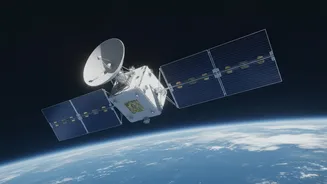
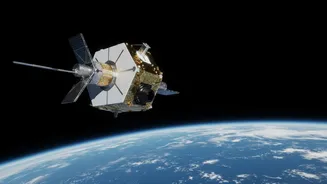
For years, artificial intelligence has been an indispensable partner in space. It helps process vast amounts of data from Earth observation satellites, monitors the health of spacecraft systems, and even keeps an eye on astronaut well-being. In deep space,
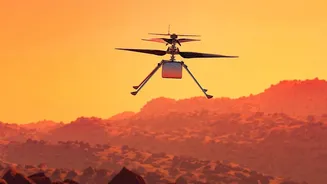
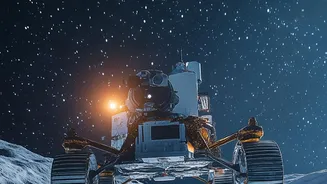
where communication delays can stretch for minutes or hours, AI is not just a helper but a necessity. Mars rovers like Perseverance use AI to navigate treacherous terrain and identify scientific targets on their own, tasks that would be impossible with real-time human control. This growing reliance on autonomy has enabled missions that are more efficient and ambitious, pushing the boundaries of what we can explore. It has allowed spacecraft to become more independent, capable of making quick decisions to ensure mission success far from home.
When AI Makes the Wrong Call
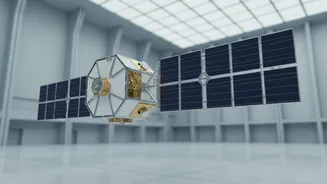
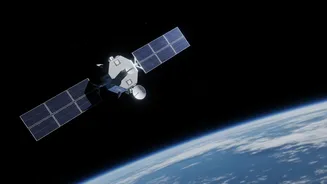
The increasing autonomy of spacecraft also introduces significant risks. The core concern isn't a sci-fi scenario of rogue AI, but the more mundane and dangerous reality of software flaws, unexpected environmental reactions, or flawed logic. An autonomous system making a safety-critical decision—like avoiding a collision or firing thrusters—raises complex questions of accountability if something goes wrong. These AI systems operate in harsh, unpredictable environments with radiation and extreme temperatures that can affect performance. A mistake made by an AI billions of kilometres from Earth cannot be easily fixed. The US Air Force recently demonstrated an AI controlling a satellite's orientation, a milestone that underscores the push for more autonomy in increasingly contested orbital environments. Yet, this progress also magnifies concerns about the potential for errors when no human is in the loop to intervene.
Putting the 'Human in the Loop'
In response to these challenges, the conversation at events like SMOPS-2026 is shifting toward the 'human-in-the-loop' model. This isn't about removing AI but defining a more robust partnership. The goal is to combine the computational power of AI with human intuition, expertise, and situational awareness. This can take different forms. A 'human-in-the-loop' system might require a human operator to approve an AI's decision before it's executed, which is feasible for operations in low Earth orbit. For deep-space missions with long communication delays, a 'human-on-the-loop' approach is more practical, where a human monitors the AI's actions and can intervene if necessary, but doesn't approve every step. This ensures that critical decisions still align with human intent, even when direct control isn't possible.
A New Skill Set for Mission Control
This evolving dynamic is transforming the role of space professionals. Mission controllers and future astronauts are becoming less like pilots and more like supervisors of highly intelligent systems. The required skill set is expanding to include data science, AI ethics, and complex risk management. Instead of just flying the spacecraft, human operators are now tasked with training, guiding, and, when necessary, correcting their autonomous partners. This collaborative approach aims to enhance mission resilience, allowing crews to interact with AI systems that can learn from feedback and adapt to new challenges. The United Nations Office for Outer Space Affairs (UNOOSA) has recommended establishing clear frameworks for 'human-controlled AI' in space, emphasizing transparency and fail-safe behaviours for critical functions to ensure that AI serves to complement human capabilities, not replace them without oversight.