







Beyond Human Scale
The core challenge of the modern age is not a lack of information, but an overabundance of it. Modern observatories, for instance, generate petabytes of data, while global business operations track countless variables in real time. Human analysts, despite
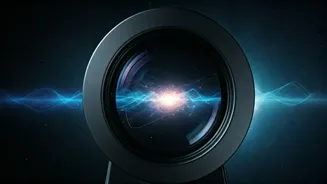
their expertise, have cognitive limits. We can only process so much information at once and are naturally prone to biases that can lead us to overlook the unexpected. Artificial intelligence, specifically machine learning, operates on a different scale. These systems are designed to sift through enormous and complex datasets, processing millions of data points and variables simultaneously without fatigue or preconceived notions. This allows them to function as a powerful magnifying glass, bringing focus to patterns that are too faint, too complex, or too widespread for a person to ever notice.
How AI Uncovers the Unseen
At its heart, AI achieves this by learning from data itself. Unlike traditional software that follows pre-programmed rules, machine learning algorithms are trained to identify statistical correlations, clusters, and irregularities directly from the information they are given. This can take several forms. Anomaly detection algorithms learn what 'normal' looks like within a system and flag any deviation, which is crucial for things like financial fraud detection. Pattern recognition models can identify recurring relationships between seemingly unrelated variables—like how weather patterns might influence the sale of specific products. These systems are not 'thinking' in a human sense; rather, they are performing a vast, multi-dimensional mathematical analysis to highlight statistical probabilities that human experts can then investigate further.
Breakthroughs in Medicine
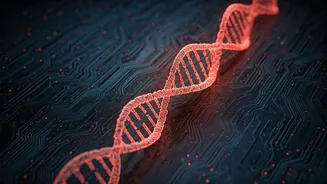
The medical field provides some of the most compelling examples of AI's analytical power. In radiology, AI models trained on millions of scans can detect signs of diseases like breast or prostate cancer with an accuracy that is comparable to, and sometimes better than, experienced radiologists. These algorithms can spot subtle textures or growths in MRIs or mammograms that might be missed by the human eye. Beyond imaging, AI is being used to predict patient risk. At Duke University, an AI system called SepsisWatch analyzes electronic health records in real-time to identify patients at risk of developing sepsis hours before clear symptoms appear, dramatically reducing mortality rates. Similarly, AI helps researchers sift through massive genomic datasets to find links to rare diseases, providing diagnoses for cases that had previously stumped doctors.
Unlocking Cosmic Secrets
Astronomy is another field being transformed by AI's ability to handle immense datasets. Modern telescopes scan the sky constantly, producing a torrent of images and signals that would be impossible for astronomers to review manually. AI has become an essential tool for discovery. Machine learning algorithms are now routinely used to scan this data to find the faint dip in a star's light that indicates a passing exoplanet. In other cases, AI helps distinguish real cosmic events, like an exploding star, from sensor noise or imaging artefacts with high accuracy. These systems can also identify unusual objects or phenomena that don't fit known categories, flagging them for human scientists to study. Essentially, AI acts as a tireless research assistant, ensuring that potential discoveries buried in the data are not overlooked.
A New Partner in Discovery
The rise of AI in data analysis is not about replacing human experts but augmenting their abilities. AI excels at the brute-force task of pattern detection at scale, freeing up human intellect for more strategic work: asking the right questions, interpreting the findings, and understanding the context. An AI might flag a correlation, but it's the human analyst who determines if it's a meaningful insight or a statistical fluke. This collaborative model is proving to be a powerful paradigm across science and industry. It allows researchers to move from being limited by what they can observe to being limited only by the sophistication of their questions and algorithms. This human-in-the-loop approach ensures that technology serves as a tool to enhance our own curiosity and judgment, not supplant it.