



The Grand Ambition: A New Economic Order
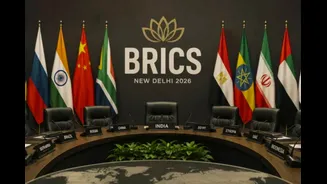
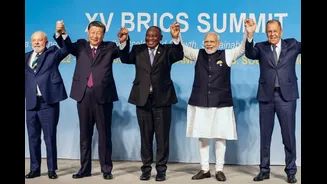
The BRICS bloc, comprising Brazil, Russia, India, China, and its newer members, represents a significant portion of the global economy—nearly 40% of global GDP in purchasing power parity terms and almost half the world's population. Its stated goal is to
create a more multipolar world, fostering economic cooperation and development outside of traditional Western-dominated institutions. A key part of this vision is to boost trade and investment among members and reduce dependence on the US dollar. Summits often feature bold announcements about deepening economic partnerships, creating resilient supply chains, and establishing alternative payment systems to challenge the existing financial architecture. This narrative has gained traction, especially as geopolitical tensions rise and developing nations seek more autonomy in their economic decisions.
Intra-BRICS Trade: A Reality Check
While intra-BRICS trade has grown impressively, rising more than thirteen-fold to over $1.17 trillion by 2024, the numbers require context. This internal trade still only accounts for about 5% of total world trade. The data reveals an imbalanced relationship. For most members, the bloc is more important as a source of imports than as a market for their exports. In fact, intra-BRICS exports make up just over 4% of world exports, suggesting that member countries still rely heavily on selling their goods to nations outside the bloc. There is also a significant lack of integration; unlike the EU, BRICS has no free trade agreement, and various trade barriers remain, hindering deeper economic cohesion.
The Elephant in the Room: China's Dominance
Any analysis of BRICS trade data highlights the overwhelming role of China. Beijing is the central driver of commerce within the group, accounting for the lion's share of both exports to and imports from other members. In 2025, China's exports to fellow BRICS nations stood at $550.8 billion, while its imports were $464.9 billion. This economic might makes China the indispensable partner but also creates significant imbalances. For India, this has led to a ballooning trade deficit with the bloc, which more than tripled between FY21 and FY26 to $226.1 billion. A staggering 84% of India's imports from BRICS partners come from just three countries: China, Russia, and the UAE, with China alone responsible for nearly half of India's total trade deficit with the bloc.
Investment and De-dollarisation: Promise vs. Progress
The New Development Bank (NDB), often called the 'BRICS Bank', is the group's most concrete achievement on the investment front. By early 2026, it had approved nearly $43 billion for projects in areas like clean energy and infrastructure. The NDB is also a key vehicle for the de-dollarisation agenda, aiming to provide 30% of its financing in local currencies by 2026. However, its overall impact remains limited compared to giants like the World Bank, and it still relies on Western capital markets and credit ratings to raise funds. Broader de-dollarisation efforts show a similar gap between ambition and reality. While bilateral agreements to trade in local currencies are increasing, the US dollar's global dominance remains unshaken. In early 2026, the dollar still accounted for over 57% of global foreign exchange reserves, and the Chinese yuan represented less than 3% of global SWIFT payment messages. Talk of a common BRICS currency remains premature, with several leaders acknowledging it is not a current goal.