






A Fever Spiking in Our Seas
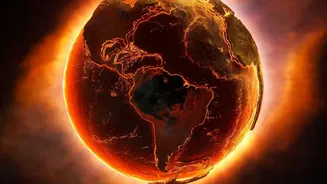
The world's oceans are absorbing over 90% of the excess heat from global warming, and the consequences are now impossible to ignore. In recent years, and particularly through 2026, global sea surface temperatures have repeatedly broken records. The Indian
Ocean, which is warming faster than any other tropical ocean, is a critical hotspot. Marine heatwaves—prolonged periods of abnormally high sea temperatures—have increased fourfold in the western Indian Ocean since the 1980s. These are not just abstract statistics; organisations like the Indian National Centre for Ocean Information Services (INCOIS) have issued alerts for waters from the Arabian Sea to the Bay of Bengal, warning that temperatures have crossed thresholds known to cause mass ecological disruption. This intense and persistent heat is the primary driver of the crisis unfolding beneath the waves.
The Foundation Crumbles
Every complex structure needs a solid foundation, and in the ocean, that foundation is plankton. These microscopic organisms—plant-like phytoplankton and animal-like zooplankton—are the base of the entire marine food web. They produce roughly half of Earth's oxygen and convert sunlight into the energy that sustains almost all sea life. But they are highly sensitive to temperature. Warmer water disrupts their growth and distribution. It can cause a decline in nutrient-rich plankton species, which are replaced by smaller, less energy-dense types. This change in the quality and quantity of the ocean's primary food source is the first domino to fall, initiating a chain reaction of hunger that ripples upwards.
A Chain Reaction Up the Food Web
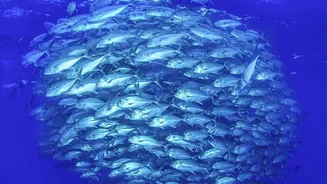
When the base of the food web is scrambled, every level above it feels the strain. Zooplankton, which feed on phytoplankton, struggle to find enough of the right kind of food. In turn, the small fish that feed on zooplankton, such as sardines and mackerel, are deeply affected. Warmer water increases their metabolism, meaning they need more food just to survive, at the exact time their food source is becoming less reliable. Faced with a food shortage and uncomfortable temperatures, these fish stocks are forced to migrate to deeper, cooler waters or further north along the coast. Research from the Central Marine Fisheries Research Institute (CMFRI) has already documented a prolonged decline and northward shift of the Indian oil sardine along the Kerala coast, directly linking it to rising sea temperatures. This forces larger predators—from tuna to dolphins—to follow their prey, or starve.
Coral Reefs: Underwater Cities Under Siege
Coral reefs are often called the 'cities of the sea' for the vibrant biodiversity they support. They act as critical nurseries for countless fish species. But they are exceptionally vulnerable to heat. An increase of just one degree Celsius can be enough to trigger mass coral bleaching. This happens when stressed corals expel the symbiotic algae living in their tissues, causing them to turn bone-white. While corals can recover from short-term bleaching, prolonged marine heatwaves lead to mass mortality. These events are becoming more frequent and severe across the globe, including in the Indian Ocean. A single marine heatwave in 2020 bleached an estimated 85% of corals in parts of the Gulf of Mannar. When reefs die, the entire ecosystem they support collapses, further devastating fish populations that rely on them for shelter and food.
The Human Cost Along India's Coasts
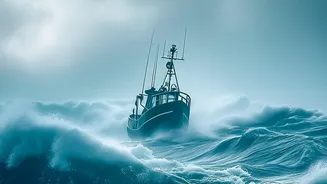
This cascading ecological crisis has a profound human dimension. The disruption of marine food webs directly threatens the food security and livelihoods of millions of people along India's vast coastline. Fishers in states like Kerala are already returning with dwindling nets, as once-abundant species like sardines become scarce. The decline in Kerala's sardine catch over the past decade has been steep—a fall of nearly 57% as sea temperatures regularly exceed the species' preferred range. This not only reduces income for small-scale fishers but also increases their costs and risks as they are forced to travel further out to sea in search of catch. For a nation where fish is a vital source of protein and the fisheries sector supports millions, the pressure on marine food webs is a direct threat to the well-being of its coastal communities.