





Understanding the Heritage Pipeline
Before a site can earn the prestigious title of a UNESCO World Heritage Site, it must first be placed on its country's 'Tentative List'. This list is essentially a national inventory of natural and cultural properties that are considered to have 'outstanding
universal value'. Managed in India by bodies like the Archaeological Survey of India (ASI), inclusion on this list is the crucial first step. It signals India's intent to prepare a detailed nomination dossier for future consideration by the World Heritage Committee, though it doesn't guarantee the final inscription.
The Fiery Nominees: Barren and Narcondam
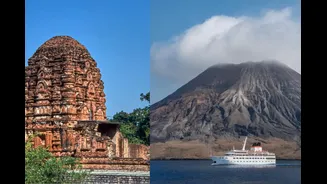
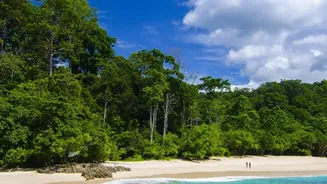
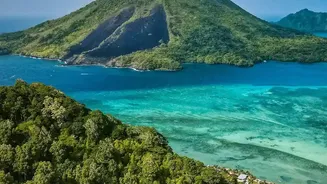
The new nomination, titled 'Andaman Subduction Volcanoes', specifically includes two islands: Barren Island and Narcondam Island. Barren Island, living up to its name with a stark, scorched landscape, is renowned as South Asia's only confirmed active volcano. Located about 138 km from Port Blair, it rises from the sea floor, a testament to the powerful geological forces at play. Its counterpart, Narcondam Island, is a dormant or extinct volcano. Its name is thought to derive from 'Naraka-Kundam', meaning 'a pit of hell', hinting at its volcanic origins. Unlike the active Barren Island, Narcondam is lush and known for its unique biodiversity.
The Science of Subduction
So, what makes these 'subduction volcanoes' special? They are formed by one of the planet's most powerful processes. The Andaman Islands lie on a tectonic suture zone where the massive Indian Plate is slowly sliding, or subducting, underneath the smaller Burma microplate. As the Indian Plate descends, intense heat and pressure cause rock to melt, forming magma. This molten rock then rises to the surface, creating the volcanic arc that includes Barren and Narcondam. This process makes them textbook examples of ongoing geological history, offering scientists a natural laboratory to study plate tectonics.
A Tale of Two Islands
While born from the same process, the two islands tell different stories. Barren Island is built on oceanic crust and its eruptions, recorded since 1787, feature basaltic lavas. Its landscape showcases repeated primary ecological succession, where life recolonises the land after each eruption. Narcondam, by contrast, sits on continental crust and its rocks are more varied, including dacite and andesite. Having been dormant for thousands of years, it has developed a stable, rich ecosystem. It is recognised as an Important Bird Area, most famously for being the only home of the endemic Narcondam hornbill.
The Path to Global Recognition
Having these volcanoes on the tentative list is just the beginning. The next stage involves preparing a comprehensive nomination dossier that justifies their 'outstanding universal value' based on specific UNESCO criteria. This dossier will be evaluated by the International Union for Conservation of Nature (IUCN), UNESCO's advisory body for natural sites. The nomination for the Andaman volcanoes argues that they meet criteria for containing superlative natural phenomena, representing major stages of Earth's history, and containing important natural habitats for biodiversity. If successful, they would join India's other esteemed World Heritage Sites.
A Diverse National Treasure Chest
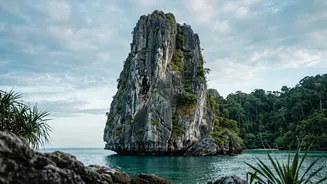
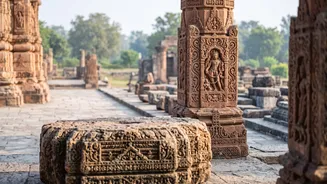
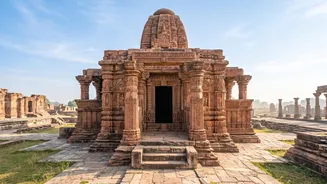
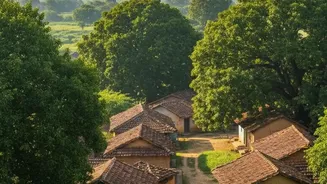
The Andaman volcanoes were not the only recent additions. At the same time, the 'Karst-Mud-Volcano Complex of Baratang', also in the Andamans, and the 'Sirpur Cultural and Archaeological Landscape' in Chhattisgarh were added to the tentative list. These sites highlight the sheer diversity of India's heritage, from unique geological formations to ancient urban settlements. India's tentative list contains dozens of other potential nominees, including the Group of Temples of the Chambal Valley and the Bagh Cave Paintings in Madhya Pradesh, each waiting for its chance at global acclaim.