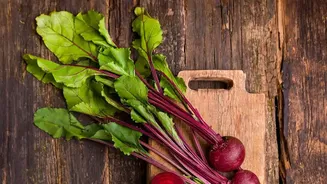






Looking to brighten up your vegetarian cooking without artificial dyes? Enter the humble beetroot. This root vegetable is nature’s secret weapon for adding spectacular, all-natural shades of pink and red to everyday meals and festive treats.
The Magic of Beetroot's Colour
The intense
ruby red of beetroot comes from pigments called betalains. Unlike the anthocyanin pigments found in most other red and purple plants, betalains are unique to beets and a few other species like amaranth and bougainvillea. These water-soluble compounds, particularly a type called betanin, are what make beetroot such a powerful natural food colouring. They provide a vibrant hue that can transform a simple dish into something visually stunning, all without the need for synthetic additives. Whether you're aiming for a pale pink or a deep crimson, beetroot offers a versatile and healthy way to paint with your food, making it a favourite in kitchens looking for natural alternatives.
Three Ways to Harness Beetroot's Hue
To start colouring your creations, you can use beetroot in three main forms: juice, purée, or powder. Juice, whether from a juicer or by straining puréed raw or cooked beets, is excellent for doughs, batters, and liquids where you want to add colour without much texture. Beetroot purée, made by blending cooked beets until smooth, is perfect for recipes where you also want to add moisture and body, like in dips, soups, or cake batters. Finally, beetroot powder, which can be made at home by dehydrating thin slices of beet and grinding them, is a concentrated option ideal for achieving a strong colour without adding extra liquid. This makes it perfect for colouring frosting, pasta dough, or spice blends.
Vibrant Breads and Grains
One of the easiest and most impressive ways to use beetroot is in doughs. Adding a few tablespoons of beetroot purée or juice to your atta can transform everyday rotis, parathas, or puris into beautiful pink flatbreads. This technique also works wonderfully for homemade pasta, colouring the dough a lovely shade of pink or deep red depending on the concentration. Beyond bread, you can stir beetroot purée or juice into rice dishes like pulao, giving the grains a festive and appealing tint that pairs well with mild spices and vegetables. The key is to substitute some of the water or liquid in the original recipe with the beet colouring to maintain the right consistency.
Colourful Dips, Raitas, and Curries
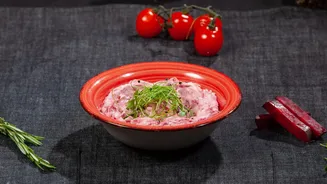
Beetroot can elevate simple side dishes from mundane to magnificent. Stir a spoonful of beetroot purée into plain hummus for a brilliantly coloured dip that will be the centrepiece of any snack platter. For a stunning beetroot raita, mix finely grated raw or boiled beetroot into chilled yogurt. A tadka of mustard seeds and curry leaves can add another layer of flavour. Even simple sabzis and curries can get a colour boost. While many Indian beetroot preparations like poriyal focus on the vegetable itself, the natural colour that leaches into the coconut or onion-based gravy is a bonus.
Sweet Treats in Natural Hues
Beetroot’s mild sweetness makes it a surprisingly effective ingredient in desserts. It can be used to create a natural red velvet cake, lending both colour and moisture to the crumb. Beetroot purée or juice can be whipped into frosting, creating a beautiful pink topping for cupcakes and cakes without any artificial dyes. The earthy flavour is often masked by other ingredients, especially chocolate or cocoa. In an Indian context, grated beetroot can be slow cooked with milk, sugar, and cardamom to make a delicious and visually striking beetroot halwa. The possibilities are vast, offering a healthier way to colour your favourite sweet dishes.
Mastering the Earthy Flavour
While the colour is the main attraction, beetroot has a distinct earthy flavour that some find overpowering. The key to balancing it is pairing it with the right ingredients. Acidic components like lemon juice, orange, or balsamic vinegar work wonders to brighten the flavour and cut through the earthiness. Herbs such as mint, dill, and parsley add a fresh lift. When it comes to spices, warming notes from ginger, cinnamon, and cumin complement beetroot well. For creamy dishes, dairy or plant based yogurts and tangy cheeses like feta or goat cheese create a delicious contrast in both texture and taste.