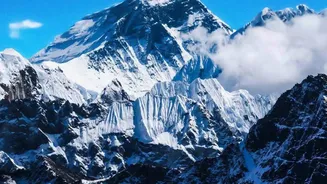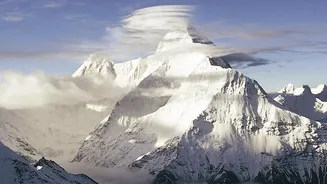





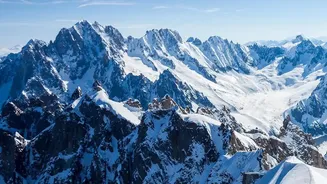
The height of Mont Blanc, Western Europe's iconic peak, is not as constant as you might think. Newly released figures show it has changed yet again, a variation that tells a fascinating and urgent story about the Alpine environment.
A Mountain on the Move
In a highly anticipated
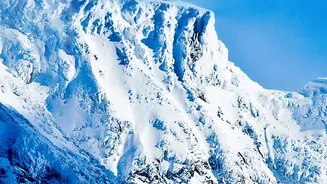
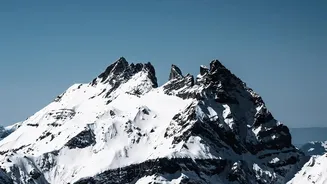
announcement, surveyors revealed that Mont Blanc's summit now stands at 4,807.47 metres. This is nearly two metres higher than the measurement taken in 2023, which was the lowest recorded in recent memory. This might sound like the mountain is growing, but the reality is more complex. The mountain's solid rock peak is stable at about 4,792 metres. The variation comes from the thick cap of ice and snow on its summit, which expands and contracts depending on snowfall, wind, and temperature. Since 2001, a team of expert surveyors has measured the peak every two years, creating a vital record of its fluctuations. The summit's height and even its exact location can shift, acting as a sensitive indicator of high-altitude weather patterns.
The Science of a Fluctuating Summit
So, what drives these changes? It's a delicate balance between accumulation and ablation. The height increases with heavy winter and spring snowfall, which adds mass to the ice cap. Conversely, a hot summer and high winds can cause more snow and ice to melt or be scoured away, reducing the height. While it's tempting to draw a direct line from a single year's measurement to long-term climate change, scientists are cautious. A single measurement is a snapshot, influenced by the specific weather of the preceding seasons. However, the long-term trend since a peak height of over 4,810 metres in 2007 shows a general decline. This data, gathered over decades, becomes crucial evidence for understanding broader climatic shifts.
An Open-Air Laboratory
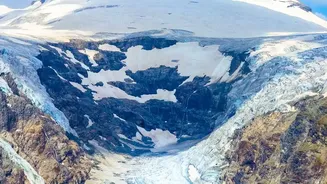
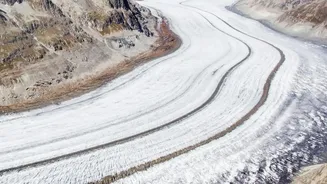
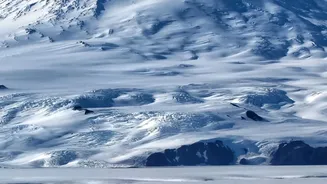
The Mont Blanc massif is considered a unique 'open-air laboratory' for studying climate change. Its immense altitudinal gradient, from temperate valleys to a polar-like summit, creates a diverse range of microclimates in a small area. Scientists can observe how different species and environments respond to changing conditions by simply moving up or down the mountain. The retreat of glaciers is one of the most visible consequences of a warming climate in the Alps. Since 1850, Alpine glaciers have lost about half their total volume. This isn't just an aesthetic loss; these glaciers are vital sources of fresh water for rivers across Europe, feeding agriculture and hydropower and providing drinking water for millions.
More Than Just Ice
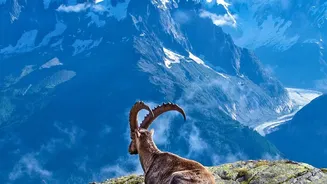
The impacts extend far beyond the ice itself. As glaciers retreat, the permafrost—permanently frozen ground that glues rock faces together—begins to thaw. In the Mont Blanc massif, this is causing significant instability, leading to an increase in dangerous rockfalls that threaten infrastructure and mountain communities. Furthermore, as lower elevations warm, the snow line creeps higher up the mountain. This shortens the snow-covered period, affecting everything from local ecosystems, where plants and animals rely on snow cover for insulation, to the multi-billion dollar ski tourism industry. Animal and plant species are being forced into a 'race to the summit' to find suitable cool habitats, but as they climb higher, the available surface area shrinks, squeezing them into an ever-smaller space.
A Bellwether for the Planet
The changes observed on Mont Blanc and across the Alps are a stark warning. Glaciers are often called 'ambassadors of climate change' because their retreat is a clear, undeniable visualisation of a warming world. The processes happening in Europe are a preview of what is unfolding in other major mountain ranges, from the Himalayas to the Andes. Studies predict that without significant global action to curb emissions, the majority of the Alps' glaciers could disappear by the end of the century. The fluctuating height of Mont Blanc, therefore, is more than a curiosity for mapmakers. It is a vital sign for the health of a critical European ecosystem and a powerful symbol of a planet in transition.