







Why Diversification is No Longer an Option, But a Necessity
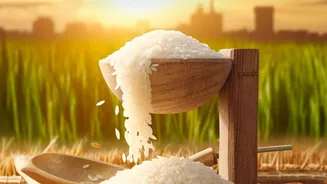
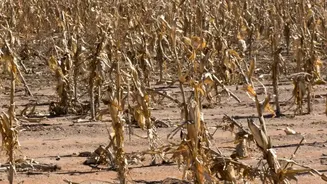
The engine of India's Green Revolution is running on empty. Punjab, the nation's breadbasket, is facing a severe ecological crisis. The primary culprit is the relentless cultivation of water-guzzling paddy (rice). Producing one kilogram of rice requires
an estimated 3,000 litres of water, a staggering amount for a state with a semi-arid climate. This has led to a drastic depletion of the groundwater table, with some regions seeing drops of over a metre annually and over 80% of the state classified as 'over-exploited'. Farmers are forced to drill deeper wells, increasing costs and hitting smallholders the hardest. Beyond water, the monoculture has degraded soil health and contributed to air pollution from stubble burning. This unsustainable model, propped up by assured government procurement (MSP) and power subsidies for rice and wheat, has left Punjab's agricultural future in a precarious position, making crop diversification an urgent priority.
The New Policy: Incentivising a Shift to Maize
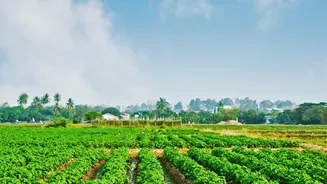
The Punjab government's main strategy to break the paddy-wheat cycle is to make alternative crops, especially maize, more attractive. A key initiative, expanded for the 2026-27 season, provides a financial incentive of ₹17,500 per hectare to farmers who switch from paddy to Kharif maize. Following a pilot project in six districts, the scheme now covers 16 districts, aiming to convert around 20,000 hectares. To ensure transparency, the entire process—from registration on a government portal to subsidy disbursal—is digitised. Farmers must provide proof of previous paddy cultivation (a J-form) and allow geo-tagging of their fields to qualify. The subsidy is released in instalments after crop verification, signalling a more hands-on approach from the government to ensure the policy's goals are met on the ground. The push for maize is also driven by rising national demand for ethanol production, creating a potential new market for farmers.
For Farmers: New Opportunities and Old Hurdles
For a farmer, switching crops is a significant risk. The new policies attempt to de-risk this transition. The financial incentive for maize helps cover initial costs, but the biggest challenge remains market certainty. While paddy and wheat have a well-oiled system of MSP and government procurement, the market for alternative crops like maize, pulses, and oilseeds is far less reliable. Farmers often struggle to get the declared MSP for these crops, with most produce being sold to private buyers at lower prices. Another challenge is the lack of infrastructure, such as adequate cold storage for perishable goods or dedicated procurement centres for new crops. Farmers are also hesitant due to practical issues like pest attacks on cotton or the lower yields of some alternative crops. While the government is promoting crops like soybeans and pulses which require less water and fertiliser, the absence of a robust procurement mechanism remains the single biggest barrier to widespread adoption.
For Policy Readers: A Test of Systemic Change
From a policy perspective, Punjab's diversification push is a crucial test case. It represents an attempt to dismantle the legacy of the Green Revolution, which, while ensuring food security, created deep-seated structural and environmental problems. The current policies signal a move from broad subsidies towards more targeted incentives. The key question for analysts is whether these incentives are enough to compete with the powerful draw of the MSP regime for paddy. Experts argue that for diversification to succeed, the incentives must be crop-neutral, meaning the profitability of growing maize or pulses should be comparable to that of paddy. This requires not just direct payments but also robust market intervention schemes and investment in agro-processing to create demand. The success or failure of these initiatives will depend on sustained political will and the government's ability to build a complete ecosystem—from seed to market—for alternative crops, rather than just offering a one-time subsidy.
The Road Ahead: Building Trust is Key
The path to a diversified agricultural landscape in Punjab is long and fraught with challenges. Decades of policies have hardwired the paddy-wheat system into the state's economy and the mindset of its farmers. Overcoming farmer skepticism is paramount. Many past schemes have failed to gain traction due to inconsistent implementation and a lack of market support. For the current policies to work, the government must ensure its promises of financial support and procurement are reliable. Building trust will require consistent, long-term support that goes beyond a single season. It involves creating awareness, providing technical assistance through bodies like the Punjab Agricultural University, and developing rural infrastructure. Ultimately, the shift depends on making diversification a genuinely profitable and secure livelihood for farmers, proving that a move away from paddy is not just an ecological necessity but a financially viable future.