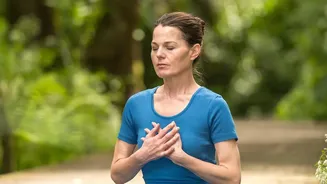








What Exactly Is Mindful Walking?
Mindful walking is the practice of bringing your full attention to the experience of walking. Unlike a regular walk where you might be listening to a podcast, talking on the phone, or lost in thought about your to-do list, this practice has no destination
in mind. The goal is not to get from point A to point B, but to be fully present with each step. It involves paying close attention to the physical sensations of your body in motion—the feeling of your feet on the ground, the rhythm of your breath, and the subtle shifts in your balance. It also means being aware of your surroundings—the sights, sounds, and smells—without judgment. It is a form of moving meditation that transforms a simple, everyday activity into an opportunity for focus and calm.
Why It's a Great Starting Point
For many people, the stillness of seated meditation can feel intimidating or even anxiety-inducing. Thoughts race, the body gets restless, and it can feel like you’re “failing” at being calm. Mindful walking bypasses this by introducing gentle movement. The physical act of walking provides a natural anchor for your attention. This makes it a more practical and approachable way to begin a mindfulness practice for those who find it hard to sit still. Moreover, it can be done anywhere—in a park, on a quiet street, in your own hallway, or even between meetings at the office. This flexibility removes the pressure of having to create a perfect, silent environment, making it easier to integrate into a busy life.
The Science-Backed Benefits
The benefits of mindful walking are not just anecdotal; they are supported by research. Studies have shown that both seated meditation and mindful walking can effectively reduce anxiety and improve cognitive function and mood. One study found that a 10-minute mindful walk was just as effective as a 10-minute seated meditation in reducing anxiety and improving feelings of well-being. The practice combines the known psychological benefits of mindfulness with the physical benefits of walking. This can lead to reduced blood pressure and heart rate, better sleep, and an overall greater sense of calm and well-being. It cultivates an alert awareness that can carry over into everyday activities, making them feel richer and more engaging.
How to Practice: A Simple Guide
Getting started is simple and requires no special equipment. Find a place where you can walk back and forth for about 10 to 15 paces, or simply walk around your neighborhood. Begin by standing still and taking a few deep breaths, noticing the feeling of your feet on the ground. Start walking at a pace that is slower than your usual stride. Bring your attention to the sensations in your feet. Notice the feeling of your heel touching the ground, the weight shifting across your foot, and your toes pushing off for the next step. Coordinate your breath with your steps if it helps, perhaps inhaling for three steps and exhaling for three. When your mind wanders—which it will—gently acknowledge the thought without judgment and guide your focus back to the sensation of walking. Try to engage your senses: notice the colors around you, the sounds you can hear, and the feeling of the air on your skin. Start with just five or ten minutes and gradually increase the duration as you feel comfortable.