



More Than a Fast
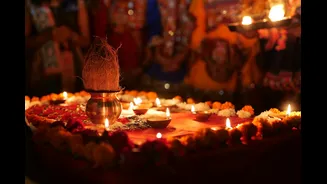
Karwa Chauth is a festival steeped in love, sacrifice, and the celebration of the marital bond, predominantly observed in Northern India. The name itself provides a clue to its rituals: 'Karwa' refers to the earthen pot used in prayers, and 'Chauth' means
the fourth day. It is celebrated on the fourth day of the waning moon in the Hindu month of Kartik. On this day, married women observe a strict, nirjala fast (without food or water) from sunrise until moonrise, praying for the long life and well-being of their husbands. While the fast is the central observance, the festival is woven together by a series of narratives that explain the 'why' behind each ritual, turning a day of austerity into a rich cultural expression.
The Legend of Queen Veeravati
The most widely told story associated with Karwa Chauth is that of Queen Veeravati. A beautiful queen and the only sister to seven loving brothers, Veeravati was observing her first Karwa Chauth at her parents' home. Unaccustomed to such a rigorous fast, she grew weak and faint by evening, desperate for the moon to rise. Unable to see their sister suffer, her brothers devised a plan to deceive her. They created an illusion of the moon by holding a mirror or a sieve with a lamp behind it through the leaves of a Pipal tree. Believing the moon had risen, Veeravati broke her fast. Immediately, she received news that her husband, the king, was dead.
A Queen's Devotion and Redemption
Heartbroken, Veeravati rushed toward her husband's kingdom. On the way, she encountered Lord Shiva and Goddess Parvati, who explained that her husband had died because she had broken her fast after seeing a false moon. The queen begged for forgiveness. Goddess Parvati, moved by her distress, granted her a boon: her husband would be revived, but she had to undertake the Karwa Chauth fast again, this time with absolute devotion and adherence to the rituals. In one version of the tale, her husband is revived but ill, with needles stuck in his body that she must remove one by one. Her unwavering faith eventually leads to his full recovery and the restoration of her status, cementing the narrative of devotion overcoming even death.
How the Story Shapes the Rituals
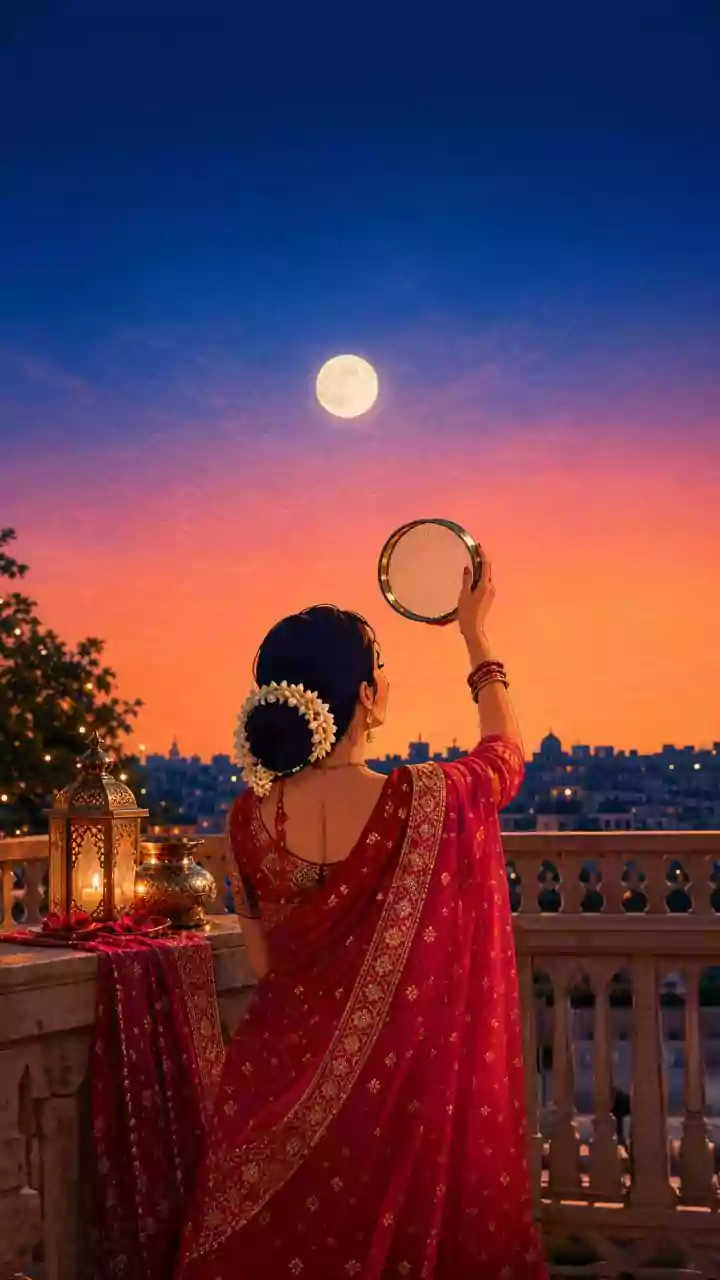
Veeravati's story is directly mirrored in the festival's key rituals. Her suffering explains the rigour of the nirjala fast. The brothers' deception is why it is considered critical to see the real moon before breaking the fast. Most visually, the use of the sieve, or 'chhalni', is tied to this tale. Women look at the moon through the sieve to ensure they are not being tricked by a false reflection, honouring Veeravati’s painful lesson. After viewing the moon, they turn to look at their husbands through the same sieve, a gesture symbolizing that their fast, their prayers, and their devotion are directed purely towards their partner. The sieve acts as a filter, symbolically removing negativity and obstacles from the marital bond.
Other Tales of Devotion
While Veeravati's katha is central, other legends also underscore the festival's themes. In the Mahabharata, Draupadi is advised by Lord Krishna to observe the Karwa Chauth fast to ensure the safety of Arjuna and the victory of the Pandavas. Another tale is of a devoted woman named Karva, whose fierce piety gave her the power to save her husband from a crocodile and command Yama, the god of death, to grant him a long life. These stories, recited during the evening puja, reinforce the belief in the protective power of a wife's devotion and love, connecting modern-day observers to a timeless spiritual tradition.