






A Stunning Rebound in Sales
Tesla announced it delivered 480,126 vehicles in the second quarter of 2026, marking a significant 25% increase from the same period a year ago. This figure comfortably beat Wall Street's consensus estimates, which hovered around 406,000 vehicles. The
result signals a potential turnaround after the company experienced two consecutive years of annual sales declines. Notably, Tesla sold about 28,000 more cars than it produced in the quarter, successfully reducing its inventory and demonstrating a healthy resurgence in demand. This performance was largely driven by a strong recovery in European markets and steady growth in China.
The Financial Cushion for the Future
While impressive, these record sales are more than just a win for Tesla's core automotive business. They serve as a vital financial 'cushion' that enables the company's far more ambitious, and expensive, long-term vision. CEO Elon Musk has been clear about pivoting Tesla from a car company to an AI and robotics powerhouse. This transformation requires immense capital. For 2026, Tesla has planned capital expenditures of over $25 billion, a massive increase from the previous year, to fund its advanced projects. The profits generated from selling hundreds of thousands of Model 3s and Model Ys are what make these futuristic investments possible.
Funding the Robot and Robotaxi Dream
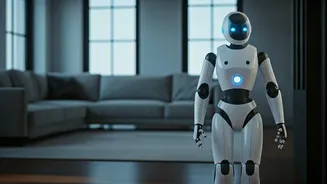
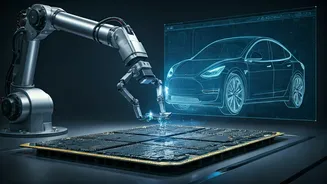
So where is all that money going? Two key areas are the Optimus humanoid robot and the autonomous robotaxi network. Progress on Optimus is accelerating, with Tesla converting the former Model S and X production line at its Fremont factory into a dedicated assembly line for the Gen 3 robot. While Musk has cautioned that initial production, expected to start this summer, will be slow, the long-term goal is mass manufacturing. Simultaneously, the company is expanding its robotaxi service, which launched in a limited capacity in Austin in June. The plan includes a purpose-built 'Cybercab' with no steering wheel, aiming to revolutionize ride-sharing. Both projects rely on the steady cash flow from vehicle sales to fund their development.
A Tale of Two Teslas
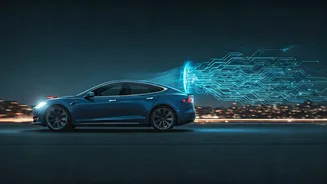
This creates a fascinating duality within the company. On one hand, there is the Tesla of today: a global manufacturer focused on production targets, supply chains, and vehicle deliveries. Its success is measured in quarterly reports and sales charts. On the other hand, there is the Tesla of tomorrow, valued by many investors not for the cars it sells but for its potential to dominate AI and autonomy. Analysts have noted that the company's narrative and sky-high valuation are increasingly centered around Full Self-Driving (FSD) capabilities, robotaxis, and Optimus. The strong delivery report helps validate both sides of the company; it proves the current business is robust while simultaneously securing the funding for its high-tech future.
The Market's Mixed Message
Interestingly, despite the blowout delivery numbers, Tesla's stock price fell sharply on the day of the announcement. Many analysts believe the positive news was already anticipated and 'priced in' by the market following a run-up in the share price leading to the report. This reaction underscores that for many investors, the focus has already shifted. While strong sales are essential, the market's long-term excitement is tied to upcoming catalysts like the next-generation Optimus reveal and concrete progress on the commercial robotaxi service. The delivery numbers were the expected good news; now, Wall Street is waiting for updates on the AI front.