







Welcome to Kulasekarapattinam
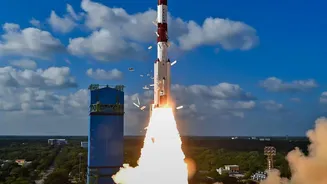
India's new spaceport is being constructed in Kulasekarapattinam, a coastal village in the Thoothukudi district of Tamil Nadu. Spanning over 2,200 acres, this facility is ISRO's first major launch complex outside of the Satish Dhawan Space Centre (SDSC)
in Sriharikota, Andhra Pradesh. The foundation stone for the project, estimated to cost around ₹986 crore, was laid in February 2024, and construction has been progressing rapidly, with a target completion date around the end of 2026. To mark the occasion, ISRO conducted the first-ever launch from the site—a Rohini RH-200 sounding rocket—on the same day the foundation was laid.
The Southern Advantage: A Straighter Path to Orbit
The choice of Kulasekarapattinam is a story of geography and physics. For decades, launches from Sriharikota heading south towards polar orbits had to perform a 'dogleg manoeuvre'—an eastward launch followed by a sharp turn south. This was necessary to avoid flying over Sri Lanka and dropping spent rocket stages on foreign territory. This manoeuvre consumes significant fuel, reducing the rocket's payload capacity. Kulasekarapattinam's location on India's southern tip solves this problem entirely. Rockets can launch directly southward over the Indian Ocean with no landmass in their flight path. This straight shot saves precious fuel, allowing rockets to carry heavier payloads, making launches more efficient and cost-effective.
Built for a New Generation of Rockets
This new spaceport is not designed to replace Sriharikota but to complement it. Its primary purpose is to serve the burgeoning small satellite market. The complex is specifically tailored for ISRO's Small Satellite Launch Vehicle (SSLV), a rocket designed for quick, on-demand launches of satellites weighing up to 500 kg. The 'dogleg' penalty from Sriharikota was particularly harsh on the SSLV, making it commercially challenging for polar missions. From Kulasekarapattinam, an SSLV can carry a useful payload of around 300 kg into a polar orbit, a capability that was practically zero from Sriharikota. This makes India a far more competitive player in the global small satellite launch industry.
A Hub for Private Enterprise
In a significant policy shift, the Kulasekarapattinam complex is set to become a hub for private space activities. The government, through its regulatory body IN-SPACe, has already invited private companies to bid for the complete operation and management of the new launch facility. This move signals a deliberate effort to create a vibrant ecosystem where private firms can not only build and launch their own rockets but also manage critical infrastructure. Companies like Skyroot Aerospace and Agnikul Cosmos, which are developing their own small launch vehicles, will be key users of the new spaceport, reducing pressure on ISRO's facilities and accelerating India's commercial space ambitions.
Economic and Strategic Boost
The impact of the new spaceport extends far beyond orbital mechanics. The project is expected to transform the economy of the Thoothukudi region, with the Tamil Nadu government planning a large Space Industrial and Propellants Park to attract ancillary industries. The closer proximity to ISRO's Propulsion Research Complex at Mahendragiri—just 88 km away compared to 780 km from Sriharikota—will drastically cut logistics costs and time. By decongesting Sriharikota to focus on larger missions like the PSLV, GSLV, and Gaganyaan human spaceflight program, Kulasekarapattinam allows India to increase its overall launch frequency, aiming for 20-25 small satellite launches per year from the new site alone.