





In the quest for peak fitness, two classic exercises often go head-to-head: jump rope and running. But beyond just burning calories, how do they stack up for improving coordination and what does their intensity really mean for your body?
The Coordination Question
Coordination is
the secret sauce of athleticism, enabling your body to perform smooth, efficient movements. Jump rope is a masterclass in this area. It demands a constant, rhythmic connection between your eyes, hands, and feet. The act of timing your jumps with the rotation of the rope develops balance, agility, and quick reflexes. This mind-body synchronisation is why boxers and other elite athletes rely on it for sharp footwork and control. Running also requires coordination, but in a different way. It's a more natural, forward-moving pattern. However, running on uneven trails or varying your pace challenges your body to adapt and maintain stability, enhancing a different type of functional coordination. But for pure, repetitive neuromuscular training that forces the upper and lower body to work in perfect sync, jump rope often has the edge.
Putting Intensity Into Context
Exercise intensity isn't just about how tired you feel; it's a measure of energy expenditure. Scientists use a value called Metabolic Equivalent of Task (MET) to compare activities. At a fast pace (120-160 skips per minute), jumping rope registers a massive 12.3 METs. A moderate pace is still a high 11.8 METs. For comparison, running an 8-minute mile is also around 11.8 METs. This means that, minute for minute at a high intensity, the two activities are remarkably similar in their cardiovascular demands. The key takeaway is that intensity is variable. A slow jog is less intense than vigorous rope skipping, and vice-versa. The choice isn't about one being definitively 'harder', but about which one allows you to control and sustain your desired intensity level for the duration of your workout.
Calorie Burn and Cardio Health
When it comes to burning calories, intensity is king. Because both activities can be performed at a high MET value, they are both exceptional calorie-burners. Some data suggests that at a vigorous pace, jump rope may burn slightly more calories per minute than running. For example, a 70 kg person could burn over 400 calories in 30 minutes of fast rope skipping, a figure that rivals a fast-paced run. However, the real question is sustainability. Many people find it easier to run for 30 minutes straight than to jump rope for that long, especially as beginners. Ultimately, both exercises are fantastic for cardiovascular health, strengthening the heart and improving circulation. One study even found that 10 minutes of jumping rope was as effective for cardiovascular improvement as 30 minutes of jogging.
Impact, Cost and Accessibility
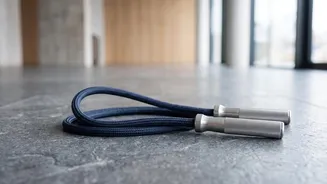
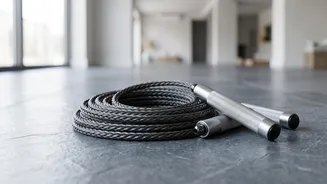
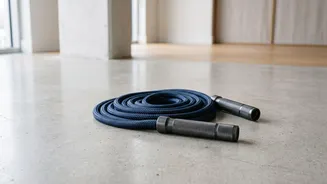
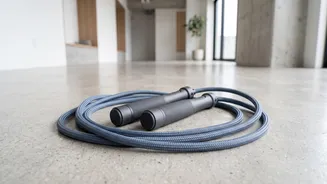
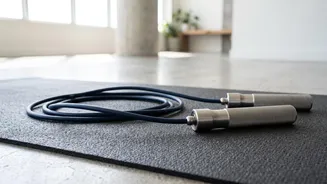
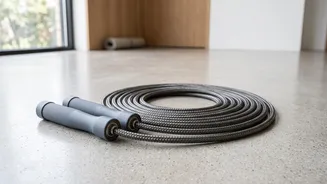
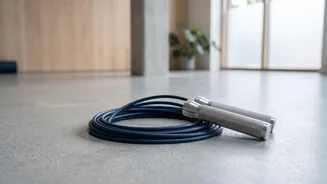
A common concern with running is the high impact on joints, particularly the knees. While jumping rope is also a high impact activity, proper form can actually make it lower impact than running. Correct technique involves small bounces on the balls of your feet, with knees slightly bent, allowing your leg muscles to act as shock absorbers. In terms of accessibility, both score high marks. Running requires only a good pair of shoes, while jump rope needs just a rope and a small patch of space. This makes both exercises affordable and convenient. You can run almost anywhere, enjoying a change of scenery, while a jump rope is ultra portable, perfect for home workouts or travel. Weighted ropes can also be used to increase the workout's intensity and engage the upper body more.
Making the Right Choice for You
So, which one wins? The truth is, there's no single winner. The better choice depends entirely on your personal fitness goals. If your primary goal is to enhance agility, footwork, and mind body coordination in a time efficient, high intensity workout, jump rope is a powerful tool. If your goal is to build long distance endurance, enjoy the outdoors, or compete in races, then running is the irreplaceable choice. But you don't have to choose. The two activities complement each other perfectly. Runners can use jump rope as a cross training tool to improve foot speed and coordination while giving their joints a different kind of stress. Conversely, the endurance built from running can help you sustain longer, more intense jump rope sessions.