



The Spiritual Heart of a Nation
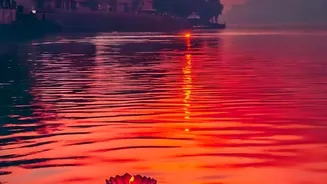
For millions of Hindus, the city of Varanasi, also known as Kashi, is the spiritual capital of India. It’s a place where the veil between the earthly and the divine feels exceptionally thin. Central to this belief is the Ganga, or Ganges River, considered
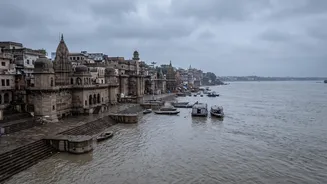
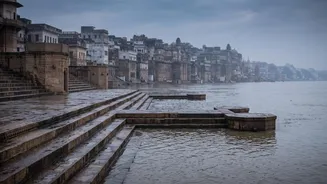
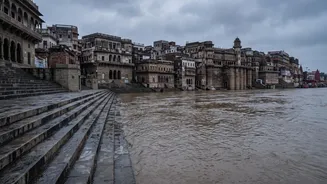
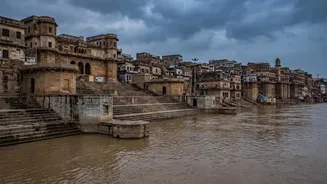
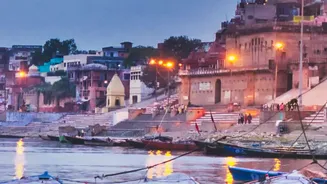
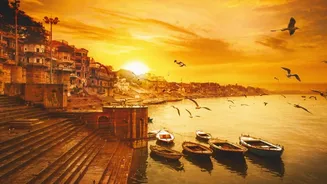
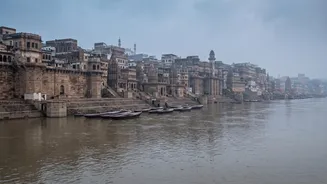
a living goddess. The city's 84 ghats are the heart of this connection. These long flights of stone steps lead down to the water’s edge, serving as temples, markets, laundry mats, and public squares. Pilgrims come from across the globe to bathe in the river’s holy water, believing it washes away sin. Two of these ghats, Manikarnika and Harishchandra, are dedicated to cremation. It is the ultimate wish for many devout Hindus to be cremated here, as it is believed to grant ‘moksha,’ or liberation from the cycle of rebirth. Day and night, funeral pyres burn, a constant, smoky reminder of the city's role as a gateway to the afterlife.
A River Swollen by Monsoon Rains
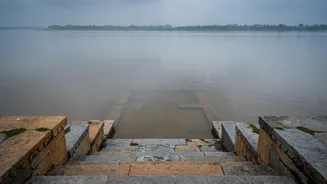
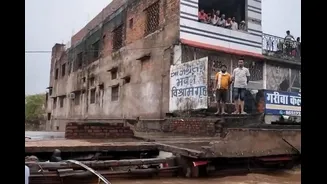
The annual monsoon is a lifeline for India, but it often brings destruction. In recent days, relentless rains have caused the Ganga to swell dramatically. According to the Central Water Commission, the river's level in Varanasi officially crossed the designated warning mark of 70.26 meters on Thursday morning, reaching 70.54 meters and continuing to rise at a rate of 2 centimeters per hour. While still below the official danger level of 71.262 meters, the rising waters have already had a dramatic impact on the city's riverfront. The lower tiers of most ghats have been completely submerged, with only the tops of some smaller riverside temples remaining visible above the floodwaters. In response, authorities have suspended all boat operations and deployed police to prevent people from approaching the dangerous currents.
Life, Death, and Livelihoods Disrupted
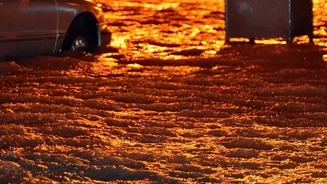
The flooding has thrown the city’s timeless routines into disarray. The famous evening Ganga Aarti ceremony at Dashashwamedh Ghat, a mesmerizing spectacle of fire and faith, has been forced to move to higher ground. For the thousands of boatmen, vendors, and priests whose livelihoods depend on the river and the pilgrims it attracts, the grounded boats and empty ghats mean a total loss of income. The most profound disruption is to the rites of death. With the main cremation areas at Manikarnika and Harishchandra Ghats inundated, funeral ceremonies have been forced onto the rooftops of adjacent buildings and into crowded, narrow alleyways. Families are now facing long waits of three to four hours as the space for pyres has been drastically reduced. Mourners must navigate knee-deep water and sludge to perform the last rites for their loved ones, a logistical and emotional ordeal layered on top of their grief.
An Escalating Challenge
While seasonal flooding is a known phenomenon in Varanasi, the situation has prompted a high-level response. Prime Minister Narendra Modi, who represents Varanasi in India's parliament, has been in contact with local officials to review the situation and has ordered relief operations to be carried out on a "war footing". Relief camps have been established to house hundreds of displaced families from low-lying areas, and disaster response teams are on high alert. With the India Meteorological Department forecasting more heavy rainfall in the region, authorities are preparing for the possibility that the Ganga could approach its danger mark. The recurring crisis highlights the increasing vulnerability of this ancient city, raising urgent questions about how to protect its priceless cultural heritage and the lives of its residents in the face of more extreme weather patterns.