





The Age of Automotive Clones
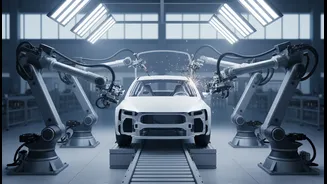
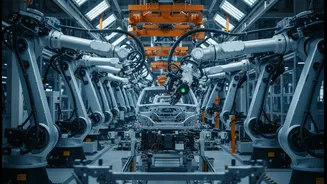
For decades, major automotive groups have practised what is known as 'badge engineering'. In simple terms, this involves taking one car platform—the chassis, engine, and basic structure—and creating multiple, slightly different versions to be sold under
various brand names. A Peugeot might share its bones with a Citroën or an Opel, with only the badges, lights, and front grille to tell them apart. This strategy was born from a desire for efficiency. Building one platform and stretching it across several brands saved billions in research and development, allowing companies to flood the market with options and chase sales volume. It was a factory-first approach: maximise production, cover every possible market segment, and hope the customer doesn't notice or care that their premium SUV is a close cousin to a more mainstream model.
A New Blueprint For 14 Brands
Stellantis, the parent company of a sprawling portfolio that includes Jeep, Citroën, Fiat, and Peugeot, is hitting the reset button. Under a new strategic plan dubbed 'FaSTLAne 2030', the company is moving to end the internal competition and customer confusion caused by its overlapping models. The new strategy creates a clear hierarchy. Four 'global' brands—Jeep, Ram, Peugeot, and Fiat—will receive the lion's share of investment, about 70 percent of the total budget. These brands are seen as having the greatest potential for worldwide sales and profitability. The rest of the portfolio, which includes brands like Citroën, Chrysler, and Alfa Romeo, will be repositioned as 'regional' or 'specialty' players. They will focus on their strongest markets and benefit from platforms and technologies developed by the core four, but with a mandate to create more distinct products. The company has promised to keep all 14 brands, but their roles will now be sharply defined.
From Confusion to Clarity
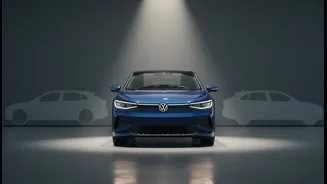
The problem with having too many similar cars is that brands lose their identity. When a customer can’t easily tell the difference between a Citroën and a Peugeot, both brands suffer. This brand dilution was a key issue for Stellantis, a conglomerate formed by the merger of PSA Group and Fiat Chrysler Automobiles. The old strategy, focused on profits over volumes, led to some brands feeling neglected while others stepped on each other's toes. The new CEO, Antonio Filosa, is shifting course to fix this. The goal is to give car buyers a clear reason to choose one brand over another. Instead of offering ten variations of the same idea, Stellantis wants each brand to stand for something unique—Jeep for adventure, Fiat for chic urban mobility, and so on. This pivot is also a defense against rising competition, forcing the company to build stronger, more desirable brands rather than just more cars.
What This Means For India
For Indian consumers, this global reset will be most visible through the two Stellantis brands operating here: Jeep and Citroën. The new strategy reinforces their separate missions. Jeep will continue to be positioned as a premium, aspirational SUV brand, focused on rugged capability and a 'luxurization' of its image. Citroën, on the other hand, will solidify its place in the heart of the market, focusing on affordable, practical, and feature-rich compact vehicles like the C3 and C3 Aircross. While future models will still share underlying multi-energy platforms to keep costs competitive, the differentiation in design, features, and target audience will become much sharper. India is also a critical engineering and software development hub for Stellantis, meaning the country will play a key role in developing the technology that powers this new generation of distinct vehicles. The group is also expanding its dual-brand retail footprint in India, allowing customers to experience both brands under one roof while maintaining their unique identities.