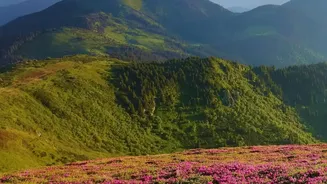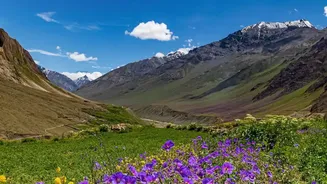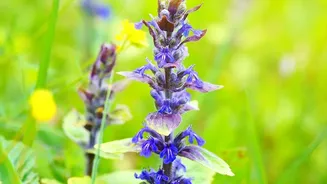





A Sea of Blue on the Hillsides
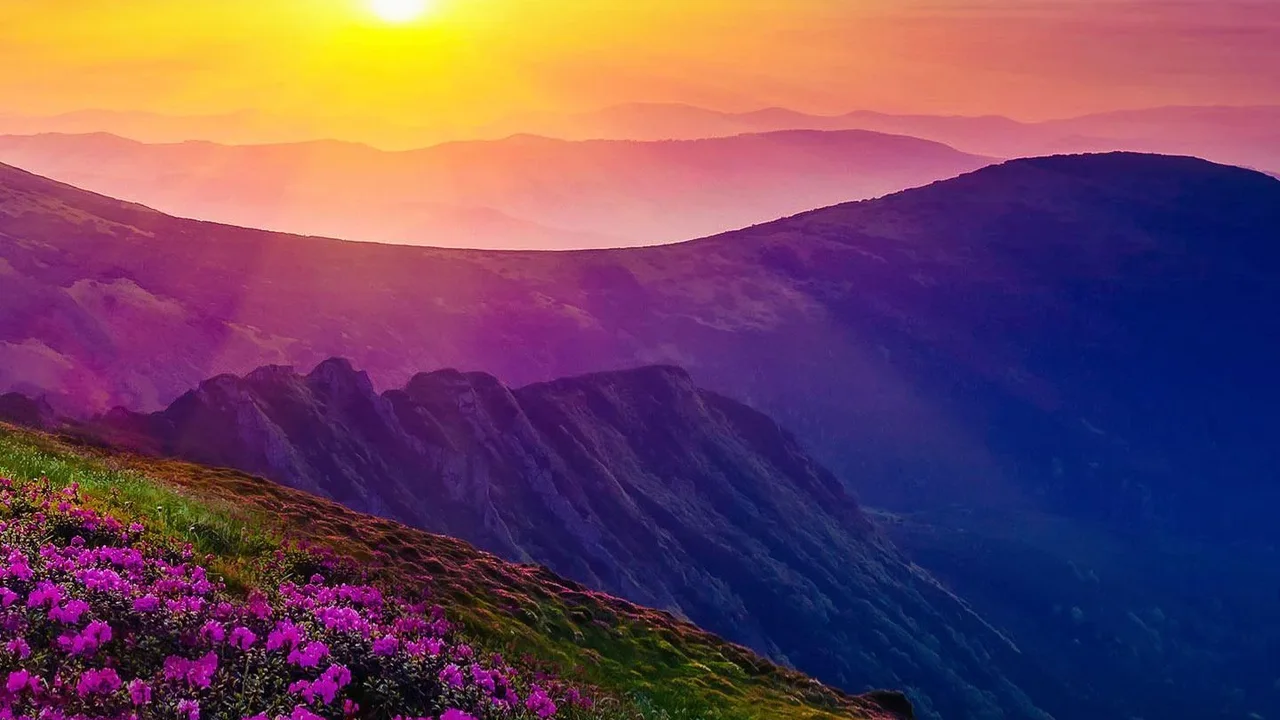
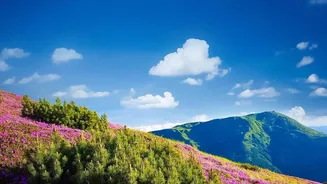
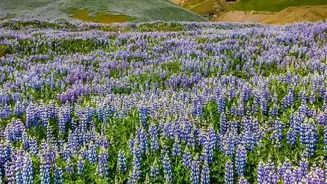
Imagine entire mountainsides awash in a vibrant, violet-blue hue. This is the breathtaking sight that greets visitors to Kerala’s Western Ghats during a Neelakurinji bloom. The flower, scientifically known as Strobilanthes kunthiana, is a shrub endemic
to these high-altitude shola grasslands. Its name is a simple combination of the Malayalam words ‘Neela’ (blue) and ‘Kurinji’ (flower). When it blooms, it does so in dramatic, synchronized fashion, a phenomenon called gregarious flowering, where millions of tiny bell-shaped flowers open simultaneously, creating a dreamlike landscape that has inspired poets and drawn travellers for centuries. So profound is its effect that the famous Nilgiri Hills, or ‘Blue Mountains’, are believed to have earned their name from this very spectacle.
The Science Behind the 12-Year Wait
The rarity of the Neelakurinji bloom is rooted in its fascinating life cycle. The plant is monocarpic, which means it flowers only once in its lifetime. For 11 long years, the shrub focuses on vegetative growth, quietly building up resources. Then, in the 12th year, prompted by an internal biological clock, it bursts into a mass flowering event. This isn’t just for show; it’s a clever evolutionary survival strategy known as ‘masting’. By flowering and producing seeds all at once across a vast area, the plant overwhelms seed predators like insects and rodents. Though predators feast, the sheer volume of seeds ensures that plenty survive to germinate. After this final, spectacular act of reproduction, the parent plant dies, making way for a new generation that will begin the 12-year countdown all over again.
Two Clocks Ticking in the Same Hills
While many associate the Neelakurinji with a single massive bloom, the reality is more complex. Different populations of the flower exist across the Western Ghats, each following its own 12-year schedule. The most widely publicized bloom, which blankets Eravikulam National Park, last occurred in 2018 and is next expected in 2030. However, the 2026 bloom is a separate, equally stunning event involving a different population of Neelakurinji. This year’s flowering, which last happened in 2014, is concentrated in the areas around Chokramudi Hills, Mattupetty, and Korandakkad. This makes 2026 a special opportunity for nature lovers to witness the phenomenon without waiting for the end of the decade.
A Flower Woven into Local Culture
For the indigenous communities of the Western Ghats, the Neelakurinji is far more than just a beautiful flower. The Paliyan and Muthuvan tribal communities have historically used the 12-year blooming cycle as a natural calendar to calculate their age and mark the passing of generations. The flower is deeply embedded in local folklore and finds mention in ancient Tamil Sangam literature, symbolizing love and the pristine beauty of the mountains. The mass flowering also plays a vital role in the local ecosystem, providing a sudden abundance of nectar for native bees and butterflies, which in turn leads to a boom in wild honey production.
A Fragile and Protected Treasure
This natural wonder is also incredibly fragile. The Neelakurinji was recently classified as a 'Vulnerable' or 'Threatened' species by the IUCN, highlighting the dangers it faces. Its delicate shola-grassland habitat is under pressure from the spread of invasive plant species like acacia, habitat loss due to construction, and the risk of forest fires. Unregulated tourism also poses a threat. To protect this natural heritage, the Kurinjimala Sanctuary was established in Idukki district. Authorities have strict rules in place during the bloom: visitors are urged to stay on designated paths and are strictly forbidden from touching or plucking the flowers, ensuring this spectacle can continue for generations to come.