






Project Camellia: An AI Factory in the Making
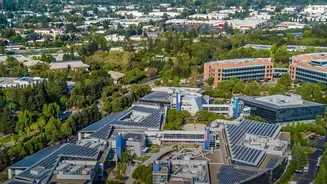
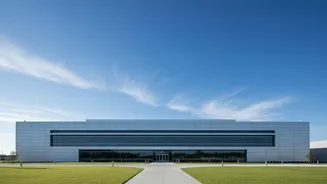
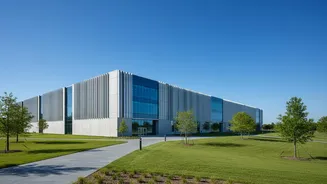
On July 22, 2026, OpenAI announced 'Project Camellia', a massive data centre campus to be built in Effingham County, Georgia, near the city of Savannah. The initial investment is a staggering $20 billion, with the total cost potentially exceeding $30
billion once fully built out. Spanning roughly 1,400 acres, the campus is designed to eventually consume 3.2 gigawatts of power, an amount comparable to the output of more than three nuclear power plants. This isn't just a building to house servers; it's what the industry now calls an 'AI Factory'—a facility purpose-built to manufacture intelligence at an industrial scale. The project signals a new phase for OpenAI, moving beyond just designing AI models to building and owning the physical foundation they run on.
A Pivot to Self-Reliance
The Georgia project represents a significant strategic revision for OpenAI. Previously, the company relied heavily on cloud partners, most notably Microsoft Azure, for its immense computing needs. While those partnerships remain, Project Camellia marks OpenAI's first major foray into designing and building its own data centres from the ground up. This move suggests a strategic shift toward gaining more control over its infrastructure, a way to manage costs, and a method to accelerate construction timelines. The company is no longer just a tenant in the cloud; it is becoming a landlord, directly overseeing everything from server layout to cooling systems. This revised plan comes as OpenAI's total projected infrastructure spending through 2030 has reportedly swelled to an astronomical $750 billion, highlighting the insatiable demand for computing power.
Why Georgia, and Why Now?
The choice of coastal Georgia is strategic. The location in Effingham County, part of the Savannah Gateway Industrial Hub, offers available land away from the traditionally crowded data centre markets like Northern Virginia. More importantly, it comes with a crucial agreement with the local utility, Georgia Power. The AI industry's biggest bottleneck is no longer just processing chips, but access to reliable and massive amounts of electricity. The Georgia project has a contract for 3.2 gigawatts of power, which will be supplied in phases between 2028 and 2032. To secure this, OpenAI has agreed to pay the full infrastructure costs itself, ensuring local residents don't see their power bills rise. The company also made one of the largest-ever demand-response commitments, agreeing to cut its power use by up to 1 gigawatt during peak grid demand, helping to ensure grid stability for everyone else.
The Global Race for AI Infrastructure
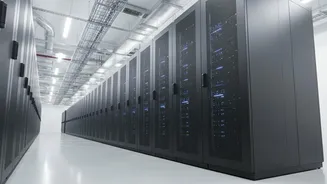
OpenAI's move is part of a much larger trend. The race for AI supremacy is no longer just about who has the best algorithms; it's about who controls the physical infrastructure. Companies like Google, Meta, and now OpenAI are investing hundreds of billions into building these AI factories. The demand for computing power for training and running advanced AI models is growing at an exponential rate, far outpacing what traditional cloud data centres were designed for. These new facilities require dense deployments of specialized chips, advanced liquid cooling systems, and, above all, gigawatts of power. Project Camellia is a clear statement that securing a private, dedicated supply of this infrastructure is now considered essential for any company aiming to lead the intelligence age.