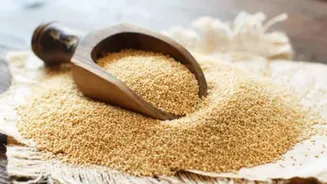








What is Amaranth?
Though often cooked and used like a grain such as quinoa or oats, amaranth is technically the seed of the Amaranthus plant family. It was a staple food for the Aztec civilization over 8,000 years ago, valued for its impressive nutritional profile. Today,
this gluten-free pseudocereal is gaining popularity worldwide for its versatility and health benefits. With a mild, nutty, and slightly earthy flavour, it serves as an excellent base for both sweet and savoury dishes, making it a perfect candidate for a nutrient-dense breakfast. Unlike many grains, it's considered a 'complete protein', meaning it contains all nine essential amino acids.
The Powerhouse of Bone-Building Minerals
Amaranth’s reputation as a bone-strengthening food is well-deserved due to its remarkable mineral content. One cooked cup (about 246 grams) is packed with nutrients essential for skeletal health. It delivers a significant amount of calcium, the primary building block of our bones. But its benefits don't stop there. Amaranth is also an exceptional source of magnesium, phosphorus, and manganese. Magnesium plays a crucial role by helping the body absorb and utilize calcium effectively, while phosphorus is a key component of the bone mineral matrix itself. Manganese is vital for the processes of bone formation and maintenance. This combination of minerals makes amaranth a comprehensive food for supporting bone density.
Beyond Minerals: The Role of Protein
While minerals are critical, they need a structure to build upon. Bones are living tissues composed of a protein matrix that minerals like calcium and phosphorus fortify. Amaranth provides a high-quality, plant-based protein—around 9 grams per cooked cup—which contributes to building and maintaining this framework. Notably, it is rich in lysine, an amino acid less common in other grains. Lysine aids in calcium absorption and is essential for the production of collagen, a key protein that gives bones their strength and flexibility. This makes amaranth’s protein particularly valuable for overall bone integrity.
Easy Amaranth Breakfast Ideas
Incorporating amaranth into your morning routine is simple. The most common way to enjoy it is as a porridge. To prepare, combine one part amaranth with about two and a half parts water or milk in a saucepan. Bring it to a boil, then reduce the heat, cover, and simmer for 20-25 minutes, stirring occasionally until the liquid is absorbed and the texture is thick and creamy. From there, you can customise it. For a sweet breakfast, top it with fresh fruit, nuts, seeds, and a drizzle of honey or maple syrup. For a savoury twist, cook it in broth and top with a poached egg, avocado, and sautéed vegetables.
Important Details to Consider
Like many plant-based foods, raw amaranth contains compounds known as anti-nutrients, such as phytic acid, oxalates, and tannins. These substances can bind to minerals like calcium and iron, potentially reducing their absorption. However, this is generally not a major concern, as these anti-nutrients are significantly reduced through simple preparation methods like soaking and cooking. Boiling amaranth, as you would for porridge, effectively mitigates these compounds, ensuring you get the maximum nutritional benefit. Therefore, it's always recommended to cook amaranth rather than consuming it raw. By doing so, you unlock its full potential as a nutrient-dense addition to your diet.