



What Just Happened in Greenland?
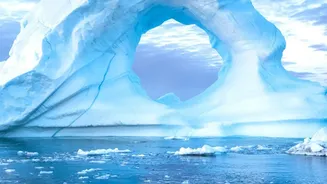
On August 4, 2026, satellite imagery confirmed that a colossal iceberg calved from the Petermann Glacier in northwest Greenland. The slab of ice, referred to as a tabular iceberg or an 'ice island' due to its flat top, covers an area of approximately
76 square kilometres. To put that into perspective, it's roughly the size of Manhattan. The European Space Agency (ESA) estimates its thickness reaches up to 150 metres. This marks the Petermann Glacier's most significant loss of floating ice since a major event in 2012 and is the largest single calving event in the Arctic since 2020.
An Event Years in the Making
This was not a complete surprise to the scientific community. An international team of researchers from institutions in Canada and the UK has been monitoring growing cracks, or rifts, on the Petermann Glacier's floating ice tongue for years. Using data from satellites like the Copernicus Sentinel-1, they observed these fractures widening, signalling that a large break was becoming increasingly likely. Adam Garbo, a researcher at the University of Ottawa, noted, “We've anticipated this break for years, and seeing it finally happen is remarkable.” The event provides a rare opportunity to study how these massive Arctic ice islands form, drift, and eventually break apart.
The Science of a Glacier's Break-Up
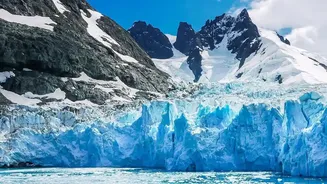
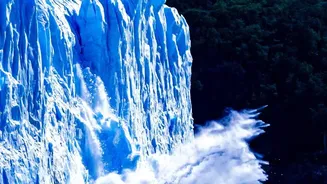
The process of an iceberg breaking off a glacier is called 'calving'. While it is a natural part of a glacier's life cycle, the frequency and size of these events are increasing as global temperatures rise. Greenland's glaciers are particularly vulnerable. Around half of the ice sheet's mass loss is due to surface melt, while the other half comes from calving, which is accelerated by warmer ocean waters melting the glacier from below. This undercutting makes the glacier's edge, or 'tongue', unstable and prone to collapse. The Petermann Glacier is one of Greenland's largest remaining ice tongues, and its stability is a key indicator for scientists.
Why This Matters for India and the World
An event happening thousands of kilometres away in the Arctic has direct global consequences, particularly for sea-level rise. While an iceberg that is already floating doesn't immediately raise sea levels, the glacier it broke from often speeds up, dumping more ice into the ocean. The Greenland Ice Sheet holds enough frozen water to raise global sea levels by over seven metres if it were to melt completely. Between 2010 and 2018, its melt contributed significantly to rising seas. For a country like India, with a 7,500-kilometre coastline and major cities like Mumbai and Kolkata vulnerable to rising waters, the accelerating melt in Greenland is a direct and serious concern.
What Happens Next?
Scientists will now track the new iceberg's journey. Its movement will be monitored by bodies like Environment and Climate Change Canada to assess risks to shipping lanes. More importantly, the focus remains on the Petermann Glacier itself. Researchers have identified two other large rifts that could lead to further calving events in the near future, potentially detaching another 180 square kilometres of ice. These events underscore the urgent need to understand the complex processes driving polar ice loss. As ESA scientist Martin Wearing stated, long-term satellite observations are crucial for understanding the wider impacts on the polar environment and, ultimately, the entire Earth system.