






Everyone recognizes the creamy, kidney-shaped cashew. It’s a staple in snacks and sweets. But what if we told you that the nut you know and love is just one part of a much stranger and more fascinating story that involves a fruit?
Meet the Cashew Apple
Before there is the cashew
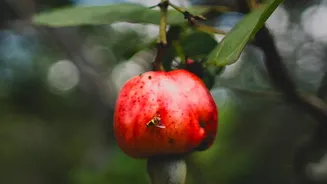
nut, there is the cashew apple. Imagine a tree, Anacardium occidentale, where colourful, bell-pepper-shaped fruits hang from the branches. These are the cashew apples, ranging in colour from yellow and orange to vibrant red. This fleshy, pear-shaped structure is not actually the 'fruit' of the tree in a strict botanical sense. It’s what botanists call a pseudocarp or 'false fruit'. The cashew apple is juicy and sweet, but also has a distinctly astringent, sometimes described as 'furry', aftertaste that can be an acquired taste. Rich in Vitamin C, it's a popular treat in the regions where it grows.
The Real Fruit and the Hidden Seed
If the apple is the 'false fruit', then where is the real one? Look at the very bottom of the cashew apple. Hanging beneath it, you'll find a green-to-brownish-grey, kidney-shaped shell. This is the true fruit, a drupe, much like a mango or a peach. Inside this hard, unassuming shell is the prize we are all familiar with: a single cashew seed. This is what we refer to as the cashew nut. So, in a strange twist of nature, the cashew tree produces its seed on the outside of its main fleshy body, a feature that is highly unusual in the plant kingdom.
Why Don't We See Cashew Apples?
Given that a large, edible fruit grows for every single cashew nut, a logical question arises: why aren’t cashew apples sold in supermarkets everywhere? The answer lies in their incredibly delicate nature. The skin of the cashew apple is thin and waxy, making it highly susceptible to bruising. It is also extremely perishable, beginning to ferment within 24 hours of being picked. This short shelf life makes it impossible to transport over long distances, confining its consumption to the local communities in cashew-growing regions like Goa, Kerala, and parts of Brazil and Southeast Asia.
The Secret Life of the Apple
While it may not travel well, the cashew apple is far from useless. In fact, where it grows, it is celebrated. The juice, known for its high vitamin content, is a popular beverage. It's also used to make jams, syrups, and chutneys. Perhaps its most famous application is in the creation of alcoholic drinks. In Goa, the cashew apple is crushed and its juice fermented and distilled to produce Feni, a potent spirit with a unique aroma and a protected Geographical Indication status. In other parts of the world, it is similarly used to create local wines and liquors, ensuring no part of the harvest goes to waste.
The Dangerous Journey of the Nut
The journey of the cashew seed from the tree to your snack bowl is surprisingly perilous. The hard shell of the true fruit is not just a protective covering; it is a fortress. This shell is ingeniously designed with a honeycomb structure filled with a toxic, caustic substance known as Cashew Nut Shell Liquid, or CNSL. This phenolic resin is a powerful irritant, related to the same compound that gives poison ivy its infamous bite. It can cause severe contact dermatitis and painful burns. Therefore, cashews can never be eaten raw straight from the tree. The careful, labour-intensive process of roasting, shelling, and peeling the nuts without coming into contact with CNSL is why cashews are one of the more expensive nuts on the market.