




What Exactly Is El Niño?
Think of the Pacific Ocean as a massive heat engine for the planet. Normally, strong winds blow from east to west across the equator, pushing warm surface water towards Asia and Australia. This allows cooler water to rise up along the coast of South America.
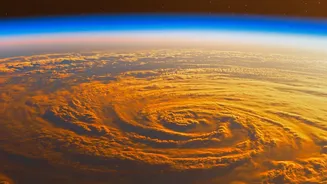
During an El Niño, which is Spanish for “the little boy,” this pattern flips. The trade winds weaken, or even reverse, causing a large mass of warm water to accumulate in the central and eastern Pacific. This isn't just a local event; this massive shift in ocean temperature changes atmospheric pressure and disrupts weather patterns across the globe, a phenomenon scientists call the El Niño-Southern Oscillation (ENSO).
The Connection to India's Monsoon
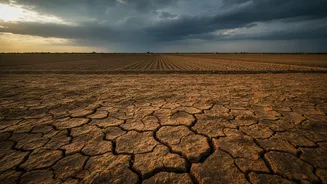
India's fate is closely tied to the monsoon, the seasonal winds that bring over 70% of the country's annual rainfall. The monsoon itself is a complex system driven by temperature differences between the land and the sea. El Niño throws a spanner in the works. The large patch of warm water in the eastern Pacific alters the typical air circulation patterns. For India, this often means weaker monsoon winds and a reduction in rainfall. Historically, many of India's most severe droughts have coincided with strong El Niño years. While not every El Niño causes a poor monsoon, a strong event significantly increases the probability of below-normal rainfall, which has major implications for our agriculture-dependent economy.
The Strong 2026 Outlook
The reason for the current concern is that multiple global weather agencies are pointing towards a powerful El Niño event for 2026. According to organisations like the World Meteorological Organization (WMO), the warming in the Pacific is not just present but intensifying rapidly. Forecasts issued in July and August 2026 suggest that sea surface temperatures in key monitoring regions could reach record levels, potentially making this a “Super El Niño,” comparable to or even stronger than the major events of 1997-98 and 2015-16. India's own meteorological department has already forecast a below-normal monsoon for the year, and early data from the season shows a rainfall deficit consistent with these predictions.
Why It Matters for India
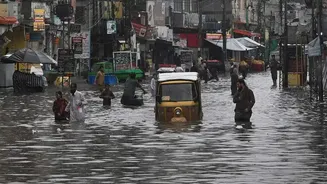
A weak or erratic monsoon can send ripples through the entire Indian economy. The Kharif crops, sown during the monsoon season, are particularly vulnerable. Lower agricultural output can lead to food inflation, affecting household budgets across the country. Beyond the farms, deficient rainfall impacts the water levels in our reservoirs, which are crucial for drinking water, irrigation, and hydroelectric power generation. The resulting stress on water and power resources can have far-reaching consequences for both rural and urban populations. The government and the Reserve Bank of India often cite a poor monsoon as a key risk factor for economic stability.
More Than Just El Niño
While El Niño is a major headwind for the monsoon, it isn't the only actor on stage. Meteorologists are also closely watching another phenomenon called the Indian Ocean Dipole (IOD), or the “Indian Niño.” The IOD is a measure of the temperature difference between the western and eastern parts of the Indian Ocean. A “positive” IOD, where the western Indian Ocean is warmer than the east, can sometimes bring good rains to India and potentially counteract some of El Niño's drying effects. Forecasts for 2026 also suggest a positive IOD may develop. This complex interplay is why predicting the exact outcome of the monsoon remains a challenge; it's a delicate balance of multiple global and regional factors.