







The 'Doomsday Glacier' Explained
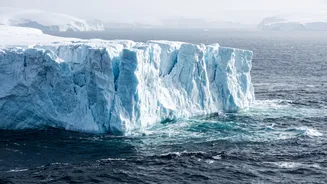
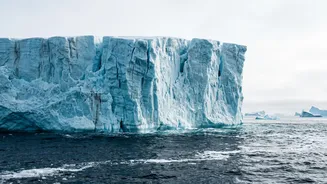
Thwaites Glacier is the widest on Earth, spanning roughly 120 kilometres. It's approximately the size of the US state of Florida or the island of Great Britain. Its ominous nickname comes from the catastrophic potential of its collapse. The glacier itself
holds enough ice to raise global sea levels by more than two feet (about 65 cm). More critically, it acts as a natural dam, holding back the rest of the vast West Antarctic Ice Sheet. Scientists warn that if Thwaites were to fail, it could eventually lead to a total sea-level rise of around 10 feet, which would inundate coastal communities around the world.
A Startling New Projection
A study recently published in the journal Nature Communications has presented a concerning new outlook. Researchers from the University of California, Irvine, and NASA's Jet Propulsion Laboratory developed a more sophisticated computer model of the glacier's behaviour. Their findings suggest that Thwaites alone could contribute up to 30 millimetres (1.2 inches) to global sea levels by the year 2100. This figure is roughly double the average estimate from previous models, which hovered around 15 millimetres (0.6 inches). Alarmingly, the new projection suggests this accelerated melting could happen even without any further increase in global warming beyond its recent state.
Why the Estimate Changed
The major update in the scientific model lies in understanding what happens at the glacier's 'grounding line'—the point where the ice lifts off the seabed and begins to float. Previous models often treated this as a fixed, narrow line. However, recent satellite data has shown that warm, dense ocean water is being pushed much farther inland beneath the glacier than previously thought, a process known as 'tidal pumping'. This creates a wider 'grounding zone', where the ocean can vigorously melt the ice from below across a much larger area. By incorporating this more realistic, dynamic process, the new models show a much faster rate of retreat.
The Unpinning of a Giant
The stability of Thwaites is partially dependent on underwater ridges that act like pins, holding the glacier in place and slowing its slide into the ocean. The new research highlights the risk of the glacier becoming 'unpinned' from a key feature called the Mouginot Ridge. The intense melting at the grounding zone is weakening this connection. The study's simulations show a 60% chance that the glacier could detach from this ridge before the end of the century, possibly as early as the 2030s. If that happens, the glacier's retreat down the sloping bedrock towards the next ridge could accelerate dramatically.
What This Means for India's Coastline
While 1.2 inches of sea-level rise from a single glacier may not sound like a deluge, it represents a significant increase in the baseline risk for coastal populations globally. For a country like India, with a 7,500-kilometre coastline and major metropolises like Mumbai, Kolkata, and Chennai situated near the sea, any acceleration in sea-level rise is a critical threat. Higher sea levels magnify the destructive power of storm surges, lead to more frequent and severe coastal flooding, and increase the rate of coastal erosion. The new findings from Antarctica are a stark reminder that the effects of climate change are interconnected and that melting ice thousands of kilometres away has direct and serious implications for homes, infrastructure, and lives in India.