








More Than Just a Rocket
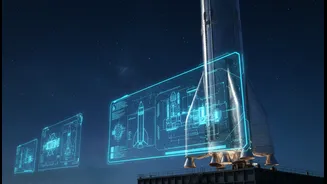
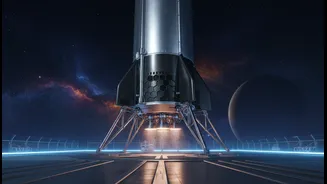
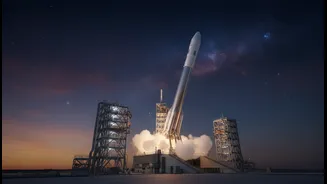
Skyroot Aerospace's Vikram-1 mission, which successfully placed payloads into low-Earth orbit, was a landmark achievement. It made India only the third country, after the US and China, to have a private company demonstrate orbital launch capability. While
the headlines rightly celebrated the launch itself, its true significance lies in what it proves: India's private sector is ready to compete in the global space market. For years, launching satellites was the exclusive domain of government agencies like ISRO. The success of Vikram-1 shifts the conversation from a question of capability to one of capacity and commercialisation. It's a proof point that de-risks the entire sector for investors and customers, changing the question from "Can you do it?" to "When can I book a slot?".
The New Supply Chain Demand
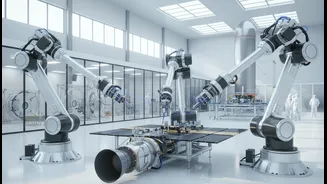
A rocket is a complex machine made of hundreds of thousands of components, from its carbon-composite structure and 3D-printed engines to its advanced flight computers and navigation sensors. While ISRO has a well-established supply chain with over 500 private suppliers, the emergence of commercial players like Skyroot, Agnikul, and others creates an entirely new and parallel demand. These new companies cannot rely solely on the existing ecosystem, which is often tailored to ISRO's specific, long-term requirements. They need suppliers who are agile, cost-effective, and capable of producing components at a commercial scale and cadence. Skyroot, for instance, aims to eventually produce one rocket per month. This ambition necessitates a robust network of specialised suppliers that can keep pace.
From Nuts and Bolts to AI Chips
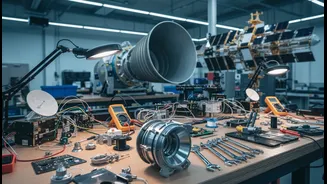
The needs of this new space economy are incredibly diverse. At one end, there is a demand for high-strength, lightweight materials like carbon composites, which are crucial for building modern rockets like the Vikram-1. At the other end, there's a growing need for highly specialised electronics. This includes radiation-hardened processors, advanced sensors, and the kind of high-performance AI chips that companies like Pixxel are putting into satellites to process data in orbit. The supply chain extends to propulsion systems, including 3D-printed engines and semi-cryogenic technologies being developed by firms like Agnikul Cosmos. It also includes avionics, power systems, and even the software that governs every aspect of a mission. The success of one launch vehicle validates the market for all these interconnected industries.
Government as an Enabler, Not Just a Customer
This boom didn't happen in a vacuum. It was made possible by a series of deliberate policy decisions from the Indian government, starting with the opening of the space sector in 2020. The establishment of IN-SPACe (Indian National Space Promotion and Authorisation Centre) has been crucial, acting as a single-window agency to facilitate private participation. By providing access to ISRO's extensive testing facilities and expertise, and creating a regulatory framework under the Indian Space Policy 2023, the government has actively nurtured this nascent industry. This support, combined with financial incentives like a dedicated venture capital fund, has encouraged over 400 space startups to enter the field.
The Path to a $44 Billion Economy
The success of Vikram-1 is a catalyst. India's space economy, valued at around $8.4 billion in 2022, is projected to grow to $44 billion by 2033. Achieving this fivefold growth depends entirely on building a comprehensive, competitive, and self-reliant industrial base. A single launch success is a critical first step, but the real challenge lies in execution and scale. The market needs not just one successful company, but a thriving ecosystem of satellite makers, component suppliers, and downstream data-analytics firms. The confidence inspired by Vikram-1's flight encourages investment and talent to flow into these specialised areas, creating a virtuous cycle of growth and innovation that will define India's future in space.