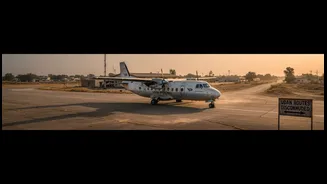










The Ambitious Dream of Flight for All
Launched in 2016, the Ude Desh ka Aam Nagrik (UDAN) scheme was a revolutionary idea for Indian aviation. The goal was simple yet audacious: make air travel affordable and connect unserved and underserved airports across the country. By providing financial
support to airlines and capping fares on regional routes—initially at around ₹2,500 for a one-hour flight—the government aimed to make flying a reality for the common person, boosting tourism, trade, and regional economies. Since its inception, the scheme has enabled over 16.6 million passengers to take to the skies on routes that were previously just dots on a map.
A Reality Check on the Tarmac
Despite its successes, the scheme is facing a harsh reality. As of early 2026, nearly half of the 669 routes that were operationalised under UDAN have been discontinued. Reports indicate that of all routes awarded, many struggled to sustain operations. Airports in places like Kalaburagi and Bidar in Karnataka, for instance, saw services stop once the initial subsidy period ended. This high rate of discontinuation has raised questions about the long-term sustainability of the programme and the fundamental economics of regional aviation in India.
The Economics of Empty Seats
The core of the problem lies in a concept called Viability Gap Funding (VGF). The government offered this subsidy to airlines for a three-year period to bridge the gap between the high cost of operations and the low revenue from capped fares. The assumption was that after three years, these routes would have enough passenger demand to become commercially viable on their own. However, this often didn't happen. Factors like high aviation fuel costs, aircraft maintenance and shortages, and persistent low passenger demand meant that many routes became unprofitable the moment the VGF support stopped. In some cases, airlines found routes unviable even with the subsidy. Furthermore, delays in making smaller airstrips fully operational and a lack of connectivity to major hubs like Delhi and Mumbai have created significant financial burdens for regional carriers.
A Necessary Course Correction
The discontinuations, while seeming like failures, are better understood as a market-driven course correction. The government has acknowledged these structural weaknesses and is actively evolving the scheme. Subsequent versions like UDAN 5.0 and its sub-phases have introduced changes, such as focusing on helicopter connectivity and smaller aircraft for last-mile access. More significantly, in March 2026, the government approved a revamped 'Modified UDAN' or 'Viksit UDAN'. This new phase, launched on July 4, 2026, comes with a massive outlay of nearly ₹29,000 crore over ten years. It extends the subsidy period for airlines from three to five years, allocates significant funds for developing 100 new aerodromes, and aims to provide better operational support for regional airports to address the very issues that caused earlier routes to fail.