





A New Breed of Fire
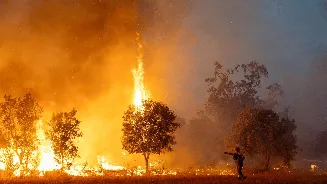
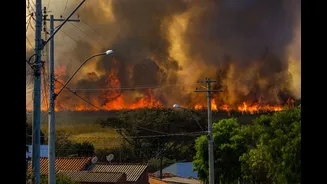
First, it's crucial to understand that we are no longer dealing with the same fires our parents' generation faced. Climate change has fundamentally altered the landscape, leading to longer fire seasons, intense droughts, and higher temperatures. This
creates vast quantities of tinder-dry vegetation, or fuel. An 'extreme blaze' or 'megafire' is not just a large fire; it's a fire that behaves in ways that defy traditional suppression models. These fires can create their own weather systems, generate winds that throw embers miles ahead of the main front, and burn with such intensity that they release the energy equivalent of a large bomb every few seconds. They move with terrifying speed and unpredictability, making them exceptionally dangerous and difficult to control.
When Planes Are Powerless
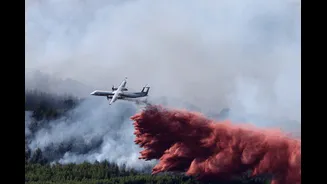
Aerial firefighting, involving planes and helicopters dropping thousands of gallons of water or retardant, is a critical tool. Very Large Air Tankers (VLATs) can drop a line of retardant to slow a fire's spread, giving ground crews a chance to work. However, their effectiveness plummets in extreme conditions. High winds, which often accompany these fires, can make flying too dangerous. Dense smoke can reduce visibility to zero, grounding all aircraft. Furthermore, planes cannot fly at night, and many modern fires continue to burn actively through the night because of warmer overnight temperatures. The reality is that air tankers don't put fires out; they support the crews on the ground. If conditions are too dangerous for ground crews, the impact of air drops is limited.
The Battle on the Ground
Even with unlimited aircraft, a fire is not truly extinguished until firefighters on the ground have secured its perimeter. This is grueling, dangerous work. In the face of an extreme blaze, the safety of firefighters is the top priority. Crews cannot be placed in front of a fast-moving wall of flame. Topography also plays a huge role; steep, inaccessible terrain can make it impossible for crews and equipment to reach the fire's edge. The primary goal of a firefighting fleet is often not to extinguish the fire outright but to steer it away from communities and critical infrastructure, a strategy known as point protection. This acknowledges the reality that some parts of the fire are simply too powerful to confront directly.
The Core Problem: Fuel and Weather
Ultimately, a wildfire is a chemical reaction requiring three things: heat, oxygen, and fuel. A firefighting fleet is designed to remove one of these elements, typically by dousing the area with water (removing heat) or retardant (creating a barrier for fuel). But in today's megafires, the sheer scale of the available fuel is overwhelming. Decades of fire suppression have led to overgrown forests choked with dead trees and underbrush. When combined with extreme heat, low humidity, and high winds, you have the perfect recipe for an unstoppable blaze. No amount of aircraft can instantly remove millions of acres of fuel or change the weather patterns driving the fire's growth.
Shifting from Reaction to Prevention
Because direct suppression is often ineffective against the most extreme fires, experts are increasingly focused on a broader strategy. This involves proactive landscape management, including prescribed burns and mechanical thinning to reduce fuel loads. It also means building more fire-resilient communities, especially in the wildland-urban interface where homes are built in fire-prone areas. While a large, modern firefighting fleet remains essential for initial attacks on new fires and protecting lives, it is not a silver bullet. The resources are vital, but they are just one piece of a much larger puzzle.