




A Legacy Unravelled by Empire
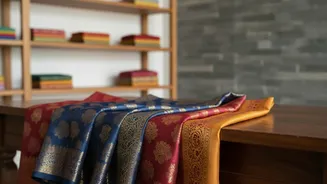
For centuries, India was a global textile powerhouse. Its handloom fabrics, like the soft Calico and vibrant Chintz, were prized across the world for their unmatched quality and artistry. European markets, in particular, were captivated by these lightweight,
beautiful cottons. However, the arrival of the British and the Industrial Revolution turned this legacy on its head. To protect their own burgeoning mills in cities like Manchester, British authorities imposed crippling policies. Raw cotton from Indian farms was exported to Britain, machine-milled into fabric, and then shipped back to be sold to Indians at inflated prices. This system systematically dismantled India’s indigenous textile industry, turning a nation of skilled artisans into a captive market and leaving millions of weavers and spinners impoverished.
The Rise of Swadeshi
The first major pushback came with the Swadeshi movement, which gained momentum following the partition of Bengal in 1905. Swadeshi, meaning 'of one's own country', was a call to boycott foreign goods and embrace domestic products. The movement's primary target was British-made cloth. Public bonfires of imported textiles became a common sight, a dramatic rejection of colonial economic exploitation. The core idea was simple yet revolutionary: to achieve self-rule (Swaraj), India first needed economic self-reliance. By choosing Indian-made goods, people were not just making a consumer choice; they were participating in a nationalist cause, redirecting capital away from the British Empire and back into Indian communities.
Gandhi and the Spinning Wheel
It was Mahatma Gandhi who elevated this concept into a mass movement, transforming the humble handwoven cloth, or Khadi, into the central symbol of the freedom struggle. He ingeniously turned the simple act of spinning thread on a 'charkha' (spinning wheel) into an act of political defiance and personal sacrifice. Starting in 1918, Gandhi urged every Indian, regardless of class or creed, to spend time spinning each day. This was not just about economics; it was a philosophy. By spinning their own cloth, Indians could break their dependency on foreign mills, restore dignity to manual labour, and create a powerful sense of national unity. Gandhi himself adopted Khadi, and his image, often seen with a spinning wheel, became an enduring symbol of a self-reliant India.
The Fabric of Unity
Wearing Khadi became a visual declaration of one's allegiance to the freedom movement. It was a uniform for a non-violent army of patriots. The coarse, simple fabric acted as a great social equaliser, breaking down barriers of caste and wealth. When a wealthy lawyer and a poor farmer both wore the same handspun cloth, it created a powerful, visible bond of solidarity. The Khadi movement also played a crucial role in empowering women, providing many with a source of income and a way to participate directly in the struggle for independence from their own homes. It transformed a household chore into a national duty, weaving together millions of individual acts of resistance into a single, cohesive fabric of protest.