





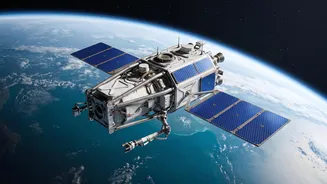
Have you ever wanted to name a spaceship? Britain's Space Agency is offering a rare chance to do just that, inviting the public to christen its pioneering new mission to clean up Earth's orbit before the 10 December 2026 deadline.
A Galactic Garbage Collector
The UK's Active Debris
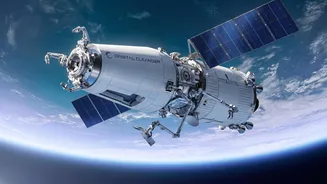
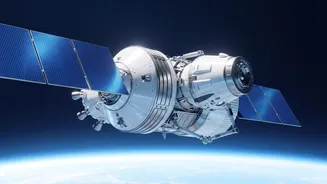
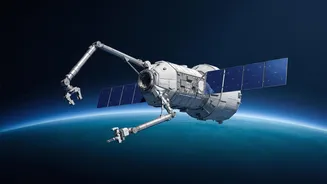
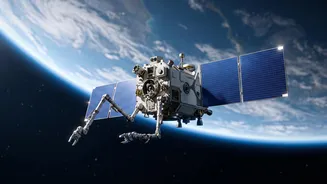
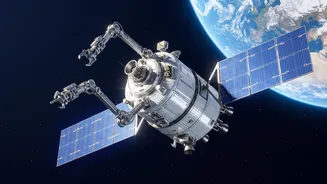
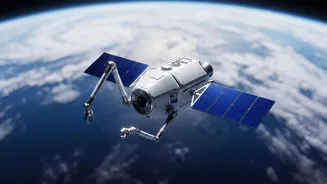
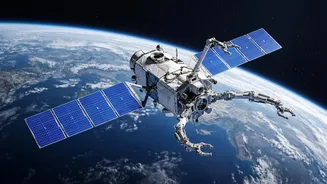
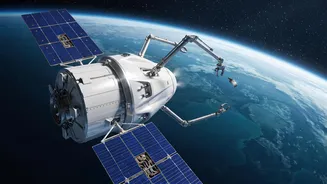
Removal (ADR) mission is, in essence, a cosmic garbage truck. It's a first-of-its-kind national project for Britain, backed by over £60 million, designed to tackle the growing problem of space junk. The plan is for a robotic spacecraft, being built by the company ClearSpace UK, to launch into orbit, hunt down two defunct satellites, and remove them. This world-first mission will see a single spacecraft capture and dispose of more than one piece of debris. Using advanced autonomous navigation and robotic claw-like arms, the spacecraft will grab the old, UK-registered satellites that are currently tumbling uncontrolled through space. Once captured, it will drag them into a lower orbit where they will burn up harmlessly upon re-entering Earth's atmosphere. The mission, targeted for operations in 2029, is a crucial test of technologies that could one day form the basis of a whole new industry focused on in-orbit servicing, repairs, and manufacturing.
The Orbital Junkyard Problem
Low Earth Orbit has become a dangerously cluttered junkyard. For decades, we have launched rockets and satellites, often leaving them to drift once their operational life ends. The result is hundreds of thousands of tracked objects—from entire dead satellites to smaller fragments—whizzing around the planet at speeds over 27,000 km/h. At that velocity, even a tiny fleck of paint can cause catastrophic damage to an active satellite. This debris threatens the vital infrastructure we rely on daily for everything from GPS navigation and weather forecasting to international communications and national security. Experts warn of a potential 'Kessler Syndrome', a cascading chain reaction where one collision creates more debris, leading to more collisions, until certain orbital paths become completely unusable for generations. This UK mission represents a critical and proactive step in trying to prevent that future and preserve space for everyone.
Your Chance to Make History
This is where the public comes in. The UK Space Agency wants a memorable name for this groundbreaking mission and is asking for suggestions. The competition is straightforward: propose a name of no more than two words (or an acronym) and provide a short explanation of up to 150 words on why it's a fitting choice. The goal is to find a name that reflects the mission's theme of safeguarding the space environment for future generations. Entries can be submitted online via the UK Space Agency's website until 5:00 PM GMT on 10 December 2026. While the competition is officially open only to UK residents, it highlights a global trend of involving the public to build awareness and support for scientific endeavours. The winning name will be etched onto the side of the spacecraft itself, becoming a permanent part of space history.
A History of Public Naming
Of course, inviting the internet to name things can be a wild ride. The most famous example is the UK's 2016 poll to name a new polar research vessel. A suggestion by a radio presenter, 'Boaty McBoatface', went viral and won the public vote in a landslide. While officials ultimately decided on the more stately RRS Sir David Attenborough, they cleverly honoured the public's choice by giving the 'Boaty McBoatface' name to one of the ship's robotic submersibles. The incident created a cultural moment, sparking countless imitators from 'Trainy McTrainface' in Sweden to 'Sweepy McSweepface' for a street sweeper in Florida. While the UK Space Agency's guidelines steer clear of 'potentially offensive or controversial names', the Boaty McBoatface saga proved that such campaigns are incredibly effective at capturing public imagination and generating global interest in otherwise niche scientific projects.