





The End of a Legend
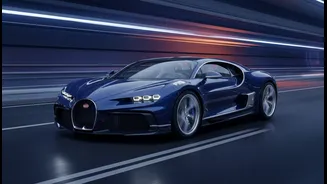
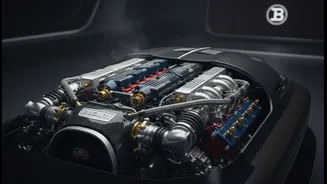
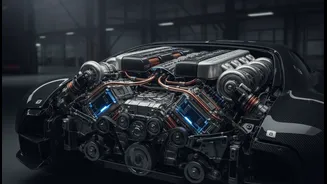
The Bugatti W16 was more than an engine; it was a statement of intent. First roaring to life in the Veyron in 2005, it was the first production car engine to produce over 1,000 horsepower. This 8.0-litre, quad-turbocharged behemoth was essentially two
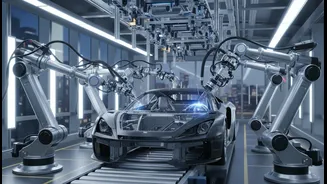
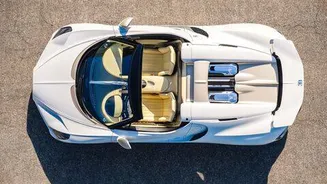
V8 engines fused together, an engineering marvel that powered the world's fastest cars for nearly twenty years. It propelled the Veyron to a record-breaking 254 mph and later, in its most potent form, pushed the Chiron Super Sport 300+ beyond the mythical 300 mph barrier. Assembling its 3,500-plus components was a painstaking process, a testament to Bugatti's commitment to pushing combustion to its absolute limits. With the final W16-powered car, the Mistral roadster, the chapter on this icon of pure internal combustion power has closed, making way for something entirely new.
A New Heartbeat: The V16 Hybrid
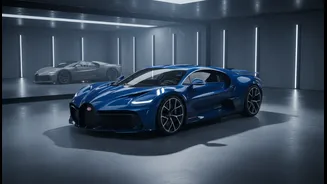
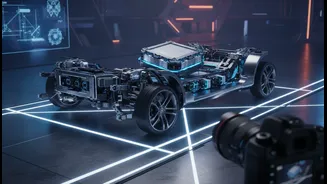
Enter the Tourbillon. Instead of downsizing or going fully electric, Bugatti has charted a surprising course. The successor to the Chiron is built around an entirely new, naturally aspirated 8.3-litre V16 engine developed with legendary engineering firm Cosworth. This engine alone produces 1,000 horsepower and revs to a screaming 9,000 rpm. But it doesn't work in isolation. It's paired with a sophisticated hybrid system featuring three electric motors—two on the front axle and one at the rear—that add another 800 horsepower. The combined output is a staggering 1,800 horsepower. This plug-in hybrid system, with a 24.8 kWh battery, also allows for an all-electric range of about 60 kilometres, offering silent, emissions-free driving when desired.
What 'Tourbillon' Really Means
The name itself is a clue to the car's philosophy. A "tourbillon" is a complex, rotating mechanism invented in the 18th century for high-end mechanical watches to counteract the effects of gravity and improve accuracy. It’s a symbol of horological artistry and precision. Bugatti chose this name to reflect the car's intricate, mechanical soul in an increasingly digital world. This is most evident in the instrument cluster. Instead of a screen, the driver is greeted by a set of analog dials and gauges crafted by Swiss watchmakers, with a skeletonized design that exposes the more than 600 tiny parts within. The entire cluster is a masterpiece of titanium and gemstones, a defiant celebration of mechanical craft that remains fixed as the steering wheel rotates around it.
Performance Reimagined
The numbers are, as expected, mind-bending. The Tourbillon accelerates from 0 to 100 km/h (62 mph) in a mere 2.0 seconds. It can reach 300 km/h (186 mph) in under 10 seconds and has a limited top speed of 445 km/h (276 mph). Yet, the car's performance is not just about straight-line speed. The hybrid system provides instant torque from the electric motors for immediate acceleration, while the naturally aspirated V16 delivers a crescendo of power and sound that no turbocharged engine or pure EV can replicate. This blend creates a multi-sensory driving experience that aims to be more emotionally engaging than its predecessor. Remarkably, despite the addition of a battery and three motors, the Tourbillon is lighter than the Chiron it replaces, thanks to extensive use of lightweight materials and advanced 3D-printed components.
A Statement for the Future of Hypercars
With the Tourbillon, Bugatti is making a bold statement. At a time when many rivals are pivoting to full electrification, Bugatti, now partnered with EV specialist Rimac, has doubled down on the internal combustion engine as the emotional core of its vehicle. The hybrid system isn't just for efficiency; it's there to augment the V16, filling in torque gaps and enhancing its performance. Limited to just 250 units with a starting price of around $4.4 million, the Tourbillon is hyper-exclusive. It represents a belief that for the pinnacle of the automotive world, the future is not about replacing the soul of the machine, but elevating it with new technology.