





A New Eye on the Cosmos
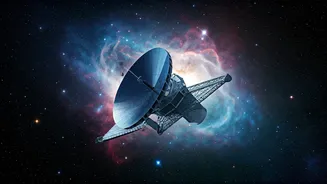
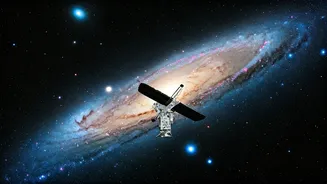
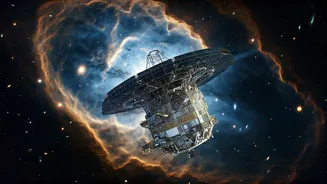
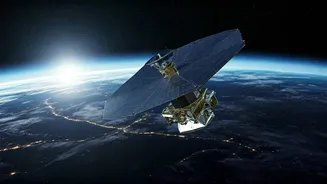
Set to launch as early as August 2026, the Nancy Grace Roman Space Telescope represents the next generation of space-based observatories, following in the footsteps of the Hubble and James Webb space telescopes. Named after Dr. Nancy Grace Roman, NASA's
first chief of astronomy, this powerful new instrument is not just an incremental upgrade; it's a game-changer in how we see the universe. While its primary mirror is the same size as Hubble's at 2.4 meters, Roman's power lies in its extraordinary field of view. Its Wide Field Instrument can capture an area of the sky at least 100 times larger than Hubble can in a single image, all with the same stunning clarity. This allows Roman to map the sky at a blistering pace, collecting data thousands of times faster than its famous predecessor.
The Great Cosmic Census
Roman's primary mission is to conduct a vast cosmic census, tackling two of the most compelling subjects in modern astronomy: exoplanets and dark energy. On the exoplanet front, the telescope is expected to be a prolific planet-hunter, with scientists estimating it could discover around 100,000 new worlds beyond our solar system. It will primarily use a technique called gravitational microlensing, which occurs when a foreground star and its planets pass in front of a more distant star. The gravity of the closer system acts like a lens, briefly magnifying the background star's light. This method is sensitive enough to find planets with a wide range of sizes and orbits, including so-called "rogue planets" that drift through space without a host star. This will give us a much clearer picture of how common planetary systems like our own are throughout the galaxy.
Shining a Light on the Dark Universe
Beyond searching for alien worlds, Roman will peer into the deepest mysteries of cosmology. An estimated 95% of the universe is made up of dark matter and dark energy, invisible components that shape the cosmos on the largest scales. Dark matter provides the gravitational scaffolding for galaxies, while dark energy is the mysterious force causing the universe's expansion to accelerate. Roman will map the distribution of dark matter by observing how its gravity bends the light from billions of distant galaxies, a phenomenon known as weak gravitational lensing. By creating a vast, 3D map of the universe, the telescope will also trace the history of cosmic expansion, measuring the faint, large-scale patterns of galaxy distribution called Baryon Acoustic Oscillations (BAOs) to see how dark energy's influence has changed over time.
A Different Kind of Vision
While it's easy to think of Roman as a successor to Hubble or Webb, it's more accurate to call it a partner. Where the James Webb Space Telescope uses its giant mirror for deep, narrow dives into specific cosmic targets, Roman is a survey instrument designed for breathtaking panoramas. It will create enormous maps of the sky, identifying tens of thousands of fascinating objects—from distant supernovae to new planets—that Webb and other telescopes can then study in greater detail. In addition to its wide-field camera, Roman carries a technology demonstration called the Coronagraph Instrument. This device is designed to block the overwhelming glare of a star, allowing astronomers to directly image the much fainter planets orbiting it—a key technology for future missions that will search for signs of life on Earth-like worlds.