


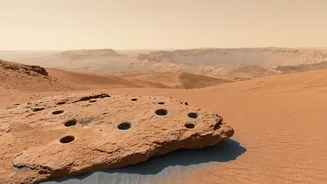
A Curious Discovery in Gale Crater
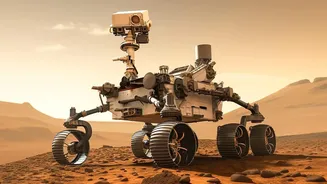
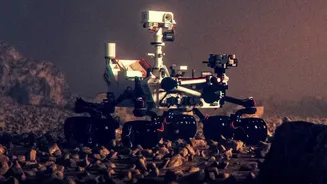
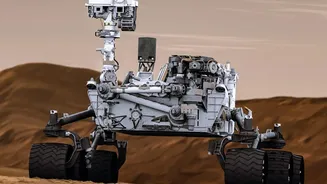
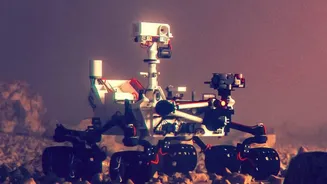
The Curiosity rover has been diligently exploring Mars since 2012, providing an unprecedented look at the Red Planet's geological history. Its latest puzzle comes from a location known as Valle Grande, a broad valley on the slopes of Mount Sharp. This
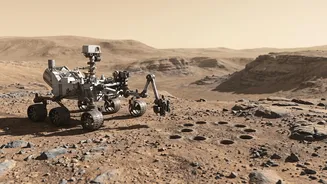
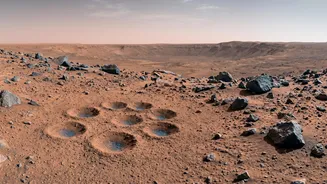
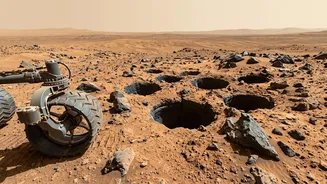
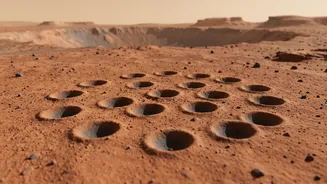
towering mountain sits in the middle of the 154-kilometre-wide Gale Crater, which is believed to be the site of an ancient lake. While climbing through this sulfate-rich region, the rover spotted a series of unusual pits dotting the bedrock. At first glance, holes on Mars are nothing new; the planet is constantly bombarded by meteorites and subject to erosion. But these were different.
What Makes These Holes So Strange?
According to the NASA science team, these newly found pits are distinct from other depressions seen on Mars. They are unusually broad and shallow, with one of the most detailed examples measuring about a centimetre across. The primary puzzle is how they formed. Typically, small pits in bedrock on Earth are created when a harder object, like a pebble or a mineral nodule, is embedded in softer surrounding rock. Over time, the softer rock erodes away, and the harder object eventually breaks apart or gets dislodged, leaving a cavity behind. In this case, however, scientists have found no obvious objects in or around the pits that could have created them. This lack of a clear cause is what has the team stumped.
Ruling Out the Obvious
The first suspect for any hole on Mars is a meteorite impact, but the rover team has largely ruled that out for these features. The pits are not characteristic of high-velocity impacts. The leading geological theory for similar features involves the erosion process described above, but the evidence just doesn't add up this time. As one mission scientist noted, after 14 years on the surface, Mars continues to surprise them. While the discovery is exciting, NASA has been clear that there is currently no evidence linking these holes to any form of biological activity. The mystery is purely geological, focusing on the unfamiliar physical or chemical processes that could have sculpted the rock in this unique way.
Gathering Clues for the Investigation
To solve the mystery, the Curiosity team is putting the rover's advanced imaging tools to work. It used the Mars Hand Lens Imager (MAHLI), a camera on its robotic arm, to take detailed, close-up photos of the pits. Simultaneously, the rover's Mastcam captured a series of overlapping, wider-angle images of the surrounding terrain. By combining these images, scientists on Earth can create detailed three-dimensional models of the area. These 3D maps will allow them to precisely measure the shape, depth, and distribution of the holes, which could provide crucial clues about the forces that formed them—whether it was an unfamiliar type of erosion, a unique property in the rock itself, or another process entirely.