
The Unmistakable Evening Star
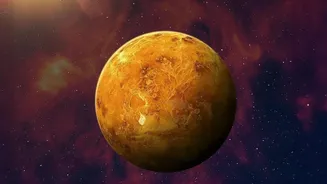
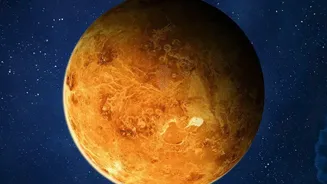
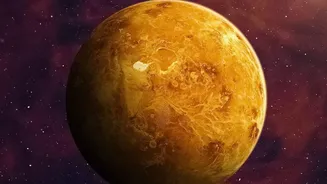
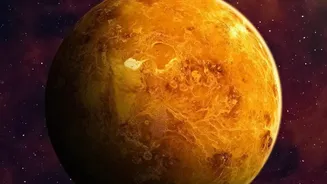
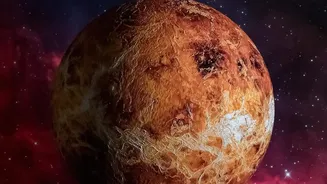
For the past few months, the planet Venus has been growing into a brilliant beacon in the western evening sky. Often mistaken for an airplane or a satellite, its steady, unwavering light sets it apart. Unlike stars that twinkle, Venus shines with a consistent,
powerful glow because it reflects sunlight from its thick cloud cover. This August, its nightly performance is building towards a climax, making it the most prominent object after the Sun and Moon have set. If you have noticed it, you are already part of a sky-watching tradition that goes back millennia. If not, the coming days offer the perfect chance to start.
What is Greatest Evening Elongation?
In simple terms, 'greatest evening elongation' is the best time to see Venus in the evening. Because Venus orbits the Sun inside Earth’s own orbit, it never appears to stray far from the Sun from our perspective. We only ever see it for a few hours after sunset (as the 'Evening Star') or before sunrise (as the 'Morning Star'). The term 'elongation' refers to the angular separation between the Sun and Venus in our sky. On August 15, 2026, Venus reaches its 'greatest eastern elongation', meaning it will be at its farthest possible point from the Sun on the sky's dome during its evening appearance. This maximum separation means it stays visible for longer after the Sun has disappeared, hanging higher in a darker sky instead of being lost in twilight.
Why This Makes for Perfect Viewing
The geometry of this event is what makes it a prime opportunity for skygazers. At its peak on August 15th, Venus will be separated from the Sun by about 46 degrees. For observers, this translates into a much more comfortable viewing window. The planet will set a few hours after the sun, giving everyone ample time to spot it as darkness falls. During this period, Venus will shine at a brilliant magnitude of -4.4, making it bright enough to be seen even from light-polluted urban areas before the sky is completely dark. This isn't just a fleeting moment; the viewing conditions will remain excellent for the weeks surrounding this date, though August 15th marks the official peak.
Your Simple Guide to Spotting Venus
You don’t need any special equipment or expertise to witness this celestial sight. The best time to look is in the hour or two after sunset. Find a spot with a clear view of the western horizon—the same direction where the sun went down. As the twilight colours begin to fade, look for the brightest point of light in that part of the sky. That will be Venus. Its light is a steady, silvery-white, and it won't twinkle like the distant stars do. For an even better experience, get away from direct city lights and allow your eyes about 15-20 minutes to adjust to the darkness. This will make Venus appear even more striking against the deepening blue of the sky.
What to Look For With Binoculars
While stunning to the naked eye, a simple pair of binoculars or a small telescope will reveal another fascinating detail. Because of its position relative to Earth and the Sun, Venus goes through phases, just like our Moon. Around the time of its greatest elongation, Venus will appear as a tiny, perfectly lit half-disk, similar to a first-quarter moon. As it continues its orbit in the following weeks, it will move closer to Earth, appearing larger but thinning into a beautiful crescent shape before it disappears into the Sun's glare in October. Observing this change over several nights can be a rewarding project for any budding astronomer.
A Bonus-Filled Month for Stargazers
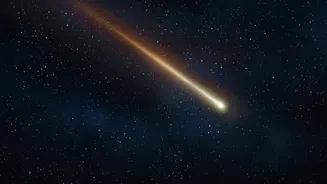
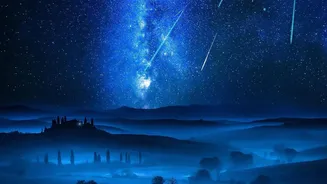
Venus isn't the only show in the sky this August. The famous Perseid meteor shower also peaks around August 13th. In 2026, this event occurs near the new moon, meaning moonlight won't wash out the fainter meteors, promising an excellent display of shooting stars for those in dark locations. With Venus putting on its best evening performance and the Perseids streaking across the sky, August is shaping up to be a spectacular month for anyone who takes a moment to look up.