
A Breakthrough in Solar Forecasting
Scientists from the Indian Space Research Organisation (ISRO) and the European Space Agency (ESA) have announced a major discovery that could revolutionise our ability to predict violent solar storms. For the first time, they have observed the subtle,
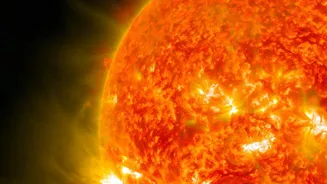
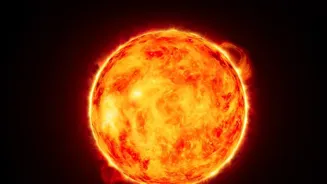
tell-tale signs that occur in the Sun's atmosphere just before a massive burst of energy and plasma, known as a Coronal Mass Ejection (CME), is unleashed. This has long been a 'holy grail' for space weather scientists. While we have been able to see CMEs as they happen, seeing the warning signs beforehand gives us a critical advantage. The joint analysis, published in the journal 'Astronomy & Astrophysics', focuses on two specific CME events observed in September 2025, providing an unprecedented look at how these events begin.
Two Missions, One Target
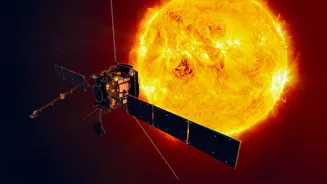
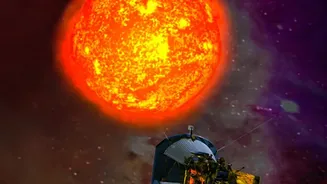
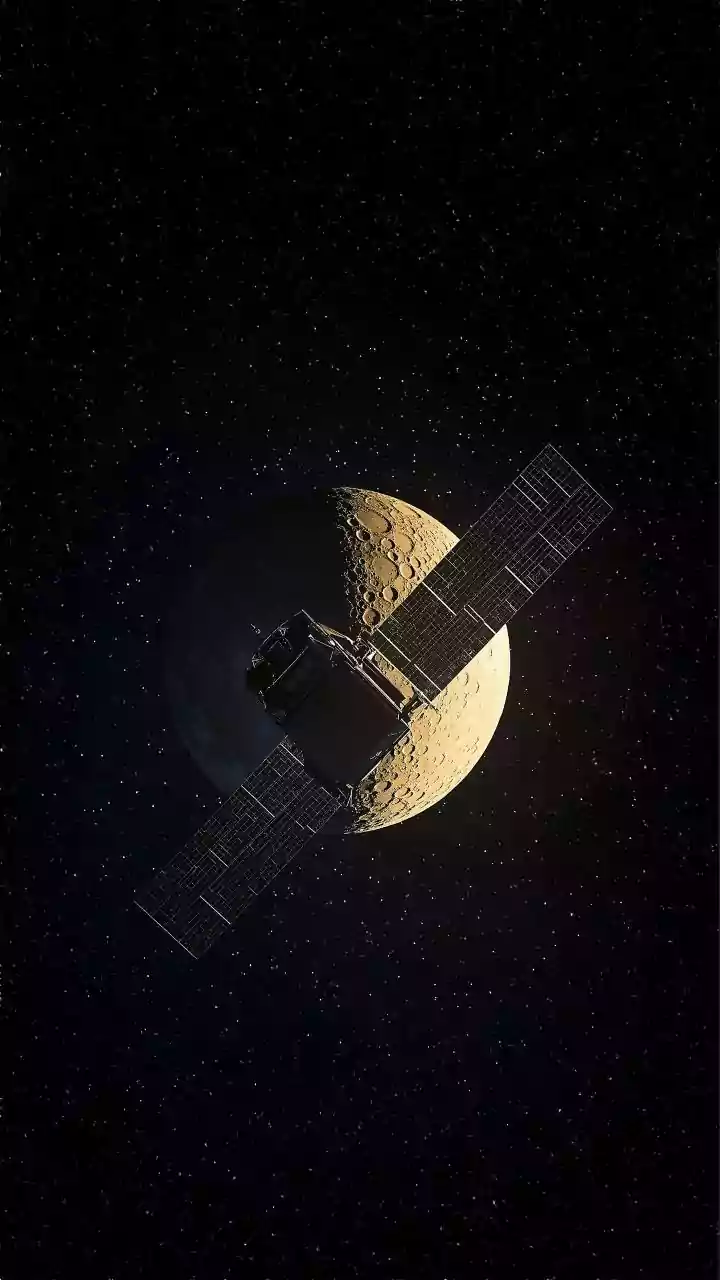
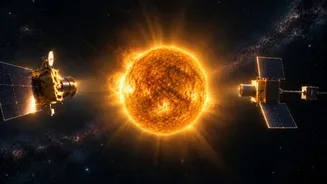
This discovery was made possible by the unique capabilities of two distinct but complementary missions. India's Aditya-L1 is a dedicated solar observatory positioned at Lagrange Point 1 (L1), about 1.5 million kilometres from Earth, giving it an uninterrupted view of the Sun. Its primary payload, the Visible Emission Line Coronagraph (VELC), developed by the Indian Institute of Astrophysics, is designed to study the Sun's outer atmosphere, or corona. Meanwhile, ESA's Proba-3 is a pioneering mission that uses two satellites flying in precise formation, about 150 metres apart, to create a perfect, sustained artificial solar eclipse. This allows its ASPIICS coronagraph to see the extremely faint inner corona, closer to the Sun's surface than ever before, without the blinding glare of the Sun itself.
Decoding Coronal Mass Ejections
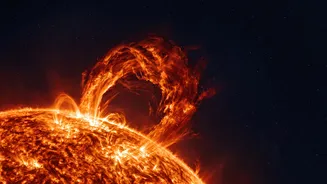
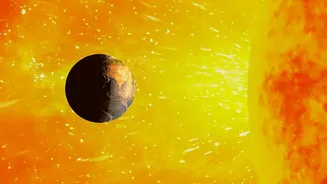
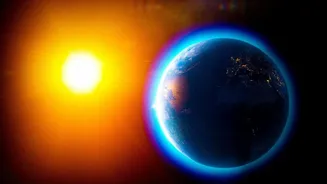
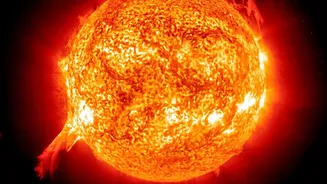
Coronal Mass Ejections are among the most powerful explosions in our solar system. They are colossal clouds of magnetised plasma hurled from the Sun at incredible speeds. While many miss our planet, those directed towards Earth can have serious consequences. These solar storms can trigger geomagnetic storms that disrupt our high-tech world, threatening communication satellites, scrambling GPS signals, damaging power grids, and posing a radiation risk to astronauts in space. Understanding how and when they will erupt is therefore not just a scientific curiosity, but a crucial part of protecting our modern infrastructure.
The Power of Paired Observation
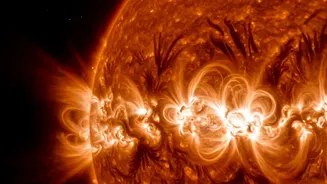
The key to this new finding was combining the data from both spacecraft. Aditya-L1's VELC provided the broad, contextual view, monitoring the overall state of the corona with its spectroscopic capabilities. Simultaneously, Proba-3's high-precision formation flying allowed it to focus on the specific region of the inner corona where the eruption was brewing. Together, their data revealed faint, previously undetectable flickers in plasma and subtle reconfigurations of the magnetic field—the 'early changes' that act as a definitive precursor to a CME. It is the space equivalent of seeing the first tiny cracks appear on a dam wall moments before it gives way, offering a clear, actionable warning of the impending event. The independent measurements of the CMEs' mass and energy from both instruments showed strong agreement, boosting confidence in the results.
Implications for Earth and Beyond
This breakthrough shifts the paradigm of space weather forecasting. Instead of merely tracking a storm that is already rocketing towards us, we now have the potential to anticipate its formation. This could extend the warning time for a potentially damaging solar event from minutes or hours to possibly even longer. This extra lead time is invaluable, giving satellite operators, power grid managers, and airlines more opportunity to take protective measures. For India, this collaborative success, which saw researchers at the Indian Institute of Astrophysics leading the analysis, cements ISRO's position as a vital and influential partner in global space science. It demonstrates the increasing importance of international cooperation in tackling some of science's biggest challenges.