






A New Landmark on the Lunar Surface
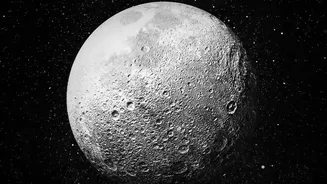
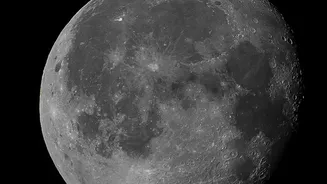
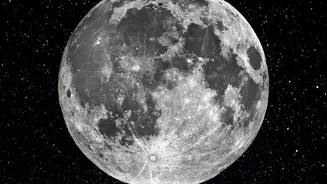
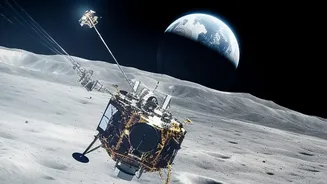
Scientists have named the new feature McGetchin crater, in honour of the late lunar scientist Thomas McGetchin. Discovered by NASA's Lunar Reconnaissance Orbiter (LRO), the crater measures a staggering 728 feet (222 meters) across and is about 141 feet (43
meters) deep. To put that in perspective, it is wider than the Roman Colosseum and deep enough to swallow three school buses stacked end-to-end. This makes it the largest newly formed impact crater ever identified in our solar system. The discovery was made by carefully comparing images of the lunar surface taken years apart; the impact itself, which occurred sometime in the spring of 2024, went completely undetected by telescopes at the time.
What Makes This Impact So Rare?
While the Moon is constantly bombarded by small objects, an impact of this magnitude is exceptionally rare. Scientists estimate that an event capable of creating a crater this large happens only about once every 132 years. The impactor is believed to have been an asteroid or comet fragment the size of a three to six-story building. Because the Moon has no atmosphere to burn up or slow down incoming objects, this rocky visitor slammed into the surface at full speed, creating a scar three times larger than the previous record-holder found by the LRO mission. The discovery provides an unprecedented opportunity to study the immediate aftermath of a major lunar impact before the slow march of space weathering erases its freshest features.
More Than Just a Hole
The effects of the McGetchin impact extend far beyond the crater's rim. The collision was powerful enough to churn the lunar surface for more than 100 kilometers, hurling dust and rock away at higher angles than models predicted. More surprisingly, instruments on the LRO detected a seven-kilometer-wide 'cold spot' surrounding the crater. This zone is several degrees colder than the nearby surface during the lunar night. Scientists believe the impact 'fluffed up' the topsoil, or regolith, making it less dense and less able to retain heat, a process one scientist likened to gardening. This discovery offers crucial new data on how impacts reshape the lunar landscape on a grand scale.
A Window Into the Future of Exploration
This 'once-in-a-lifetime' observation is more than just a scientific curiosity; it holds practical importance for future lunar missions, including India's own ambitious space programs. Understanding the frequency and effects of such impacts is a treasure trove of information as NASA and other international agencies plan to build permanent bases for astronauts on the Moon. The data from McGetchin crater will help engineers design stronger structures to protect against damage from impact ejecta. It also reveals that the lunar surface changes more quickly than previously thought, with the top layer being overturned every 80,000 years or so, meaning the famous Apollo footprints will one day be erased.