



A New Celestial Giant
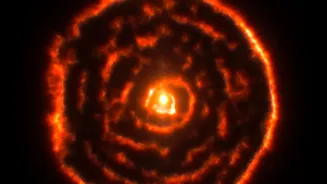
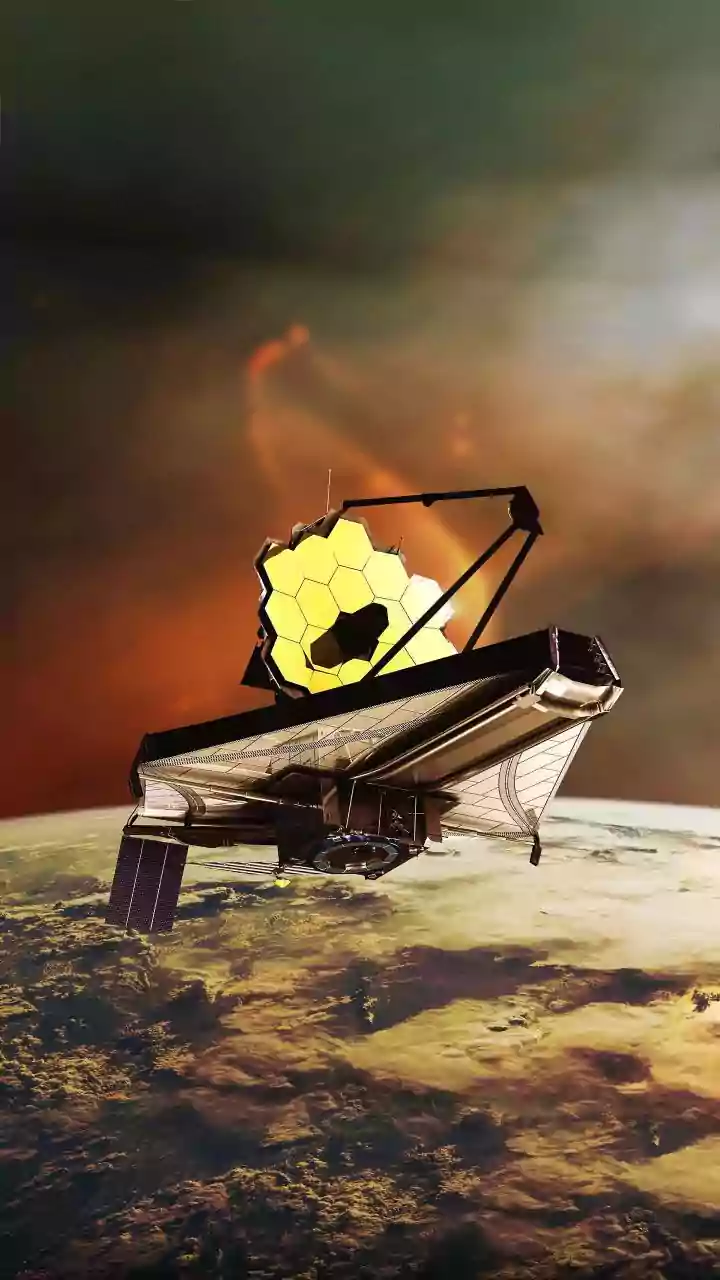
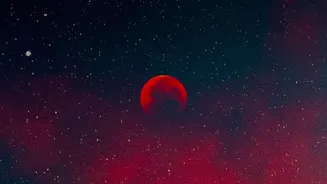
Deep-field images from the James Webb Space Telescope (JWST) have revealed a bizarre object unlike anything seen before. Labeled MoM-BH-1, it's a glowing red dot from the cosmic dawn, existing just 660 million years after the Big Bang. What makes this
object staggering is its scale and power. It appears to be a single, star-like body with a diameter comparable to our solar system, yet it blazes with the light of 100 billion suns. This is far more energy than any known star could physically produce, leading scientists to propose a radical new explanation for what it is.
What is a Black Hole Star?
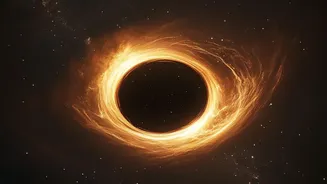
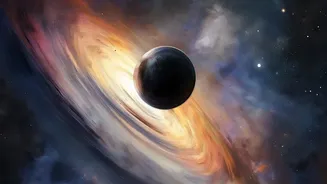
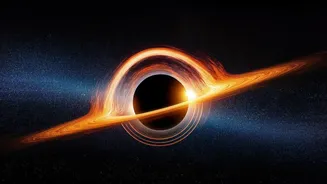
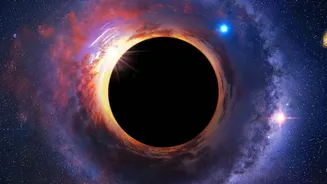
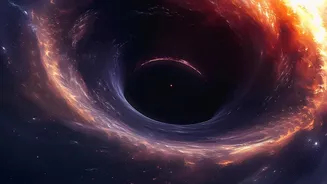
This is not a star in the traditional sense. Stars like our sun are powered by nuclear fusion, a process where atoms are squeezed together in a hot, dense core to release energy. MoM-BH-1, however, appears to be a long-theorized but never-before-seen object called a “quasi-star,” or black hole star. The theory suggests that in the early universe, truly enormous clouds of primordial gas could collapse. Instead of igniting fusion, the core of this cloud could collapse directly into a black hole while the vast outer layers remained intact. The object's brilliant light doesn't come from fusion, but from the incredible energy released as the central black hole continuously feeds on the dense gas surrounding it, creating an equilibrium that holds the structure together for millions of years.
Solving the 'Little Red Dots' Mystery
Since it began operations, the JWST has puzzled astronomers with images peppered with mysterious “little red dots” (LRDs). These objects were too compact to be galaxies but too bright to be ordinary stars. The discovery of MoM-BH*-1 provides a compelling answer to this puzzle. Scientists, led by researcher Rohan Naidu, believe that this object is a pristine example of an LRD. The distinct reddish glow and extreme brightness, once thought to be caused by dust, now appear to be the signature of a black hole shrouded in a thick cocoon of hydrogen gas. If this hypothesis holds, it suggests that many of these other red dots across the early universe are also black hole stars.
The Missing Link for Supermassive Black Holes
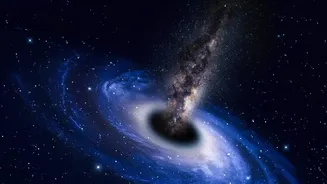
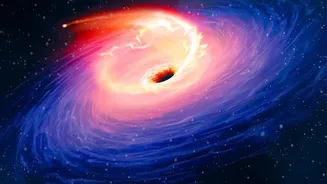
Perhaps the most significant implication of this discovery is that it helps solve one of cosmology's biggest paradoxes: how did supermassive black holes get so enormous, so quickly? The universe's first billion years doesn't seem long enough for standard stellar-mass black holes to grow to the epic sizes seen at the centers of early galaxies. Quasi-stars offer a perfect solution. The immense gravitational pressure of the surrounding gas envelope would essentially force-feed the central black hole, allowing it to grow at a phenomenal rate. These objects would serve as the 'seeds' for the supermassive black holes that dominate galaxies today, providing a crucial, previously missing step in our understanding of cosmic evolution.