



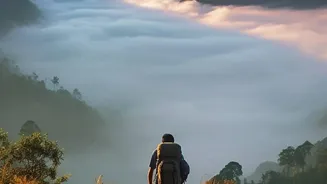
The Land of the First Sunrise
In the far eastern corner of India, nestled within the Anjaw district of Arunachal Pradesh, lies the breathtaking Dong Valley. It holds a unique distinction: it is the first inhabited place in India to witness the morning sun. Situated at a strategic
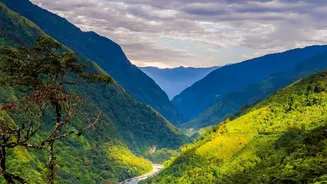
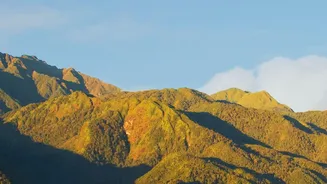
tri-junction where India, Myanmar, and China converge, this valley is more than just a geographical curiosity; it's a destination that promises a spiritual and natural spectacle unlike any other. The phenomenon was officially noted in 1999, and the area gained wider recognition after hosting a special millennium sunrise event on January 1, 2000. The valley, home to a small community of the Meyor tribe, is a landscape of dense pine forests, snow-dusted peaks, and the roaring Lohit River, which carves its way through deep gorges.
The Journey to the Trailhead
Reaching Dong Valley is an adventure in itself, requiring planning and a journey through some of Arunachal’s most scenic and rugged terrain. The most common starting point for travellers is Dibrugarh in Assam, which has the nearest major airport and a well-connected railway station at New Tinsukia. From Dibrugarh, it's a multi-day road trip of approximately 400 kilometres to Walong, the main town that serves as the base for the Dong Valley trek. The drive itself is spectacular, following the course of the Lohit River and passing through towns like Tezu and Hayuliang. It's crucial to refuel at Khupa, the last petrol station before Walong, and withdraw cash at Hayuliang, which has the last ATM on the route. Accommodation in Walong is limited to government guest houses and a few basic homestays run by local families, so booking well in advance is highly recommended.
An Unforgettable Predawn Trek
The trek to witness the sunrise begins in the dead of night. Trekkers typically wake up around 1 or 2 AM to start the ascent. From Walong, a short drive takes you to the trek’s starting point near Tilam, a small hamlet. The hike itself is a steep, 8-kilometre climb that takes about 90 minutes to two hours. Guided by local Meyor tribesmen and armed with only headlamps or torches, you’ll navigate through fragrant pine forests and grassy meadows in complete darkness. This predawn pilgrimage is a core part of the experience, filled with the sounds of nature and the crisp, cold mountain air. The trail can be moderately challenging, so a reasonable level of fitness is required to comfortably make the ascent in time for the main event.
The Spectacle of Dawn
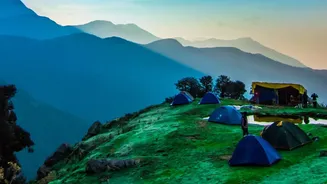
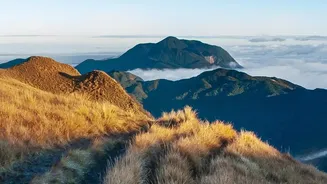
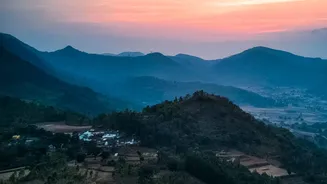
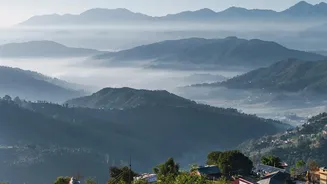
As you reach the viewpoint on a high ridge, you wait in the chilly darkness for the magic to unfold. The sunrise in Dong Valley happens as early as 4:30 AM. Before the sun itself appears, the sky begins to transform, with hues of orange and red painting the eastern horizon. The first rays of light strike the snow-capped peaks, making them glow like gold. From this vantage point, you are treated to a panoramic view of the mountains folding into one another and the stunning sight of the confluence of the Lohit and Sati rivers far below. It’s a moment of profound tranquility and beauty, watching the day begin for an entire nation from this remote and pristine corner of the Himalayas. For many, it's a once-in-a-lifetime experience that is both humbling and deeply memorable.
Planning Your Trip: Permits and Essentials
A trip to Dong Valley requires careful preparation. Indian citizens must obtain an Inner Line Permit (ILP) to enter Arunachal Pradesh. This can be applied for online and is mandatory for entry. Foreign nationals require a Protected Area Permit (PAP) and must travel with a registered tour operator. The best time to visit for clear sunrise views is from October to April, when the weather is generally dry and the skies are less likely to be cloudy. Packing essentials include serious warm layers for the cold predawn trek, sturdy hiking shoes, a powerful headlamp with extra batteries, and basic supplies like water and snacks. As mobile networks are unreliable past Hayuliang, it is wise to inform someone of your itinerary beforehand.